
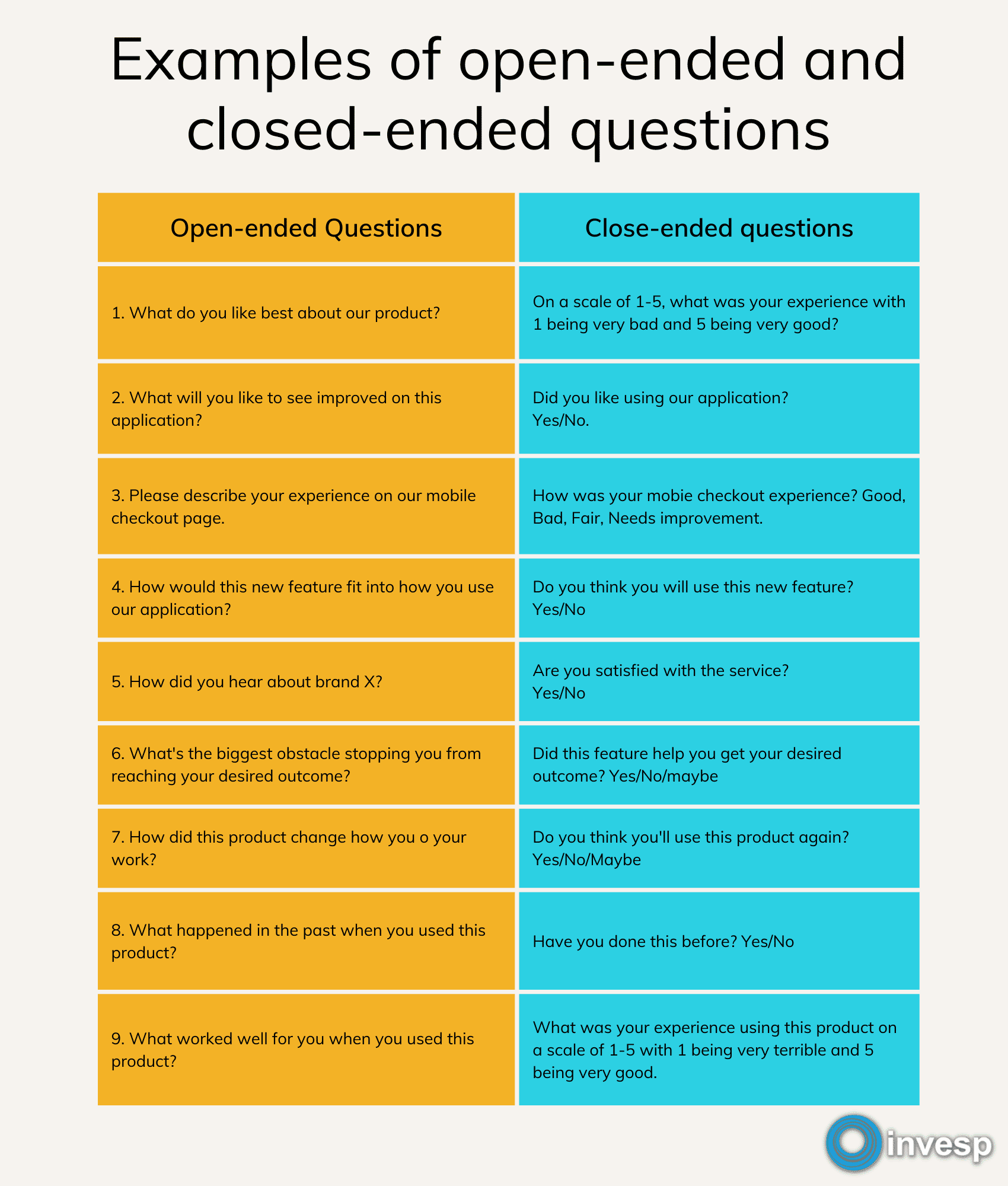
Open-ended questions are a powerful tool in communication, transcending mere inquiries to spark deeper dialogues. Unlike their closed-ended counterparts, which yield succinct answers, open-ended questions invite respondents to elaborate, share perspectives, and explore thoughts comprehensively. This article delves into examples of such questions, their significance, and how they can foster more meaningful conversations.
At the heart of open-ended questions lies the art of eliciting elaborate responses. Such questions invite individuals to consider their feelings, thoughts, and experiences. They beckon the respondent to delve into their psyche, reflecting not only on their immediate answers but also on the motivations and experiences behind them. This dual-layered engagement not only enriches conversations but also enhances understanding between interlocutors.
Consider the common inquiry, “What are your thoughts on our current educational system?” This question does not merely solicit an opinion; it encourages a multifaceted discussion about policies, societal impacts, and personal experiences with education. Respondents may reflect on their schooling, the effectiveness of teaching methods, or the role of technology. The richness of such discourse lays bare the complexities of individual perceptions, driven by personal history and societal context.
Open-ended questions also serve as an effective bridge in professional settings, facilitating collaboration and innovation. For instance, when leading a creative team, one might ask, “How do you envision our project impacting our audience?” This question doesn’t just seek a direct response; it nudges team members to articulate their visions, probe into audience aspirations, and discover emotional connections. Such discussions can unveil insights that may not have surfaced with direct queries, igniting collective creativity.
In everyday contexts, open-ended questions can significantly enhance personal relationships. Imagine a scenario in which a friend shares a challenging experience. Instead of simply asking, “Are you okay?” a more probing approach would be, “Can you tell me what you felt during that situation?” This invites them to narrate their experience in a way that elucidates their emotional terrain, fostering empathy and understanding. The very act of the question encourages vulnerability, prompting a connection that might otherwise remain superficial.
Moreover, open-ended questions can invigorate the interview process. A hiring manager might inquire, “What inspired you to pursue this career path?” Such a question allows candidates to share their journeys, motivations, and aspirations—details that provide valuable insights into their character and fit for the role. This approach creates an atmosphere of openness, wherein honesty flourishes and candidates feel empowered to showcase their individuality.
Additionally, in customer service scenarios, open-ended questions can transform interactions. For example, one might ask, “What was your experience with our product?” instead of seeking mere satisfaction ratings. This prompts customers to elaborate on their experiences, offering companies invaluable feedback that quantitative metrics alone could neglect. By listening to the narrative behind a customer’s journey, organizations can identify strengths and areas for improvement, fostering loyalty through a demonstration of genuine interest.
Another fascinating realm where open-ended questions shine is in therapy and counseling. A therapist might pose a question such as, “How do you feel about the relationships in your life?” This not only surfaces emotions but invites exploration of underlying thoughts that shape interpersonal dynamics. The therapist can guide the individual through a nuanced understanding of their feelings, leading to breakthroughs in self-awareness and personal growth.
In educational contexts, open-ended questions stimulate critical thinking. Rather than asking students to choose the correct answer on a test, an instructor could inquire, “What do you believe is the most significant impact of climate change?” This challenges students to synthesize knowledge, articulate their thoughts, and engage with material on a deeper level. Such inquiries foster an atmosphere of curiosity and critical analysis, preparing learners for real-world complexities.
Interestingly, open-ended questions also play a pivotal role in research methodologies. Researchers frequently employ such questions in surveys and interviews to gather qualitative data. An example might be, “What challenges do you face in your day-to-day life?” The responses can reveal patterns and themes that statistical data alone might overlook. By analyzing these narratives, researchers gain a more comprehensive understanding of the human experience, guiding more effective interventions and policies.
Furthermore, open-ended questions champion authenticity in conversations, dismantling barriers that inhibit genuine exchanges. When one asks, “What motivates you?” it encourages introspection and candidness. Individuals often respond not just with surface-level answers but with anecdotes and insights that reveal their values and priorities. This authenticity fosters trust and strengthens connections, laying the groundwork for more profound relationships.
In conclusion, open-ended questions are not merely linguistic tools; they serve as gateways to exploration, understanding, and connection. By inviting discourse rather than dictating responses, they enrich conversations across various contexts—be it in personal relationships, professional settings, or educational environments. The art of crafting such inquiries lies in their potential to unravel deeper motivations and nuanced experiences. As we embrace the beauty of open dialogue, let us recognize the profound insights that emerge from the simple act of asking thoughtful questions.













