
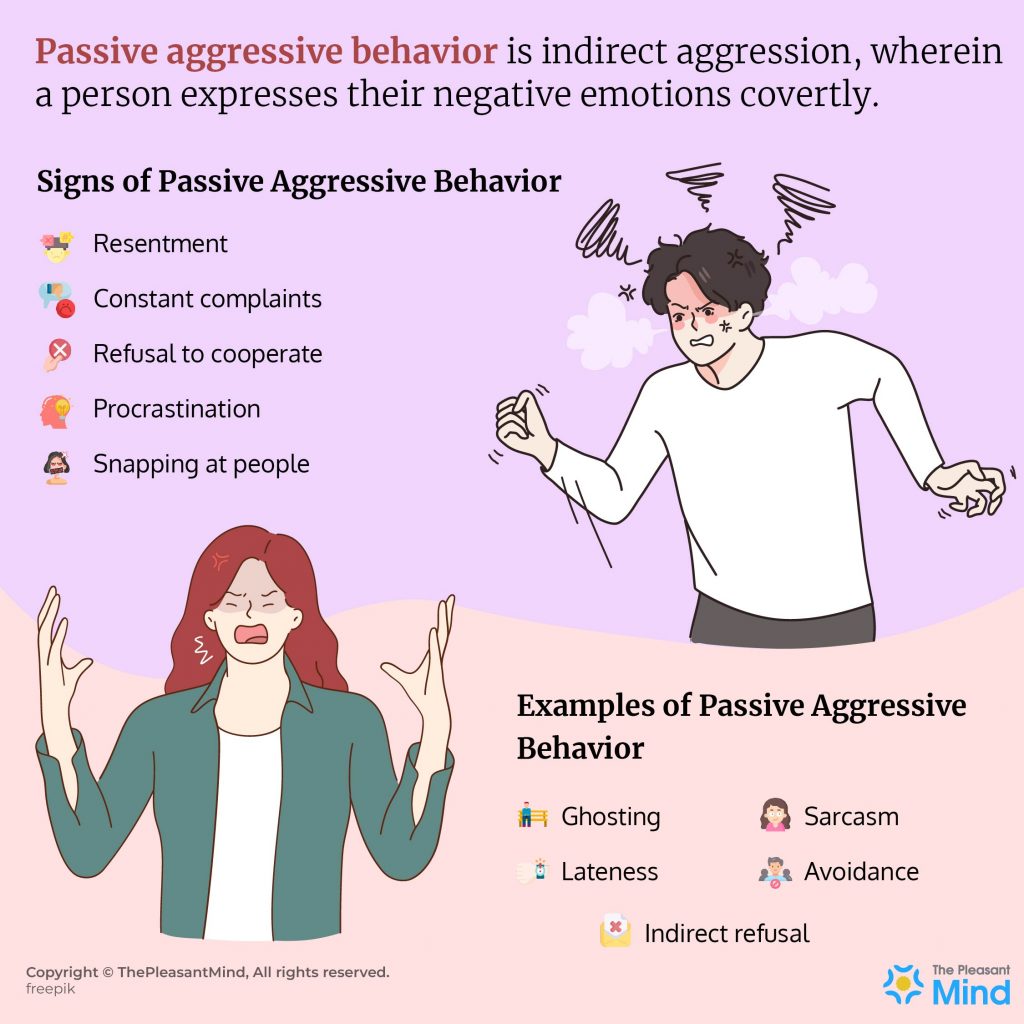
Passive-aggressive behavior is an intricate and often perplexing form of communication. It manifests in various ways and can complicate personal and professional relationships. As individuals navigate the complexities of human interaction, recognizing passive-aggressive tendencies is essential for fostering healthier, more open environments. Below, we explore numerous examples of passive-aggressive behavior, each shedding light on its subtleties and implications.
1. Sarcastic Remarks
Sarcasm often serves as a veil for those unwilling to express their true feelings directly. When an individual makes a biting comment disguised as humor, it can signify underlying resentment. For instance, a co-worker might say, “Oh, great job on that presentation! Really nailed the part where you didn’t know what you were talking about!” Though presented as praise, the true intent is to belittle, revealing passive-aggressive undertones.
2. Procrastination as a Weapon
Delaying tasks or commitments can be a subtle yet powerful method of expressing discontent. Imagine a family member repeatedly postponing a chore, such as cleaning the shared living space. When confronted, they might respond with, “I meant to get to it, but I just didn’t feel like it.” This lack of action conveys resistance and evokes frustration in others, illustrating the insidious nature of procrastination as a form of passive aggression.
3. The Silent Treatment
Choosing to ignore someone instead of addressing issues directly is a classic example of passive-aggressive behavior. This method of punishment can be especially detrimental in intimate relationships. A partner who is upset might withdraw communication entirely, making the other person feel isolated and uncertain. By refusing to engage in dialogue, they evade confrontation while simultaneously inflicting emotional discomfort.
4. Backhanded Compliments
Backhanded compliments elegantly blend praise with an undercurrent of hostility. For example, one might say, “You look fabulous today! Did you finally figure out how to do your hair?” Such comments imply that the recipient regularly looks unkempt, masking criticism within a façade of goodwill. The complexity of backhanded compliments can leave individuals questioning their self-worth, while the instigator feels justified in their remarks.
5. Unmet Expectations
Passive-aggressive individuals often express dissatisfaction through ambiguous expectations, leaving others in a state of confusion. For instance, a friend may say, “I just thought you would remember my birthday,” when they had not explicitly communicated their expectations. This tactic not only places blame but also stifles honest discourse, as it evokes guilt rather than clarity. The emotional fallout can create unnecessary rifts in relationships.
6. Indirect Communication
Communication that lacks directness can often be indicative of passive-aggressive behavior. For example, rather than directly requesting help, an individual might state, “It would be nice if someone could tidy up the kitchen.” This roundabout approach can lead others to feel either compelled to act out of guilt or resentful of the manipulation. Indirect communication is a hallmark of passive aggression, reflecting an unwillingness to confront issues head-on.
7. Neglecting Responsibilities
Individuals demonstrating passive-aggressive behavior may neglect their duties intentionally. Imagine a team member who consistently ignores their share of a project that impacts the entire group. When confronted, they may feign ignorance or assert they were “too busy.” This avoidance not only hinders productivity but also erodes trust within the team, creating an atmosphere of animosity rather than collaboration.
8. Guilt-Tripping
Using guilt as a manipulative tool is another manifestation of passive-aggressive behavior. For example, a parent may say to their child, “I sacrificed so much for you, and this is how you thank me?” This tactic aims to extract compliance or remorse, forcing the child to acquiesce to demands out of guilt rather than authentic desire. This dynamic can develop unhealthy patterns in relationships, fostering resentment rather than understanding.
9. Conditional Kindness
Expressions of kindness that come with strings attached can also embody passive aggression. For instance, someone may offer to help you with a task but later vocalize their annoyance when you don’t adhere to their suggestions. This behavior creates a tension-filled environment where one’s motives are called into question, undermining genuine kindness and replacing it with conditional expectations.
10. Facebook Subtweets
In the age of social media, passive-aggressive behavior has found new avenues of expression. Individuals may post cryptic messages or quotes on platforms like Facebook or Twitter, targeting someone without naming them directly. For instance, “Some people just don’t appreciate what they have,” may serve as a veiled attack on a specific person. Such indirect communication can deter resolution, fostering animosity rather than promoting understanding.
Conclusion
Understanding the myriad forms of passive-aggressive behavior is crucial for navigating both personal and professional relationships. By recognizing the signs and repercussions of this behavior, individuals can develop healthier communication strategies and foster more transparent interactions. Addressing the core issues directly, rather than allowing passive-aggressive tendencies to take root, is essential for building a foundation of trust, respect, and genuine connection. Open dialogue and emotional honesty pave the way for resolving conflicts and fostering understanding, rendering passive aggression obsolete.













