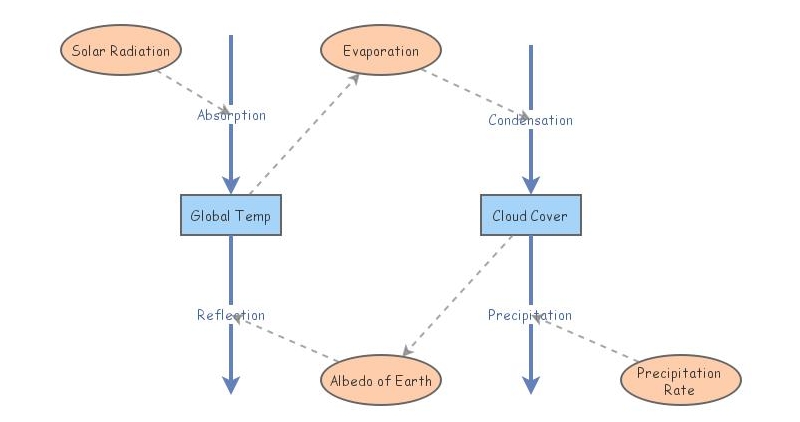
Understanding the concept of positive feedback loops is essential for grasping the dynamics of various phenomena in both nature and human-made systems. A positive feedback loop occurs when an initial change leads to further changes in the same direction, creating a cycle that amplifies effects and outcomes. This article outlines several compelling examples of positive feedback loops across different contexts, demonstrating their importance in various fields. Each example illustrates how these loops function and the implications they hold.
1. Avalanche Formation
One striking example of a natural positive feedback loop is the formation of avalanches. It begins with a tiny disturbance, such as a small snowpack shift. This disturbance can trigger a snow slab to slide down a slope. As this slab collapses, it creates additional disturbances in the surrounding snow, leading to more slabs breaking off. The sliding snow accelerates, and the cumulative force generates even more snow slides, resulting in a cascading avalanche. In less than a minute, a serene snowy landscape can turn chaotic, illustrating how minor perturbations can snowball into significant events.
2. Population Growth
In the realm of ecology, population growth exemplifies a positive feedback loop. When a species’ population increases, it enhances the chances of reproduction, owing to the greater number of individuals available to mate. This increased reproduction leads to a further rise in the population. For instance, if a predator’s population rises, the availability of prey may also increase, leading to a boom in reproductive success for both predators and prey. This interplay can create rapid changes in ecosystem dynamics, where unchecked growth may eventually lead to resource depletion and subsequent crashes, illustrating the dual-edged nature of feedback loops.
3. Climate Change and Polar Ice Melt
The alarming phenomenon of climate change is rife with positive feedback loops. One notable example is the melting of polar ice caps. As global temperatures rise, ice melts, reducing the Earth’s albedo—the reflectivity of a surface. With less ice, darker ocean or land surfaces become exposed, absorbing more sunlight and further accelerating warming. This process continues in a self-reinforcing cycle, contributing significantly to climate change. The implications are profound, affecting sea levels, weather patterns, and global ecology, demonstrating the interconnections that feedback loops foster.
4. Economic Expansion
In economics, positive feedback loops can manifest during periods of economic expansion. When consumer confidence increases, spending rises, leading to higher revenues for businesses. This growth prompts companies to invest in new projects, hire more staff, and produce more goods. The influx of jobs may subsequently enhance consumer confidence even further, driving additional spending. Conversely, if an economic downturn occurs, the reverse can happen, creating adverse effects that spiral downwards. Understanding these cycles is crucial for policymakers aiming to stabilize or stimulate economies.
5. Technological Innovation
Technological advancements often follow a positive feedback loop model. As new technologies emerge, they lead to increased efficiency and lower costs of production. This encourages widespread adoption, which in turn spurs further innovation and investment in related technologies. For example, the development of smartphones has revolutionized communication, leading to the creation of countless applications and related services, further embedding technology into daily life. Each innovation fosters new ideas, perpetuating a cycle of technological growth that is rarely linear.
6. Social Media Dynamics
The realm of social media is another fertile ground for positive feedback loops. When a user generates engaging content, it may receive likes and shares. This popularity can attract more followers, leading to a larger audience and increased interactions with future content. As engagement grows, algorithms may promote the content further, creating an exponential increase in reach and influence. However, this also can lead to echo chambers, where particular views reinforce themselves, subsequently magnifying societal polarization. The loop is powerful but complex, creating both opportunities and challenges for communication in the digital age.
7. Health and Disease Transmission
The spread of infectious diseases can also illustrate a positive feedback loop. When an individual becomes infected, they can transmit the illness to others. Each new infection contributes to a more extensive outbreak, leading to a rising number of cases. This dynamic can overwhelm health systems rapidly, as the resources in healthcare institutions are spread thin. In many instances, the urgency to contain diseases highlights the need for early intervention to disrupt such feedback loops before they spiral out of control.
8. Music and Culture
Cultural phenomena often develop through positive feedback loops. Music genres can gain popularity through virality; as a style becomes popular, more artists are drawn to create within that genre, which can further enhance its popularity. This cycle can lead to cultural trends that evolve rapidly, propelled by social media and shared experiences. The intertwining of music and culture emphasizes how feedback loops can shape identities and influence societal norms, illustrating the synergy between creativity and shared human experience.
Conclusion
Positive feedback loops are a fundamental aspect of numerous systems, from ecological interactions to societal shifts. They reveal the interconnectedness and complexity inherent in various processes, reminding us that small changes can have substantial ramifications. Whether considering the natural environment, economic patterns, or cultural trends, recognizing and understanding these loops can provide invaluable insights into managing change and fostering sustainable development. As we navigate a world characterized by rapid transformation, awareness of these dynamics will be crucial in addressing challenges and leveraging opportunities for advancement.