As humanity advances into the future, the distinction between renewable and non-renewable energy sources becomes pivotal in shaping our communities, industries, and the very planet we inhabit. This dichotomy is not merely academic; rather, it reflects our collective values and choices that ultimately cascade into the real world. The ongoing debate about which types of energy will lead us toward a sustainable future ignites passions and curiosity among scientists, policymakers, and concerned citizens alike. Understanding each energy type’s examples, characteristics, and implications deepens our appreciation for the intricate play at work in energy generation.
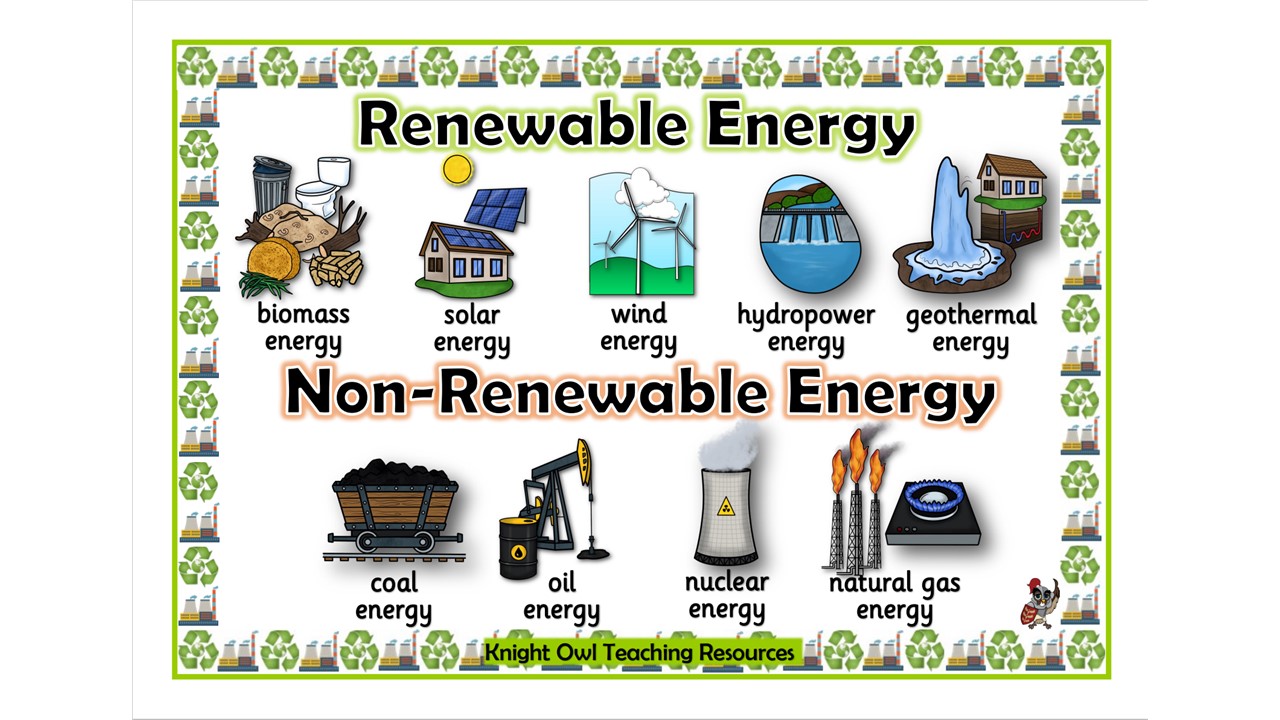
Renewable energy sources are derived from naturally replenishing resources. These sources include sunlight, wind, rain, tides, waves, geothermal heat, and organic materials. Their capacity to regenerate means they are pivotal in the global endeavor to reduce dependence on fossil fuels. Solar energy, for instance, is harnessed through photovoltaic cells, which convert sunlight directly into electricity. Solar panels adorn rooftops and vast solar fields alike, transforming otherwise unused space into sustainable energy repositories.
Wind energy is another prominent renewable source. Turbines harness the kinetic energy of wind currents, converting it into mechanical power, which can then be transformed into electricity. Wind farms, with their colossal turbines silhouetted against the horizon, beckon admiration and curiosity. People are often awestruck by the sight, pondering the potential energy that cascades down from heights through the blades, ultimately contributing to cleaner energy generation.
Hydropower captures the energy of flowing or falling water. Dams create reservoirs that magnify the water’s force as it rushes downstream. Turbines located within these dams spin to generate electricity, providing power for millions. The ubiquitous presence of rivers and water bodies underscores this renewable energy source’s practicality, revealing a harmonious interplay between nature and technology.
Geothermal energy, derived from heat stored beneath the Earth’s surface, presents a fascinating contrast to surface-level energy sources. By tapping into the Earth’s internal heat, facilities can produce steam that drives turbines, generating electricity. In regions with high volcanic activity or natural hot springs, geothermal systems showcase how the planet’s inherent heat can be utilized sustainably and efficiently.
Biomass, another renewable resource, utilizes organic materials such as plant matter, agricultural residues, and even municipal waste to produce energy. The combustion of these materials releases stored energy in the form of heat, which can be converted into electricity or used for heating and cooking. The cyclical nature of biomass, which involves replanting and regrowth, underscores its sustainability. Nevertheless, caution must be exercised to ensure that biomass production does not disrupt food supplies or lead to deforestation.
On the other end of the spectrum, non-renewable energy sources—comprising fossil fuels like coal, oil, and natural gas—pose significant challenges. These resources, formed over millions of years from the remains of ancient organisms, are finite. Their extraction and combustion contribute to environmental degradation, air pollution, and greenhouse gas emissions. Coal, once hailed as the “black gold” of industrialization, is now viewed with increasing skepticism due to its substantial carbon footprint. The iconic imagery of coal mines and power plants evokes nostalgia but also a growing awareness of the detrimental consequences of our energy choices.
Oil, another non-renewable stalwart, powers vehicles, heats homes, and fuels industries. The geopolitical ramifications of oil extraction and distribution are profound, often intertwining with national interests and global stability. The intricate ballet of supply and demand can lead to volatile pricing, imposing economic strain on consumers and nations alike. Countries rich in oil reserves find both wealth and strife in this energy resource, illustrating the complex interplay of energy economics and global politics.
Natural gas, often considered a “bridge” fuel due to its relative cleanliness compared to coal and oil, still bears the burden of being a non-renewable resource. Pipelines crisscrossing landscapes and storage facilities dotting the countryside highlight the infrastructure required to harness this source. Although natural gas emits fewer pollutants than its fossil counterparts, it remains a potent greenhouse gas and a contributor to climate change when leaked into the atmosphere. The balancing act between utilization and environmental impact epitomizes the ongoing energy debate.
The world stands at a crossroads, where the transition from non-renewable to renewable energy sources is not merely desirable but imperative. The fascination with renewable energy arises from its dual capacity to address immediate energy demands while promoting environmental stewardship. Each technological advancement—from improved solar panel efficiency to innovative wind turbine designs—signals hope and offers numerous economic and ecological benefits. Investing in renewable energy often translates to job creation, energy independence, and reduced vulnerability to market fluctuations tied to fossil fuels.
Conversely, the continuing reliance on non-renewable resources is not simply a reflection of their embeddedness in existing infrastructure but also underscores the profound resistance to change. Psychological inertia, economic interests tied to fossil fuel industries, and the complexities of transitioning energy systems complicate this shift. These challenges fester, yet they also fuel a fervent drive for innovation, policy reform, and community engagement in the quest for sustainability.
In conclusion, the examples of renewable and non-renewable energy sources provide a window into the multifaceted world of energy generation. The inexorable march toward sustainability invites greater scrutiny and appreciation for the energy that powers our lives. As we grapple with our energy future, understanding the complexities of these diverse sources reveals not only our artistic ingenuity but also our responsibility toward the Earth and future generations.