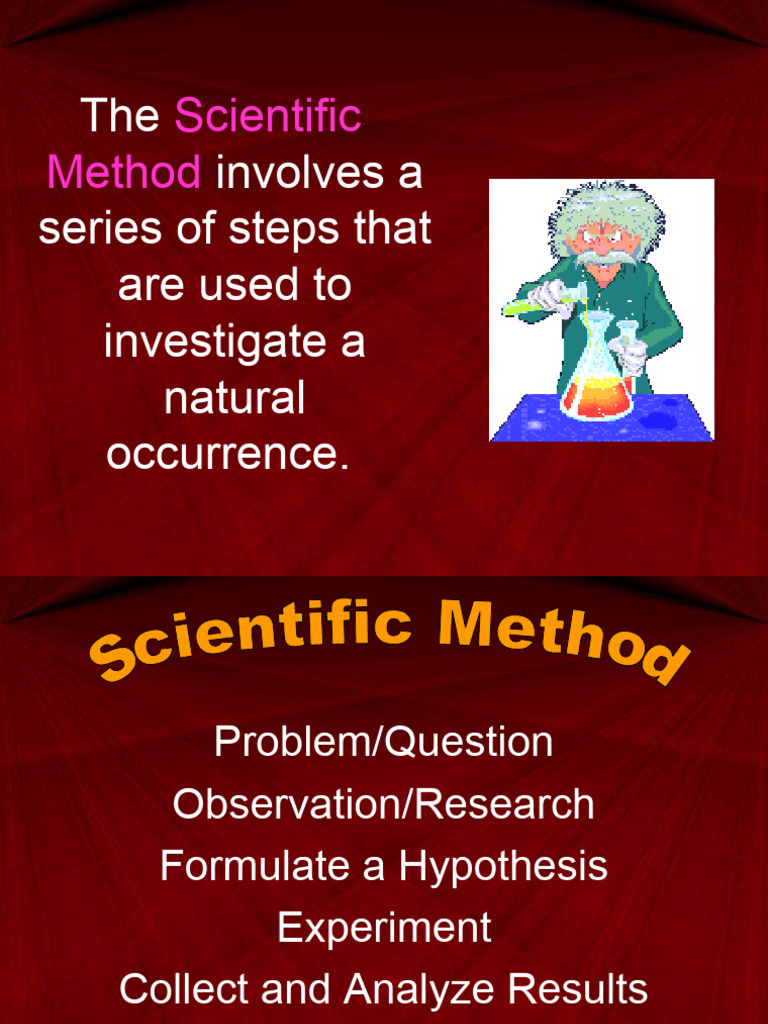
The scientific method is a paramount concept in the realm of science, serving as the backbone of inquiry and investigation. But have you ever paused to ponder a whimsical question: What if a curious child, with a penchant for experimenting, decided to uncover the secrets behind the humble plants growing in their backyard? This scenario sparks an exploration into the scientific method’s application and its profound implications in understanding the natural world.
At its core, the scientific method is a systematic approach designed to rid inquiry of ambiguity, offering a structured pathway from observation to conclusion. Let’s delve into the various steps and see how a hypothetical child—let’s call her Lily—might embody this process as she embarks on a quest of discovery.
1. Observation
Every scientific journey begins with an observation. In our tale, Lily notices that her marigolds seem to bloom more profusely when they are positioned in direct sunlight, while those in shaded areas lag behind. This initial observation sets the stage for a deeper inquiry. The act of observing is not mere passive acknowledgment; it is an active engagement with the environment, prompting questions and igniting a thirst for knowledge.
2. Question
Lily’s curiosity burgeons into a question: “Do marigolds grow better in sunlight than in shade?” This query exemplifies a critical component of the scientific method—it allows for precision in focus. A well-framed question lies at the heart of every investigation, guiding the direction in which the inquiry will unfold. It not only encapsulates the essence of curiosity but also directs resources and efforts efficiently.
3. Hypothesis
With her question formed, Lily propounds a hypothesis. She conjectures, “If marigolds are exposed to more sunlight, then they will grow taller and have more flowers, as compared to those in the shade.” This foresight is integral, proposing a testable prediction that can either be substantiated or refuted through experimentation. Hypotheses act as guiding lights in the exploratory journey—providing a clear point of reference as one ventures into the unknown.
4. Experimentation
Now comes the exhilarating portion of Lily’s scientific journey: experimentation. Here, she devises a controlled experiment to test her hypothesis. She meticulously plans to cultivate two groups of marigolds: one set placed in direct sunlight for at least six hours daily and another confined to a shaded area for the same duration. Variables are carefully controlled; soil types remain constant, water amounts are equal, and the same species of marigolds are used to ensure a fair test.
Lily’s experiment unfolds over several weeks. During this period, she documents each growth stage, taking notes on height, leaf color, and the number of flowers produced. This process embodies the essence of experimentation—testing the hypothesis rigorously while maintaining objectivity in her observations.
5. Data Collection & Analysis
As days roll into weeks, Lily gathers data. She measures the height of her marigolds and counts their flowers with the enthusiasm of a budding scientist. But data collection is merely half the battle; analysis comes next. At this juncture, she replaces raw numbers with insights. Employing basic statistical methods, she compares the growth metrics of the two groups, uncovering trends that may support or contradict her initial hypothesis.
Visual representations, like graphs and charts, could enhance her understanding of the results. By juxtaposing the growth of marigolds from each group, patterns become apparent. Such analytical skills amplify the significance of the findings, transforming mere observations into compelling evidence.
6. Conclusion
Armed with thoughtful analysis, Lily can draw conclusions. If her data suggests that marigolds in sunlight indeed grow taller and produce more flowers, she would tentatively accept her hypothesis. Conversely, should the results indicate little to no difference, it would necessitate reevaluation. This stage encapsulates the critical nature of the scientific method—it is iterative, demanding reflection and adjustment based on empirical evidence.
7. Communication
The final phase of Lily’s scientific expedition is communication. Sharing her findings with peers, family, or even a local science fair fosters a sense of collaboration. Whether through presentations or written reports, the dissemination of knowledge is the lifeblood of scientific progress. Peer feedback can also offer new perspectives, prompting further inquiries and fostering a scientific community’s collaborative spirit.
In conclusion, the scientific method is not merely an academic exercise; it is a vital framework that underpins all scientific inquiry. The hypothetical journey of young Lily serves to illustrate how this systematic approach allows one to transition from questioning to understanding. Each phase of the scientific method—from observation to communication—interacts seamlessly, illuminating the path toward knowledge. With each experiment, we gain not only insights into our inquiries but also a deeper appreciation for the meticulous beauty of the scientific world.
So, the next time you pass a blooming flower or peer into the complexities of nature, may the scientific method inspire your own curiosity. Who knows what delightful discoveries await those who dare to ask and test?