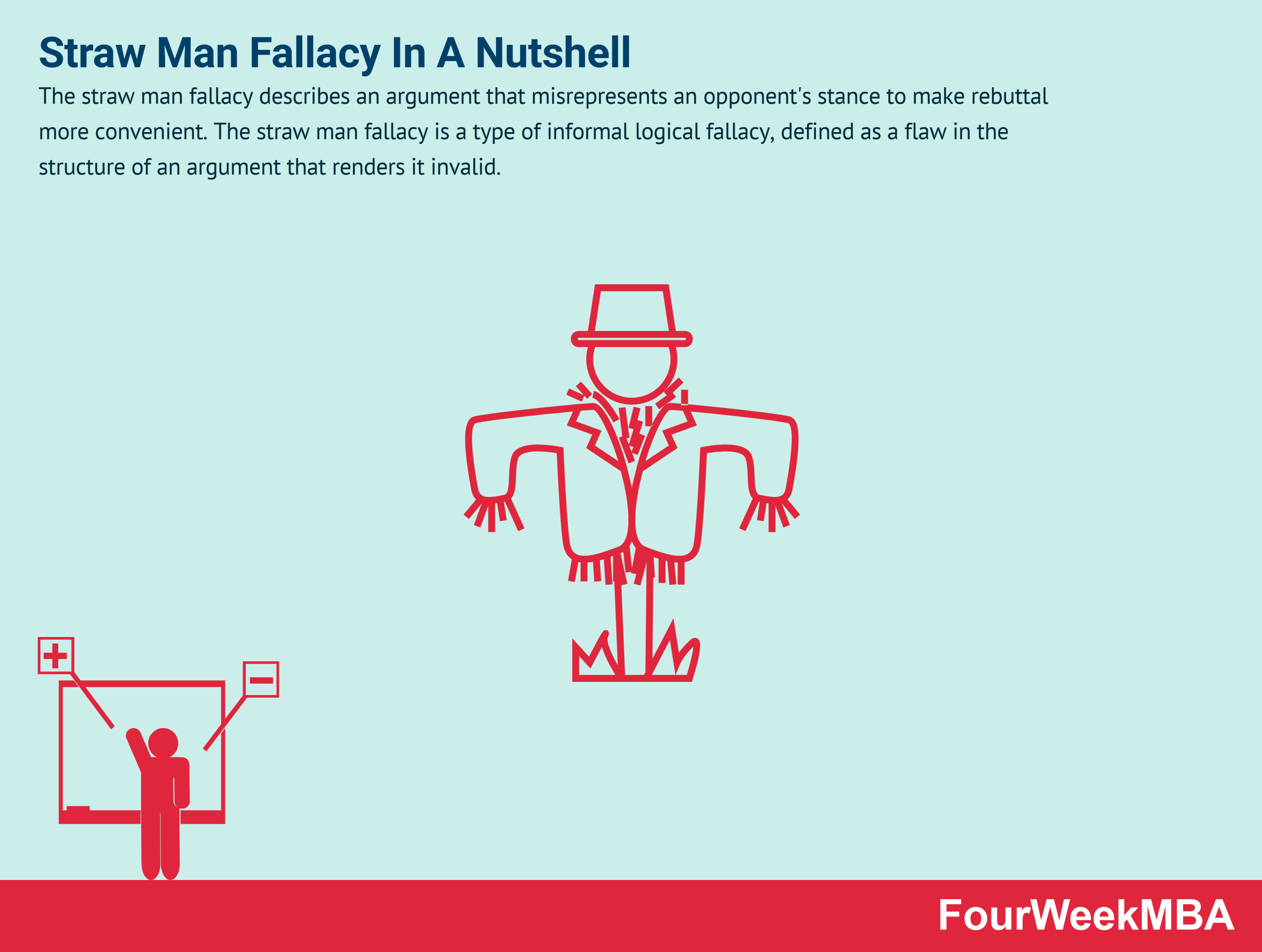
The straw man fallacy is a logical misstep, akin to building a majestic castle in the clouds, only to have it crumble into mist when confronted with reality. This phenomenon occurs when an argument is misrepresented or oversimplified, allowing the proponent to easily dismantle what they perceive to be the original argument. It’s as if someone takes a photograph of a splendid work of art, and instead of engaging with the intricate details, they critique a poorly rendered copy instead. In essence, a straw man is erected as a deceptive facsimile, offering a false target that sidesteps the substantive issue at hand.
Understanding the Underpinnings
To grasp the essence of the straw man fallacy, one must first delve into the anatomy of argumentation. Logical discourse is predicated on presenting one’s perspective clearly and accurately, engaging not only with the content of another’s argument but also grasping its underlying intentions. When one resorts to the straw man strategy, the conversation is derailed. Instead of engaging with the genuine substance, the altercation becomes a duel against a phantom—one that lacks resilience and dimension.
The Art of Misrepresentation
Consider a debate concerning the implications of climate change regulations. An environmental advocate may argue for stringent controls on pollution emissions, emphasizing the scientific consensus on climate threats. Opponents might respond, not by addressing the proposed regulations, but by claiming, “They want to shut down all industries and throw millions out of work!” Here, the opponent constructs a straw man. Instead of confronting the actual argument, they twist and distort the original point, creating a caricature that is easier to attack. This maneuver distracts from the critical conversation about environmental policy and economic stability, shifting the audience’s focus away from the complexities of the situation.
Straw Man in Everyday Life
The straw man fallacy is not purely a tool of philosophers or debaters; it permeates everyday exchanges. Picture a family discussion surrounding dietary choices. If one member expresses a desire for healthier eating habits, another might retort, “So you want us to live on grass and herbs alone?” This overstatement skews the original sentiment, making it easier for the second person to disparage the proposal while simultaneously diverting attention from the weightier discourse about nutrition and well-being.
The Impact on Discourse
This fallacy does more than simply distort arguments; it uproots the foundation of meaningful dialogue. Engaging in straw man tactics can obliterate trust among interlocutors. It creates an atmosphere fraught with mistrust, where participants feel that their words will be manipulated rather than authentically understood. In public discourse, the prevalence of such fallacies can lead to polarized communities, where nuanced discussions are lost in the thick fog of misrepresentation.
Historical Examples
Throughout history, the straw man fallacy has manifested in various forms, often shaping pivotal conversations. A quintessential example can be traced back to political arenas. During heated debates about civil rights, opponents of progressive legislation may have contended that proponents wish to “impose radical change overnight,” instead of recognizing the more measured requests for equality and justice that were articulated. This reframing not only dilutes the original argument but also serves to rally uninformed support against an easily toppled opponent.
Strategies to Navigate the Straw Man
To circumvent the snares of a straw man fallacy, one must cultivate critical listening skills. Responding effectively requires one to discern between the authentic argument and the distorted version. Additionally, practicing clarity in one’s own arguments can serve as a defense mechanism. By articulating your thoughts cogently, you reduce the chance that others will misinterpret your positions.
The Beauty of Sincere Engagement
Engaging in discussions with integrity can transform the landscape of dialogue. Rather than summoning a flimsy straw man, conversational partners can elevate the discourse to genuine exploration. By addressing the real arguments, participants can illuminate the path toward understanding, collaboration, and, ultimately, resolution. This refined approach to communication fosters empathy—a quality that stands in stark contrast to the manipulative tendencies of the straw man fallacy.
Conclusion: Exposing the Facade
In a world rife with distractions and oversimplifications, recognizing the straw man fallacy is paramount for enriching discourse. It serves as a reminder to look beyond the superficial and engage with the truth, no matter how complex it may be. As we strive for enhanced communication, let us wield the illuminating sword of clarity, slicing through the shrouds of misrepresentation and unveiling the authentic essence of our arguments. The stakes are high; only through such rigorous engagement can we aspire to build bridges rather than barriers in our collective quest for knowledge and understanding.