
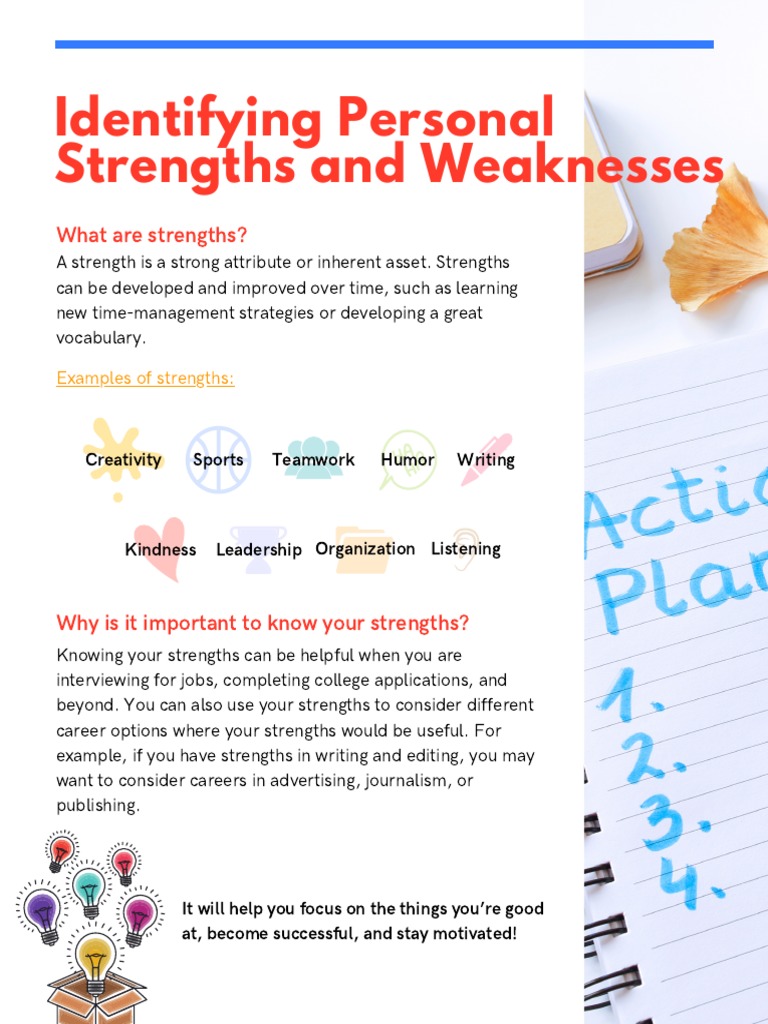
In the intricate tapestry of human behavior, strengths and weaknesses often form the dual threads that define one’s personality. Observations of the dichotomy between these traits can reveal profound insights into an individual’s character and the myriad of experiences that shape them. While we might admire the tenacity of a confident leader, we may also lament the impulsiveness that can accompany such boldness. This juxtaposition invites a deeper exploration of what truly constitutes our strengths and weaknesses.
To elucidate this nuanced interplay, let’s contemplate some quintessential examples of strengths and weaknesses in individuals, highlighting how they can coexist, influence one another, and ultimately mold a person’s destiny.
1. Empathy vs. Over-sensitivity
Empathy stands out as a remarkable strength, allowing individuals to resonate with others’ emotions and foster genuine connections. Those endowed with a high degree of empathy can navigate social landscapes with ease, often serving as the emotional barometers for their communities. However, this strength can morph into a weakness when it tiptoes into over-sensitivity. An empathetic individual might absorb the emotional turmoil of others, leading to emotional exhaustion or even anxiety. This can culminate in a detrimental cycle where their capacity for connection becomes a source of personal strife.
2. Assertiveness vs. Aggressiveness
Assertiveness is a coveted trait, particularly in leadership roles. It reflects confidence, clarity, and the ability to advocate for one’s needs and the needs of others. However, when assertiveness crosses the threshold into aggressiveness, it can alienate colleagues and friends alike. An assertive individual articulates their perspective while respecting differing viewpoints, but an aggressive person often bulldozes through conversations, disregarding the emotional landscapes of those around them. Thus, the essence of what could be a dynamic leader risks being overshadowed by an intimidating demeanor.
3. Creativity vs. Disorganization
Creativity, heralded as a driving force behind innovation and artistic endeavors, exemplifies an admirable strength in individuals. Creative thinkers possess an ability to perceive the world through a kaleidoscope of possibilities, often leading to groundbreaking ideas and solutions. However, this very strength can become a weakness when it manifests as disorganization. A creative mind may struggle to implement structure, resulting in chaotic endeavors that hinder the realization of their ideas. This paradox illustrates how a vibrant imagination, without the tether of organization, can lead to frustration and unrealized potential.
4. Loyalty vs. Stubbornness
Loyalty shines as a quintessential value, often celebrated in friendships and professional relationships. A loyal person stands by their friends and colleagues through thick and thin, cultivating trust and a sense of belonging. Yet, this commendable trait can devolve into stubbornness when individuals refuse to reassess their commitments in light of new information or circumstances. Such rigidity can impede personal growth and jeopardize relationships, as the very quality that initially endeared them to others becomes a source of conflict.
5. Diligence vs. Workaholism
Diligence is often revered in both personal and professional arenas, representing a commitment to hard work and perseverance. Diligent individuals tend to outshine peers in their pursuits, achieving excellence through unwavering effort. However, when diligence becomes an obsession, it may evolve into workaholism. This detrimental spiral leads to neglect of personal relationships and self-care, creating an imbalance that can diminish overall well-being. Consequently, what began as a strength may inadvertently morph into a weakness that hinders life satisfaction.
6. Open-Mindedness vs. Indecisiveness
Open-mindedness fosters an environment ripe for learning and growth. Individuals who embrace diverse perspectives often cultivate rich, multifaceted experiences. They readily adapt to change, which can be invaluable in today’s fast-paced world. However, this strength may oscillate towards indecisiveness, as the desire to consider all angles can paralyze decision-making. Striking a balance between being receptive to new ideas and maintaining assertiveness in choices is crucial to harnessing the power of open-mindedness without succumbing to its pitfalls.
7. Charisma vs. Manipulativeness
Charismatic individuals often captivate and inspire those around them through their charm and social prowess. This strength can manifest in effective communication, making them natural leaders and motivators. Nevertheless, charisma can be a double-edged sword, as it may slide into manipulativeness. When charm is wielded with the intention of self-serving goals rather than genuine connection, it can breed distrust and resentment among peers. Recognizing the fine line between influence and manipulation is essential to ensure that charisma enriches relationships rather than undermines them.
8. Analytical Thinking vs. Paralysis by Analysis
Analytical thinking empowers individuals to dissect complex problems and synthesize information into coherent strategies. This strength is invaluable across numerous disciplines, from business to academia. However, an over-reliance on analytical thinking can lead to paralysis by analysis, where one becomes so entrenched in data and potential outcomes that they struggle to take action. The ability to analyze is instrumental, but it must be balanced with decisiveness to avoid stagnation and missed opportunities.
In conclusion, the exploration of strengths and weaknesses reveals a compelling duality that exists within every individual. While these attributes can illuminate the path to personal and professional growth, they can also serve as reminders of the inherent complexities of human nature. Recognizing this interplay allows for a nuanced understanding of oneself and others, encouraging a journey of introspection and development. As we navigate the landscape of our traits, embracing both our strengths and weaknesses can lead to a more balanced and fulfilling existence.













