Understanding the Uniform Resource Locator
The Internet, a vast expanse of information and connectivity, is navigated through an intricate system of addresses known as Uniform Resource Locators (URLs). These digital coordinates serve as gateways, leading users from one online destination to another. To truly appreciate their significance, one must delve into the multifaceted world of URLs and the myriad ways they influence our online experience.
The Anatomy of a URL
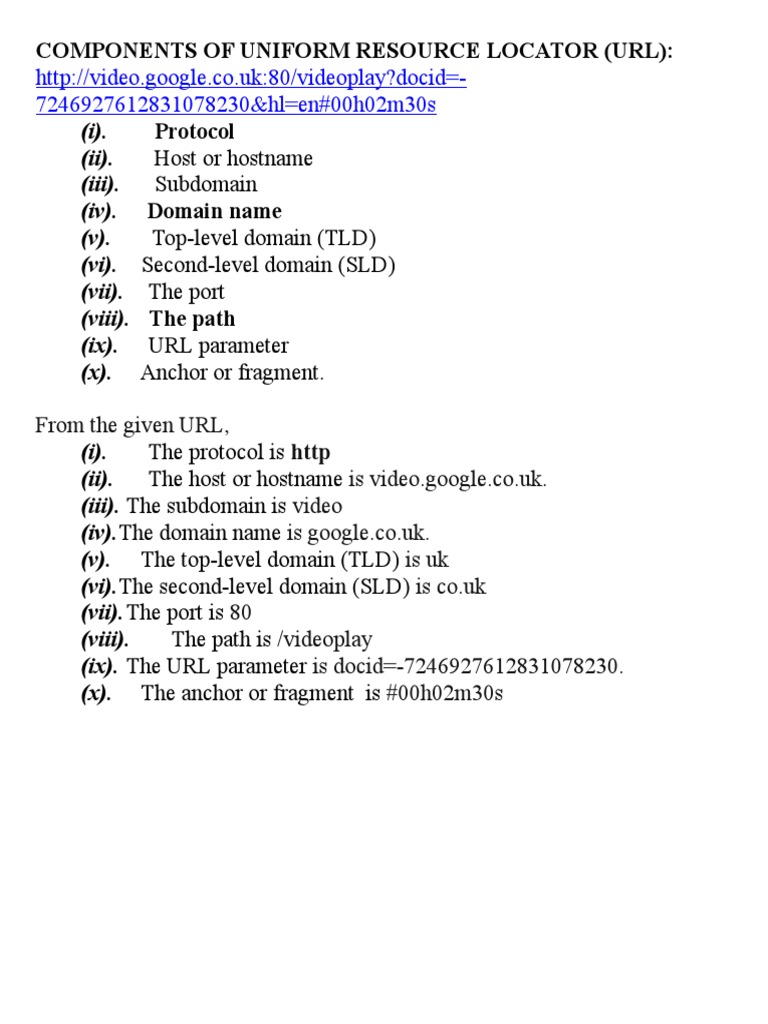
Every URL is composed of various components that work harmoniously to form a cohesive whole. At first glance, a URL might appear to be merely a web address, but it is, in fact, an intricate architecture of elements designed to facilitate seamless navigation. Let’s dissect the URL into its constituent parts:
- Protocol: The protocol is the foundational element, dictating how data is transmitted. The most common protocols are HTTP (HyperText Transfer Protocol) and HTTPS (HTTP Secure), with the latter ensuring a secure connection. This crucial distinction subliminally hints at the importance of security in our digital lives.
- Domain Name: The domain name serves as a human-readable representation of an IP address. This is where the magic begins, as it encapsulates the identity of a website. For instance, in the URL https://www.example.com, “example.com” is the domain name, signifying the specific location of resources on the Internet.
- Path: The path follows the domain name, guiding users to a specific resource on the server. This might include directories, subdirectories, or the exact position of a webpage, such as /images/photo.jpg.
- Query String: Often overlooked, the query string is pivotal for passing additional parameters to the server. It typically begins with a question mark (?) and includes various key-value pairs, allowing for dynamic content retrieval based on user inputs or preferences.
- Fragment Identifier: The fragment identifier, indicated by a hash (#), directs users to a specific section within a webpage. This adds depth to navigation, enhancing user experience by providing targeted access without redistributing traffic unnecessarily.
Analyzing a Real-World URL Example
To illustrate the complexities of URLs, let’s analyze a specific example: https://imgv2-1-f.scribdassets.com/img/document/398591739/original/2f4a6fbeff/1716319241?v=1. In this URL, we can identify various components contributing to its functionality and specificity:
- Protocol: The use of HTTPS indicates that this URL prioritizes security, encrypting the data exchanged between the user and the server.
- Domain Name: The domain scribdassets.com signifies a service associated with Scribd, a digital library. This connection provides insight into the nature of the content being accessed.
- Path: The intricate path reveals the location of a document on the server, showcasing the organization of content within an expansive library.
- Query String: The presence of a query string suggests that additional parameters dictate how the resource is presented or retrieved, perhaps affecting display size or format.
The Evolution of URLs
Historically, URLs have undergone an evolution that mirrors the growth of the Internet. In the early days, URLs were relatively simplistic; a mere string of text pointing to a location. As the Internet expanded, so did the need for more sophisticated and descriptive addresses. The introduction of uniform standards and protocols allowed users to communicate with online resources effectively.
Moreover, the expansion of the web prompted the advent of sophisticated URL structures. This evolution reflects the increase in complexity of the underlying web applications and services. Friendly URLs, characterized by simplicity and a level of readability, emerged as a strategy to enhance user engagement and search engine optimization. The question remains: are simpler URLs inherently more user-friendly, or do they mask the underlying complexity of web structures?
The Psychology of URL Usage
Why are URLs captivating? Their omnipresence in our digital lives is a testament to their critical role in communication. URLs carry an inherent promise – the promise of access to knowledge, entertainment, or profound connection. They are often gateways to new experiences and learning opportunities. This leads to a fascinating intertwining of technology and psychology; as humans, we derive satisfaction from successful navigation, reinforcing a sense of accomplishment. The thrill of clicking a URL and reaching an anticipated destination can evoke a rush, akin to solving a puzzle.
A deep-rooted exploration of URLs also uncovers narratives about trust and perception. Users often judge the credibility of a source based on its URL structure. A seemingly complex URL may provoke skepticism, while a concise, well-crafted address might inspire trust. This psychological aspect speaks to the deeper undercurrents of how information is perceived in our digital age. Are we, as users, conditioned to assess trustworthiness based on these digital coordinates?
Looking Ahead: The Future of URLs
The landscape of URLs is likely to continue evolving, driven by technological advancements and user behavior. With the advent of voice search and intelligent assistants, the way we interact with URLs may change significantly. The proliferation of mobile devices further complicates this landscape; URLs must now be adaptable, responsive, and concise to accommodate smaller screens without sacrificing clarity.
As the digital ecosystem becomes increasingly interconnected, the underlying architecture of URLs will need to adapt to enhance usability and security. It raises an intriguing question: can we maintain the functional integrity of URLs while simultaneously pursuing simplicity and user-friendliness?
Ultimately, the Uniform Resource Locator is more than just a string of text leading to a website. It represents a tapestry of interconnected relationships, embodying security, user experience, and the psychology of navigation. As we continue to delve into the digital landscape, it is pertinent to appreciate the profound impact and the intricate artistry behind every URL we encounter.