In the grand tapestry of language, punctuation serves as the threads that weave coherence and clarity into the narrative fabric. Among these essential tools, the semi-colon stands as a sophisticated yet often misunderstood device, bridging the gap between sentences in a manner that is both elegant and impactful. Let’s delve into the artful world of the semi-colon, exploring its utility through a myriad of examples that illuminate its unique appeal.
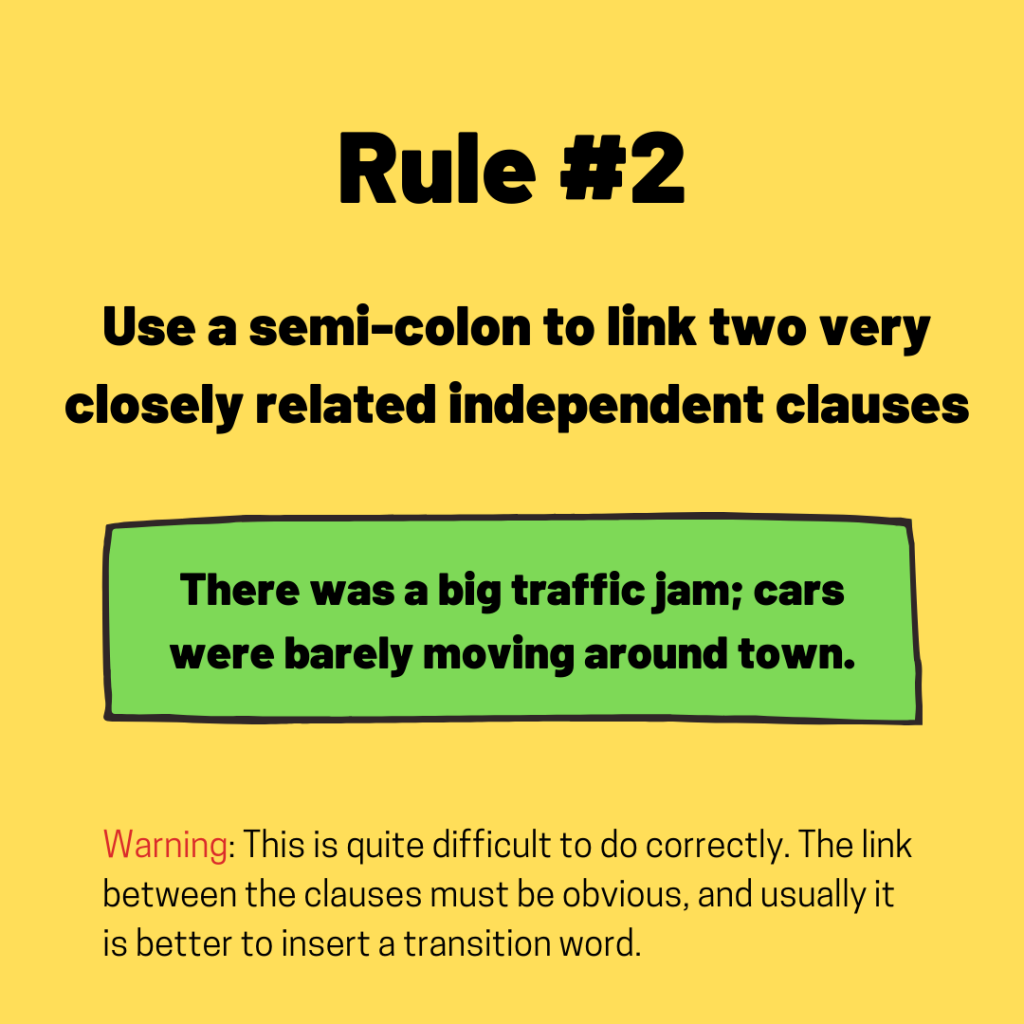
The semi-colon (;) is not merely a decorative mark; it acts as a linguistic fulcrum, providing balance between two independent clauses that hold a thematic or contextual relationship. For instance, consider the following example: “I have a big exam tomorrow; I can’t go out tonight.” Here, the semi-colon is the glue binding two closely related thoughts. Each clause could stand alone, yet the semi-colon indicates a nuanced connection, a suggestion of inevitability or consequence.
By utilizing the semi-colon, one invites the reader into a deeper contemplation of the relationship between ideas. It serves a purpose beyond mere separation; it signifies that the second clause qualifies or enhances the first. Take this illustration: “The night was quiet; not even a breeze stirred the leaves.” This example immerses the reader in the tranquility implied, inviting them to feel the weight of stillness that envelops the scene.
Furthermore, the semi-colon offers a fluidity that commas alone cannot achieve. Commas, while versatile, often fall short when attempting to join independent clauses; they can create run-on sentences that lack clarity. The semi-colon, in contrast, wields authority and sophistication. For example: “She loves painting; her canvases burst with color and life.” Notice the elegant rhythm that emerges from this construction; it creates an intrinsic linkage between her passion and its manifestation, inviting the reader to envision the vibrancy of her artwork.
Moreover, semi-colons shine in lists where complex items must be delineated. In such instances, they prevent confusion and enhance readability. Consider this scenario: “During our trip, we visited Paris, France; Rome, Italy; and Barcelona, Spain.” Here, the semi-colons clarify which cities belong to which countries. Amidst the chaos of information, they serve as quiet sentinels, ensuring clarity in presentation.
Another enchanting aspect of the semi-colon is its ability to convey contrast. It can deftly juxtapose opposing ideas, infusing the text with a dynamic tension. For instance: “He was a man of few words; she, a fountain of ideas.” This juxtaposition not only highlights the differences but also enriches character development, providing insights into both individuals’ personalities. The reader is compelled to ponder the dynamics of their interaction.
As we delve deeper into the semi-colon’s metaphorical realm, it is akin to a bridge arching over a river; it connects two distinct lands, yet encourages exploration of the waters that lie beneath. Imagine the connections within your thoughts as islands in a vast sea. The semi-colon becomes the vessel that transports ideas, allowing them to flow freely while preserving their individuality.
Moreover, the semi-colon has the ability to encapsulate moods and tones with a finesse that eludes more rudimentary punctuation. For example: “The sun set over the horizon; a quiet, melancholic beauty hung in the air.” In this sentence, the semi-colon accentuates the contemplative atmosphere, drawing the reader into an emotion-laden landscape that speaks volumes beyond mere words.
One must also acknowledge the semi-colon’s role in dialogue, where it can reflect the complexities of human interactions. Consider the sentence: “I don’t understand; why is this so difficult for you?” Here, the semi-colon creates an interruption that reflects confusion and a need for clarity. It encapsulates the moment, granting the reader insight into the speaker’s emotional state while maintaining a coherent structure.
Embrace the semi-colon as a stylistic choice that enhances your writing repertoire. Its usage cultivates an air of intellectualism, while simultaneously granting an artistic flair. It is a tool that, when wielded adeptly, helps shape the narrative into a resonant melody, where every note plays harmoniously with the next.
Ultimately, mastering the semi-colon is akin to cultivating an intricate garden of thoughts; it requires patience, understanding, and an appreciation for subtlety. As we infuse our writing with the richness of this punctuation mark, we foster not only comprehension but also a profound connection with our audience. The semi-colon beckons us to pause, to reflect, and to appreciate the nuances that lie between the lines of our words.
In conclusion, the semi-colon is more than just punctuation; it embodies a philosophy of connectivity and complexity in thought. By skillfully integrating this enchanting symbol into your writing, you invite your audience to journey alongside you, where ideas intertwine and stories flourish. Let it be a guiding force in your literary endeavors, bridging not just sentences but also the very essence of expression itself.