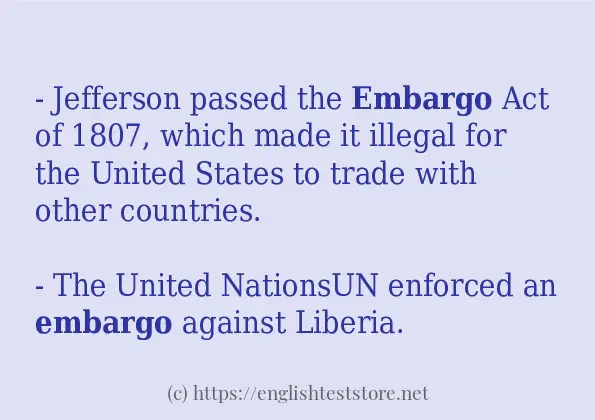
In the complex tapestry of global relations, the term “embargo” frequently surfaces, eliciting a myriad of reactions ranging from intrigue to apprehension. An embargo, in its most fundamental essence, is a government-imposed restriction on trade or commerce with specific countries or entities. While often executed with political motivations, its implications can resonate deeply within the fabric of international relations, economics, and even humanitarian efforts. This article delves into the multifaceted world of embargoes, elucidating real-world examples to demonstrate their profound impact on nations and their populations.
One of the most notable and historically significant examples of an embargo is the United States’ embargo against Cuba. Initiated in the early 1960s, the U.S. embargo was a reactionary measure to a series of events that culminated in the Cuban Revolution. Under Fidel Castro’s regime, Cuba aligned itself with the Soviet Union during the Cold War, alarming the United States and leading to a stand-off that would last for decades. The embargo restricted a wide array of goods, severely limiting Cuba’s access to essential resources, including food and medicine.
Over time, this embargo shaped Cuba’s economy and society in ways that are both stark and nuanced. The island nation struggled with shortages that were exacerbated by the U.S. restrictions; however, it also fostered an environment of resilience and innovation. The long-term isolation encouraged the development of a unique agricultural sector, where urban gardening and local farms became necessary responses to import shortages. In a fascinating twist of circumstances, the embargo led to a redefinition of Cuba’s domestic production capabilities and a push towards self-sufficiency.
Moreover, the embargo against Cuba has emerged as a symbol of ideological divides. The persistence of the embargo reflects deeper global rifts between capitalist and socialist ideologies. It incites debate regarding human rights abuses in Cuba and the ethicality of punishing an entire population for the actions of its government. This duality encapsulates the very essence of what an embargo can symbolize: a complex interplay of morality, political strategy, and international diplomacy.
Another poignant example of an embargo that highlights its ramifications in contemporary settings is the sanctions imposed on Russia following its annexation of Crimea in 2014. As a response to Russia’s aggressive foreign policy and violation of Ukrainian sovereignty, the United States and several European nations swiftly implemented economic sanctions aimed at key sectors, including finance, energy, and defense.
The ramifications of these sanctions on Russia’s economy have been profound. Initially, Russia experienced a significant downturn, leading to a depreciation of its currency and inflationary pressures. However, over time, the country has sought to adapt. The Russian government launched initiatives to bolster domestic industries and reduce reliance on foreign goods. This led to an unexpected outcome: a gradual development of alternative supply chains and a resilience that might not have materialized without the impetus of sanctions. More than just a burden, the embargo against Russia exemplifies how states can pivot in response to economic pressures, illustrating a dynamic that is as fluid as it is unpredictable.
Furthermore, embargoes can serve as a tool for humanitarian intervention, albeit a controversial one. The embargo against Iraq in the 1990s is a tragic example. Imposed after Iraq’s invasion of Kuwait, the comprehensive sanctions resulted in severe humanitarian crises. While intended to pressure Saddam Hussein to withdraw, the embargo culminated in widespread hardship for ordinary citizens, raising ethical concerns regarding civilian suffering as collateral damage in geopolitical conflicts.
As the world navigates an increasingly interconnected landscape, the questions surrounding embargoes become more convoluted. The ongoing debates about the efficacy and morality of such actions reveal a society in search of solutions. For instance, alternatives like targeted sanctions which aim to isolate specific individuals or entities, are being explored as potential means to mitigate extensive civilian suffering while still achieving strategic political goals.
The fascination with embargoes stems not only from their political implications but also from their effects on daily life and culture. In nations under embargo, creative expressions emerge, shedding light on resilience in the face of adversity. From literature to art, the struggles endured often catalyze rich cultural movements that assert identity and foster community, making the discourse surrounding embargoes both poignant and multifaceted.
In conclusion, the examination of embargoes reveals the intricate dance between power, resistance, and resilience. From the longstanding embargo on Cuba to the more recent sanctions on Russia, each case provides insights into how nations react under pressure and the unexpected innovations that arise from adversity. As global dynamics evolve, understanding the implications of embargoes will be crucial for future diplomatic engagements and humanitarian considerations. Ultimately, these actions reflect not just policy decisions but are emblematic of the broader human experience, highlighting the resilience of communities and the enduring quest for dignity against the odds.