When embarking on the journey of drafting an incident report, have you ever pondered the intricacies of what truly constitutes a well-crafted document? The task may appear straightforward, yet the nuances involved often pose significant challenges. Whether you are confronting workplace mishaps, accidents, or security breaches, the manner in which you encapsulate these events can profoundly influence resolutions and future preventative measures. So, how does one rise to the occasion of creating an exemplary incident report?
To navigate this terrain, let’s explore the essential elements of an incident report, examine a sample example, and understand its overarching importance in various sectors.
Understanding the Purpose of an Incident Report
At its core, an incident report serves as an official documentation of an unforeseen event, offering clarity for all parties involved. This document is instrumental not only for regulatory compliance but also serves as a vital tool for data-driven decision-making. The primary purpose of this report is not just to register the occurrence but to facilitate learning and improve safety measures. Thus, the crux of an effective report lies in its perspicuity, coherence, and comprehensiveness.
Breaking Down the Components of an Incident Report
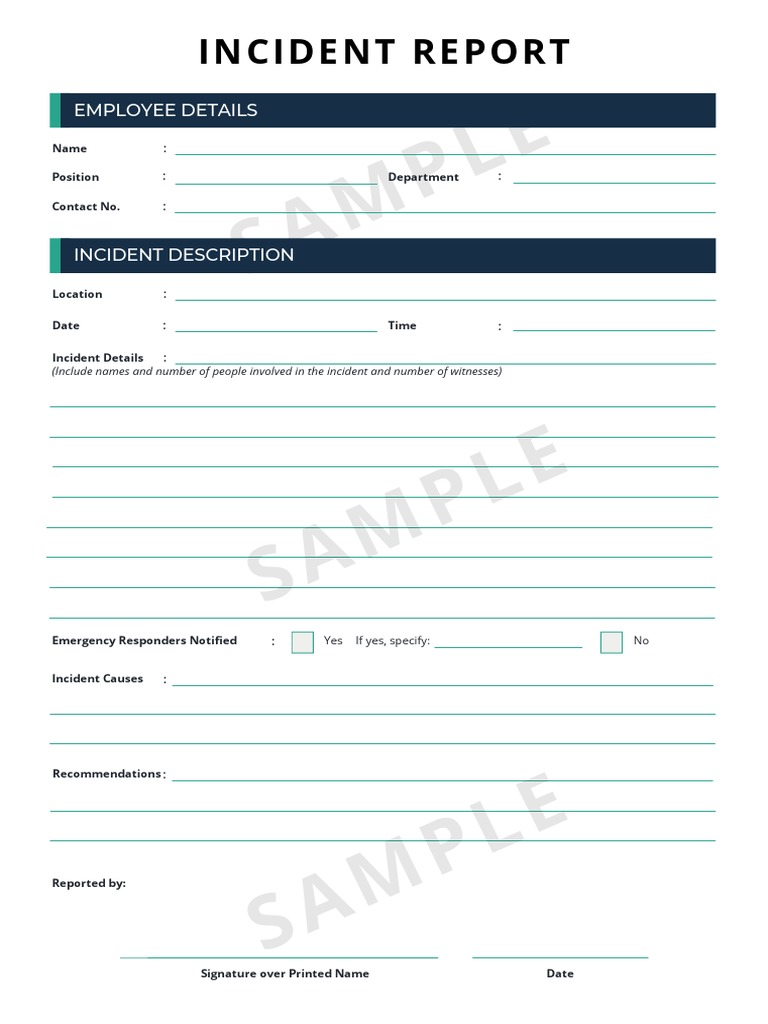
To craft a compelling incident report, one must consider several key components:
- Title: Begin with a succinct title that indicates the type of incident.
- Date and Time: Record the exact date and time when the incident transpired to establish an accurate timeline.
- Location: Specify where the incident occurred, providing exact details to avoid ambiguity.
- Individuals Involved: List all parties affected by the incident, including witnesses and individuals who reported it.
- Detailed Description: Provide a thorough account of the incident, outlining what happened before, during, and after it occurred.
- Contributing Factors: Identify any elements that may have led to the incident—be they environmental, procedural, or human errors.
- Immediate Action Taken: Note any immediate measures implemented to address the situation or mitigate further risk.
- Recommendations for Future Prevention: Based on your analysis, suggest strategies to prevent a recurrence, emphasizing proactive measures.
- Report Author: Conclusively, include the name and position of the individual who composed the report, ensuring accountability.
A Sample Example of an Incident Report
Consider crafting an incident report for a workplace injury that occurred during a machinery operation. This scenario serves as our illustrative guide:
Title: Machinery Incident Report – Employee Injury
Date and Time: September 15, 2023, at 10:30 AM
Location: Production Floor, Assembly Line 2
Individuals Involved: John Doe (Employee), Jane Smith (Witness), Emily Davis (Supervisor)
Detailed Description:
At 10:30 AM on September 15, 2023, John Doe operated the assembly line machinery without incident until the system malfunctioned, causing the machinery to cease function abruptly. In the process of attempting to troubleshoot the problem, Mr. Doe’s hand was inadvertently caught in the operational mechanism as it restarted unexpectedly. Immediate cries for help were raised, prompting a response from nearby employees, including Jane Smith and Emily Davis, who promptly halted all machinery operations.
Contributing Factors:
The malfunction appears to stem from inadequate maintenance checks and unclear operational protocols communicated to the workforce. A review of training procedures unveiled gaps in educating employees on emergency shutdown procedures, which exacerbated the situation.
Immediate Action Taken:
Following the incident, first aid was administered to Mr. Doe by the on-site safety officer, and he was subsequently transported to the nearest medical facility for further evaluation. The machinery was locked out and tagged to prevent further use until a comprehensive inspection could be conducted.
Recommendations for Future Prevention:
To avert similar incidents in the future, it is recommended that the company implement a strict scheduling of regular maintenance checks. Moreover, an enhanced training program focusing on safety protocols, emergency procedures, and operational guidelines should be instituted. Additionally, visual aids may be deployed throughout the production area to remind employees of the necessary safety precautions.
Report Author: Emily Davis, Safety Supervisor
The Importance of Incident Reports in Organizational Dynamics
Crafting precise and informative incident reports transcends the mere act of documentation; it embodies an organization’s commitment to safety and accountability. These records serve as a rich resource for analyzing why incidents occur and how, through a judicious review of past events, a company can safeguard its employees and assets. Above all, the ability to diagnose weaknesses within the operational framework allows organizations to evolve steadily, adapting to new challenges and unforeseen crises with resilience.
In a world where unpredictability looms, adeptness in generating detailed incident reports is an invaluable skill. The challenge lies not just in recording an event, but in fostering a culture of safety, continuous improvement, and proactive problem-solving. So, as you contemplate your next incident report, remember: each detail matters, and with the right approach, you can transform potential adversities into opportunities for growth.