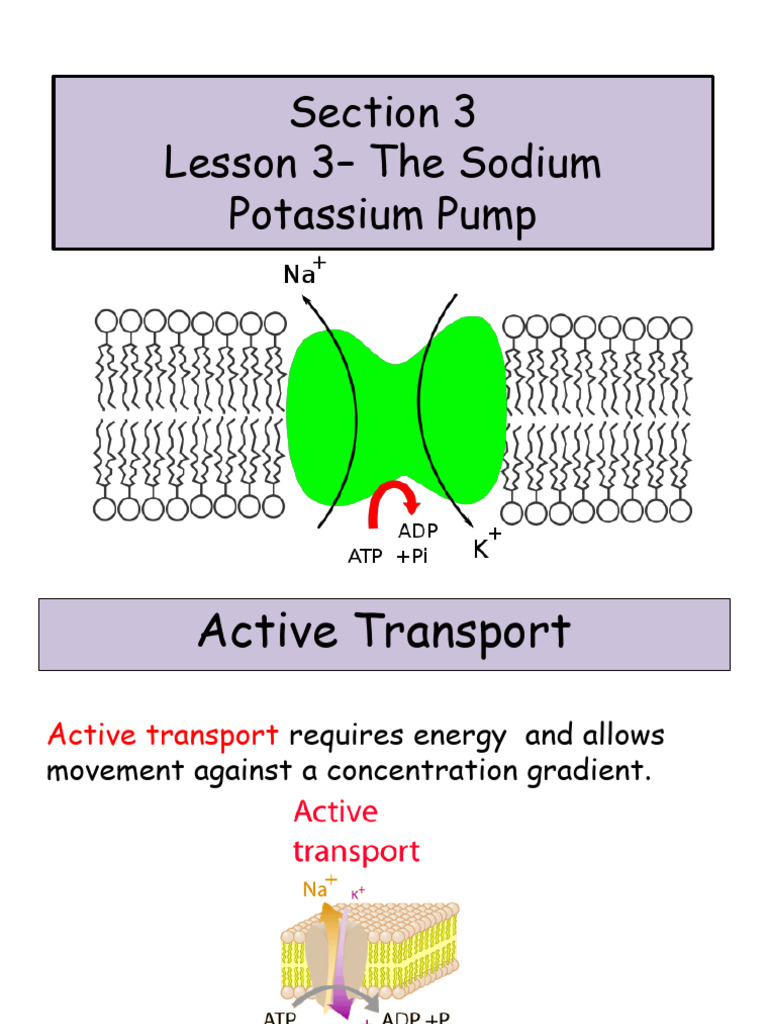
The fascinating world of cellular processes is filled with intricate mechanisms that sustain life, one such mechanism being the sodium-potassium ion pump (Na+/K+ ATPase). This remarkable protein complex is a quintessential example of active transport, a process pivotal to maintaining the homeostasis of living cells. But how does this enzyme work, and why is it crucial to our understanding of cellular biology? Let’s embark on a journey into the depths of this molecular marvel and discover its multifaceted nature.
At its core, the sodium-potassium ion pump exemplifies the intricate balance that cells must maintain to ensure their survival. This pump operates against the natural gradients of sodium and potassium ions, vigorously working to transport sodium ions out of the cell while simultaneously bringing potassium ions in. The energy required for this process is derived from the hydrolysis of ATP (adenosine triphosphate), the cell’s energy currency. Through this action, the pump orchestrates a delicate equilibrium, allowing the cell to thrive in its environment.
One of the most striking features of the sodium-potassium pump is its capacity for selective permeability. Each cycle of the pump translocates three sodium ions out and two potassium ions into the cell. This unequal exchange not only conserves the vital concentration of potassium ions within the cytoplasm but also contributes to the generation of a negative membrane potential—a condition essential for numerous cellular functions. The role of membrane potential cannot be overstated; it is the bedrock for the conduction of nerve impulses, the contraction of muscles, and the regulation of cellular signaling pathways.
Moreover, the sodium-potassium pump serves as an elegant testament to evolution’s penchant for efficiency and adaptability. Research has shown that the pump’s mechanism has remained remarkably conserved throughout evolution, with variations observed across different species. From the humble unicellular organisms to the complex neural networks in higher vertebrates, the fundamental principles governing the pump remain strikingly similar. This conservation across species hints at the pump’s vital importance in cellular function, emphasizing its adaptability in response to ever-changing environments.
Beyond its basic function, the sodium-potassium pump unveils intriguing connections to various physiological phenomena. For instance, the interplay between the pump and cellular signalling pathways often provides deeper insights into disease mechanisms. Disruptions in the pump’s activity have been implicated in a plethora of health issues, including hypertension, heart failure, and neurological disorders. The investigation of these associations not only sheds light on the disease’s underlying pathology but also opens doors for novel therapeutic interventions.
Furthermore, the sodium-potassium pump embodies a paradigm shift in our understanding of homeostasis. Traditionally, homeostasis was viewed as a passive state, yet the pump’s active role illustrates that maintaining balance is an energetically demanding endeavor. It is a reminder of the dynamic nature of biological systems that are constantly at work, requiring the concerted effort of multiple components to achieve equilibrium. This realization leads to a broader contemplation of how other active transport systems contribute to the holistic functioning of an organism.
Interestingly, the sodium-potassium pump is increasingly recognized for its role in cellular communication. The gradients established by the pump are fundamental to the propagation of action potentials in neurons, the signals that transfer information throughout the nervous system. The rapid influx and efflux of ions across the membrane, facilitated by the pump and voltage-gated ion channels, allows for the swift transmission of messages, forming the foundation of our neural architecture. Understanding this process broadens one’s perspective on how cellular dynamics orchestrate complex behaviors and responses in an organism.
Moreover, the sodium-potassium pump demonstrates a fascinating intersection of biochemistry and bioenergetics. The reckoning between energy expenditure and ion transport provides a compelling platform for biophysicists studying cellular metabolism. In an era where energy efficiency remains paramount, the mechanistic insights garnered from the pump may inform novel strategies for enhancing metabolic pathways, potentially leading to advances in bioengineering and synthetic biology.
In conclusion, the sodium-potassium ion pump stands as a pivotal example of the intricate interplay between active transport and cellular physiology. Its function exemplifies the necessity of maintaining homeostasis and illustrates how such microscopic mechanisms resonate throughout biological systems. By delving deeper into the pump’s functions and implications, we can foster a greater appreciation for the complexity of life at the cellular level. The learning journey does not end here; rather, it melds into a broader exploration of cellular dynamics, inviting questions about the myriad ways in which organisms adapt to thrive in an ever-evolving world.