
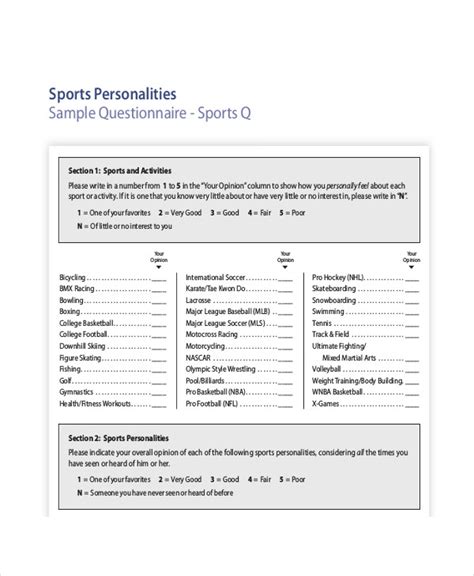
In the captivating realm of men’s soccer, akin to the intricate brushstrokes of a master painter, questionnaires are deftly woven to discern the essence of players’ experiences, preferences, and performance metrics. These forms serve as a tapestry of insights, unraveling the complex fabric of a player’s psyche, physicality, and tactical understanding. But what precisely do these questionnaires entail? In this exploration, we unveil the layers behind what constitutes men’s soccer questionnaires and decode their myriad meanings.
At the core of these questionnaires lies a fundamental query: what do they seek to elucidate? Primarily, they are designed to assess players’ physical fitness, mental resilience, and tactical awareness. Just as a maestro fine-tunes an orchestra, coaches and sports scientists employ these forms to harmonize team dynamics and optimize individual performance. By amalgamating responses from these tools, coaches glean vital information that can pivot player development and strategy. Let us delve into the essential components of these assessments.
1. Physical Performance Metrics
The first section of a men’s soccer questionnaire typically revolves around physical performance metrics. Questions in this domain often probe into endurance levels, strength capabilities, and agility tests. With inquiries ranging from “How many goals can you sprint for 30 seconds?” to “What is your vertical leap?”, these metrics paint a vivid portrait of a player’s physical prowess.
Understanding these individual benchmarks is paramount. Imagine a sturdy oak tree, each ring representing a year of growth; similarly, performance metrics reflect not just current capabilities but a player’s trajectory over time. A detailed assessment can delineate not only strengths but also areas begging for enhancement, guiding tailored training regimens that can cultivate a robust athlete.
2. Psychological Assessment
Next comes the nuanced realm of psychological assessment. In this section, surfers ride the waves of mental fortitude and resilience. Players may answer questions about previous experiences under pressure, their confidence levels during pivotal matches, and how they cope with setbacks.
This psychological dimension serves as a litmus test for an athlete’s preparedness to navigate the turbulent waters inherent in competitive sports. Mental strength, much like an anchor, stabilizes a player amidst the storm; understanding where a player stands in this regard can catalyze interventions that build unwavering confidence and mental clarity.
3. Skill Assessment and Tactical Understanding
Moving onward, skill assessment emerges as another critical facet. Here, players might respond to prompts regarding their preferred positions, skill sets, and strategic inclinations during gameplay. Questions could include “Describe your approach to a counter-attack” or “What is your preferred style of passing?” This section aids coaches in understanding not only what players can offer but also how they perceive their roles on the field.
Imagine a chess game where each player visualizes the board differently; this analogy aptly captures the unique viewpoints players bring to their understanding of tactics in soccer. By analyzing their responses, coaches can cultivate strategies that accentuate these distinctive perspectives, fostering a cohesive yet versatile game plan.
4. Training and Recovery Preferences
The realm of training and recovery preferences also garners attention within these questionnaires. Players may elaborate on their preferred training modalities, recovery techniques, and dietary habits. Engaging with questions such as “How do you prefer to recover after a match?” or “What role does nutrition play in your training regimen?” unveils not only players’ lifestyle choices but also their commitment to optimal performance.
This emphasis on recovery is not merely supplementary; it is the silent guardian that enables players to bounce back, fully recharged and invigorated. Like a well-tended garden, players flourished when provided with tailored recovery strategies that resonate with their individual preferences.
5. Social Dynamics and Team Cohesion
A particularly fascinating element within men’s soccer questionnaires targets social dynamics and team cohesion. Relationships among team members can profoundly impact performance; thus, inquiries regarding comfort levels within the team environment and social interactions are pivotal. A player may be asked, “How do you perceive team camaraderie during high-pressure situations?”
Such insights reflect not merely personal sentiments but the collective spirit of the team. Much like notes in a symphony, whereby each contribution is vital for achieving harmonious output, understanding players’ perceptions of team interactions facilitates the cultivation of a resilient and collaboratively driven unit.
Conclusion: The Real-Life Impact
The significance of men’s soccer questionnaires transcends the realm of paperwork; they serve as lifelines tethering players, coaches, and teams together. The analysis derived from these forms shapes the future of soccer athletes, enabling them to transcend their perceived limitations while fostering a deeper understanding of their teammates.
Ultimately, these questionnaires encapsulate the narrative of the soccer journey. By decoding their elements—from physical performance metrics to psychological resilience, tactical understanding, training preferences, and social dynamics—coaches consolidate the myriad threads that compose the intricate tapestry of men’s soccer. In embracing these insights, the essence of the game flourishes, echoing a profound ethos: that understanding oneself and one’s team is pivotal, but the unwavering passion and commitment to the sport are what ultimately lead to its beauty.












