
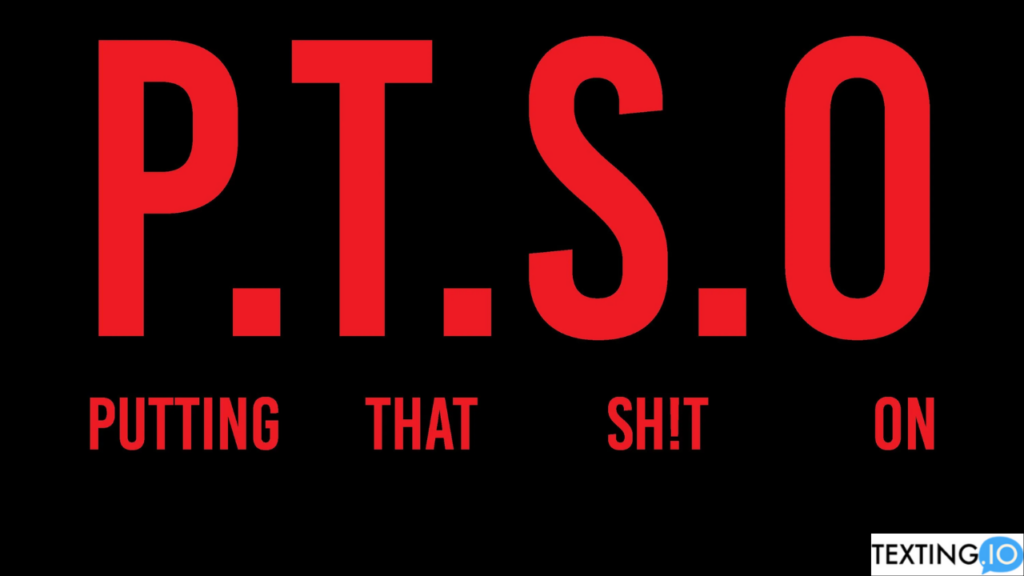
In a world rife with acronyms, comprehending their myriad meanings can often feel overwhelming. One such abbreviation that may have crossed your radar is “PTSO”. It’s essential to explore the depth of this term, particularly since it might carry varying connotations in different realms of conversation. This article will dissect the meanings of PTSO, especially in medical contexts and informal texting, inviting you to broaden your understanding of this intriguing acronym.
To begin, let’s examine the formal definition of PTSO within medical terminology. From a clinical standpoint, PTSO commonly stands for “Post-Traumatic Stress Order.” This term references a psychological condition that can manifest following exposure to traumatic events. Often associated with military personnel, this disorder has been increasingly recognized across various sectors of society, affecting individuals who have experienced car accidents, natural disasters, or other life-altering events. Understanding PTSO in this medical context is vital because it underscores the importance of addressing mental health issues that arise from trauma.
Within the framework of post-traumatic stress, symptoms can include severe anxiety, flashbacks, and uncontrollable thoughts about the traumatic experience. Individuals with PTSO may find themselves experiencing an emotional numbness, difficulty in forming relationships, or a pronounced sense of isolation. Acknowledging these symptoms is crucial not only for those affected but also for family members and friends who aim to provide support. Counseling, cognitive-behavioral therapy, and mindfulness practices have shown efficacy in helping individuals manage their symptoms and reclaim their lives.
Moving forward, we transition from the clinical to the more colloquial. In the realm of texting and digital communication, PTSO has carved out an entirely different niche. In this context, it stands for “Please Take it Slow.” The incorporation of this phrase is particularly prevalent among younger generations, often employed in digital messaging platforms where brevity reigns supreme. Yet, while its meaning may seem simplistic, the nuance it carries is profound. In a frenetic world, speed can overshadow genuine connection and understanding.
When someone sends a message expressing PTSO, they are subtly inviting the other person to take a moment—to reflect, to think, or to savor a particular detail before moving forward. This call for a measured approach can serve as a reminder to pause amid the hustle of modern communication. It advocates for patience, encouraging individuals to cultivate relationships that are founded on thoughtful interaction rather than mere expediency. In essence, each time PTSO flits across our screens, it evokes a necessary shift in perspective—one that champions deliberation and mindfulness over haste.
Bridging these two interpretations, it becomes evident that the juxtaposition of PTSO’s meanings provides an intriguing commentary on human experience. On one hand, we grapple with psychological turmoil—an aftermath of trauma that often demands immediate and thoughtful intervention. On the other hand, we are engaged in a ceaseless dance of instant messaging—a terrain fraught with the temptation to rush through interactions, missing the richness of deeper exchanges that heartfelt conversations can elicit. The convergence of these meanings invites a contemplative dialogue on how we communicate our needs and vulnerabilities.
Delving deeper into the ramifications of PTSO reveals a fascinating dimension of modern discourse. As society becomes increasingly aware of mental health issues, conversations surrounding PTSO in a medical context have gained traction, emphasizing the importance of stigma reduction and open dialogue. Professionals and advocates are working tirelessly to ensure that those suffering from PTSO can achieve the support they necessitate, breaking down barriers that have historically impeded access to care.
Conversely, the texting interpretation of PTSO reflects a broader cultural shift—a longing for connection that is both meaningful and nurturing. The usage of “Please Take it Slow” can prompt individuals to be more conscious of their choices in communication. It encourages a mindfulness that is often eclipsed by the rapid-fire nature of today’s society. The acknowledgment of the need for slowing down can cultivate environments where authentic relationships thrive, ultimately enriching our social fabric.
In addition to the psychological implications, exploring the etymology of PTSO reveals its interesting evolution. Both definitions underscore humanity’s inherent struggles, whether they arise from the remnants of war or the frenetic connectivity offered by technology. This duality prompts one to consider: how can we integrate these lessons into our daily lives? Adopting a PTSO mindset might involve taking proactive steps in caring for our mental health—reaching out for help when needed or simply applying the principle of slowing down in our interactions with others.
Furthermore, recognizing and addressing PTSO in both contexts can create a community dynamic that values empathy and understanding. By articulating the necessity of taking things slowly, we pave the way for connections that foster resilience and healing. Such interactions can extend beyond personal relationships to include collaborative environments—workplaces, schools, and community organizations—that prioritize mental health and open communication.
So, the next time you encounter PTSO, take a moment to reflect on the rich layers embedded within this simple abbreviation. Whether contemplating the complexities of mental health issues or appreciating the virtues of slow and deliberate communication, PTSO serves as a compelling reminder of the intersection between our struggles and our relationships. In a fast-paced world, embracing its dual meanings not only aids our understanding but also enriches our capacity to connect with one another on a profound level.












