
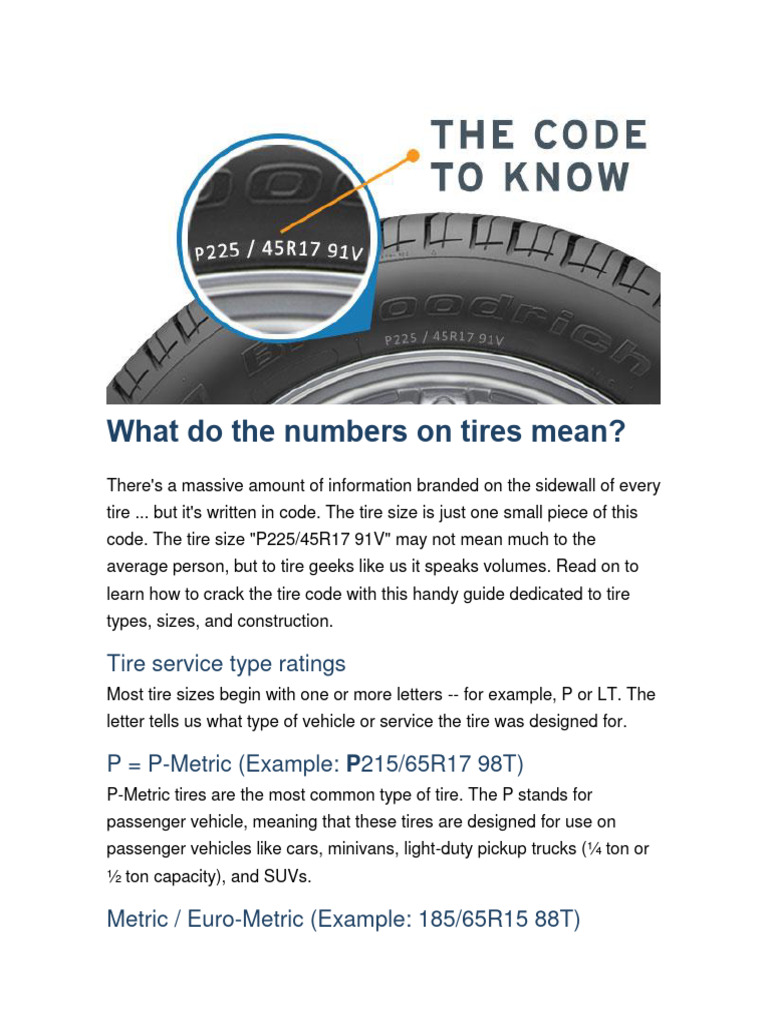
Have you ever glanced at your tires and wondered what all those numbers and letters emblazoned on the sidewalls signify? You’re not alone! Many drivers are perplexed by the cryptic codes that wrap around their tires. This playful puzzle of letters and digits can indeed present a challenge, particularly for those who may not be mechanically inclined or are merely unaware of their significance. Understanding tire codes is not only essential for ensuring safety on the road but also pivotal for maintaining optimal vehicle performance. Let’s dive into the mysterious world of tire codes and unravel their meanings.
At first glance, a standard tire code like “P215/65R15 95H” may seem like gibberish. However, each component serves a specific purpose, conveying crucial information about the tire’s specifications. Let’s embark on an illuminating journey through these tire codes, decoding them one element at a time.
1. The Prefix: Understanding Tire Types
The tire designation begins with a letter that represents the type of tire. The most common prefix is “P,” which stands for “P-metric,” indicating a passenger car tire. For example, in our earlier code, the “P” in “P215” denotes that this tire is designed primarily for passenger vehicles.
Other common prefixes are “LT” for light trucks and “ST” for specialty trailers. Understanding this prefix helps in selecting the appropriate tire based on your vehicle’s category, ensuring compatibility with your driving needs.
2. Section Width: The Numbers Before the Slash
Next, we encounter the section width, which is the first number in the code. In our example, it’s “215.” This number measures the tire’s width in millimeters, taken from sidewall to sidewall when the tire is mounted and inflated. A wider tire usually offers improved traction, while a narrower tire can enhance fuel efficiency. So, if you desire grip and stability, a tire with a larger section width might be your best bet.
3. Aspect Ratio: The Intricacies of Sidewall Height
Following the section width is the aspect ratio, represented by the number after the slash (the “65” in this case). This ratio compares the tire’s sidewall height to its width. If we apply simple math, the aspect ratio shows that the sidewall height is 65% of the tire’s width. A lower aspect ratio typically results in a shorter sidewall and a sportier driving experience; however, it may compromise ride comfort. Choosing the right aspect ratio depends on your comfort versus performance preferences.
4. Construction Type: The Letter Following the Aspect Ratio
The next crucial piece of information is the construction type, denoted by the letter “R” in our example. The “R” signifies that the tire is of radial construction, which is the most common type in modern tires. Radial tires have plies that radiate outward from the center, providing better handling, increased tread life, and improved fuel efficiency. Other construction types may include “D” for diagonal or bias-ply tires, though these are less common.
5. Rim Diameter: The Size of the Wheel Fitment
Next up is the rim diameter, indicated by the number that follows the construction type (the “15” in our case). This number reveals the diameter of the wheel in inches that the tire fits. For instance, a “15” means the tire is designed for a 15-inch wheel. Selecting a tire with the correct rim diameter is pivotal, as mismatched sizes can cause handling issues and potentially unsafe driving conditions.
6. Load Index: Bearing the Weight of the Vehicle
Moving on, we arrive at the load index, represented by the two-digit number that follows the rim diameter (the “95” here). This number indicates the maximum weight, in pounds, that the tire can support when properly inflated. To put it into perspective, a load index of 95 equates to a load capacity of approximately 1,521 pounds. It’s imperative to select a tire with an appropriate load index that accommodates your vehicle’s weight to ensure stability and safety.
7. Speed Rating: Knowing How Fast You Can Go
Finally, the tire code concludes with the speed rating, shown by the letter “H” in our example. This classification indicates the maximum speed the tire can safely maintain under optimal conditions. The “H” denotes a speed rating of up to 130 mph. Each letter corresponds to a specific speed range. Hence, when selecting tires, it is vital to ensure the speed rating aligns with your vehicle’s capabilities and your driving habits.
8. The Importance of Understanding Tire Codes
Understanding the various components of tire codes is fundamental for safe driving and effective tire maintenance. It empowers drivers to make informed choices when purchasing replacements or upgrades, enabling them to select tires that best suit their driving style, vehicle type, and environmental conditions.
In conclusion, while tire codes may initially appear to be an enigma, they are essential clues that serve a purpose. By comprehending these cryptic symbols, drivers can conquer the challenges associated with tire selection, ensuring their vehicles perform optimally and safely. So, the next time you encounter a row of numbers and letters on your tires, remember that behind those codes lies a wealth of information waiting to be deciphered!












