
In today’s digital age, where communication often transcends traditional boundaries, slang codes infiltrate our everyday interactions, offering layers of meaning that can easily elude those unacquainted with them. One such intriguing example is the term “410.” Delve deeper with us into this relatively obscure yet captivating expression, often cloaked in the veil of contemporary vernacular.
To the uninitiated, “410” might merely appear as a numeral combination. However, within the context of mobile messaging and internet lingo, it clandestinely encapsulates the phrase “gone.” The origins of this particular slang can be traced to the familiar speech patterns of the younger generation, who often prefer brevity and creativity in their exchanges. Instead of framing a full sentence, one can simply drop “410” to indicate that someone or something has departed or is no longer present.
Yet, this interpretation merely scratches the surface. Understanding “410” also requires a foray into the nuances of online communication where contextual significance reigns supreme. Is it a casual message to a friend confirming that a mutual acquaintance has left a party? Or perhaps a cleverly devised means of signaling to a loved one that their attention is required elsewhere? The multifaceted nature of this implicit code fuels the intrigue that surrounds it, prompting thoughts about the underlying motivations of those who use such phrases.
Exploring further, one realizes that slang codes, much like “410,” do not exist in isolation. They are part of an extensive lexicon that reflects societal shifts and cultural influences. Innovation in expressive language showcases generational traits and serves as a barometer for the collective psyche. With internet culture evolving at breakneck speed, new codes are constantly birthed, reshaping the landscape of language and communication.
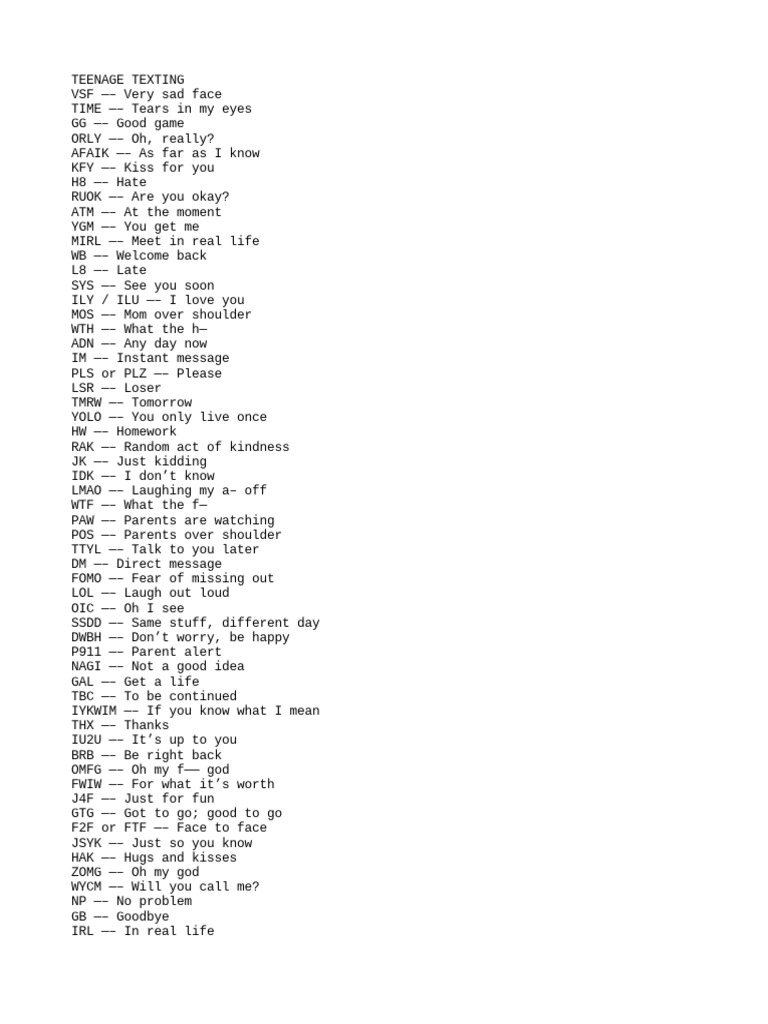
Consider how “410” fits within the grand tapestry of internet slang. For instance, there are countless acronyms that have similarly gained traction, often depending on current trends, memes, and social media platforms. These expressions serve as both a form of shorthand and a communal bond, signifying membership within a particular group. Whether it’s the universally recognized “LOL” for laughter or the more niche “FOMO” indicating a fear of missing out, these terms invite curiosity about their origins and meanings.
Moreover, delving into “410” also invites an exploration of the emotional undertones implicit in such slang. It often conveys a certain nonchalance or lightheartedness about someone’s absence. The casualness of saying someone is “410” suggests an atmosphere of ease; it implies a shared understanding that life continues, relationships morph, and connections evolve. This linguistic evolution, undeniably, captures the transient essence of modern interactions.
There is, however, another layer to “410” that deserves exploration. The number itself might remind one of various cultural references. In certain circles, the number connects to the area code in Baltimore, Maryland. This connection could symbolize local pride or even serve as a nostalgic nod for residents who have left their homes but still cherish their roots. The versatility of the number extends beyond mere slang, serving as a vessel for deeper regional and cultural significance.
Furthermore, consider how “410” might resonate with those who creatively employ it in artistic expressions, like rap or poetry. The incorporation of slang codes demonstrates linguistic prowess, elevating casual phrases to sophisticated constructs. Recognizing the layers of meaning embedded within these terms fosters an appreciation for the artistry involved, transforming basic communication into something nearly poetic.
As we navigate this discussion, it becomes evident that “410” reflects a broader trend in language where brevity and richness coexist harmoniously. Code-switching—an act of alternately using two or more languages or language varieties—thrives in these spaces. Modern communicators deftly switch from traditional language to slang codes, often adapting their expressions based on context, audience, and intent. Such elasticity speaks to the dynamic and evolving nature of human communication.
For those intrigued by the profound implications of language evolution, the exploration of codes like “410” offers a tantalizing glimpse into the future of communication. As technology continues to influence our interactions, one can only imagine how new slangs, acronyms, and codes will emerge, carving out fresh niches within our vernacular landscape.
Ultimately, “410” serves as a compelling reminder of the complexities of language and the vast tapestry of human connection. It encourages curiosity and a deeper understanding of the ways we interact with one another. So the next time you encounter this seemingly innocuous code, take a moment to appreciate its multifaceted nature. Consider the cultural roots, emotional subtleties, and artistic elements that intertwine to create meaning in our ever-evolving discourse.
In conclusion, whether you’re a seasoned digital native or a curious observer, embracing the nuances of slang like “410” can significantly enhance your understanding of modern communication. Each phrase and code carries with it a world of meanings, histories, and connections waiting to be discovered. Engage with this linguistic evolution, and you might just find a new perspective on the way we converse today.












