
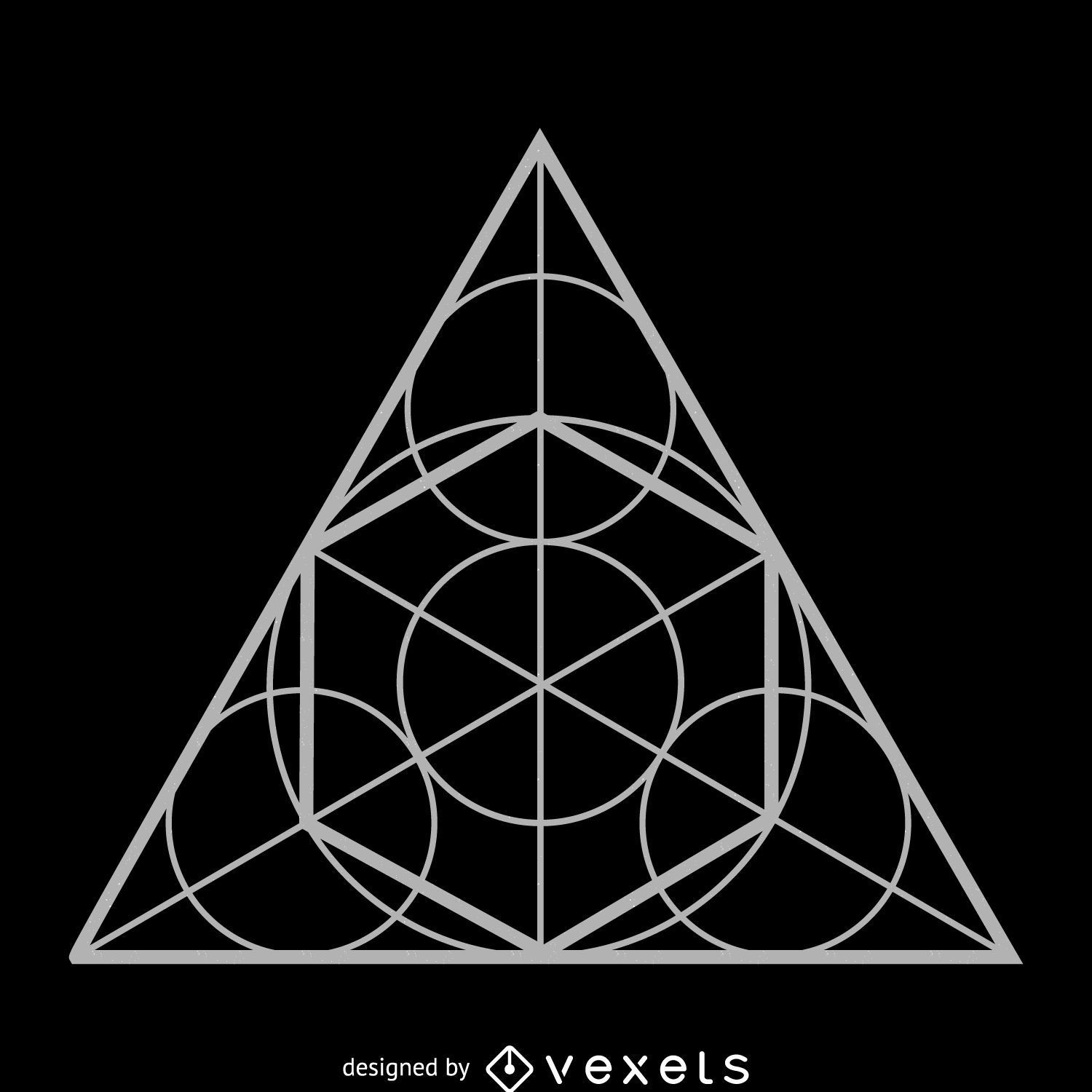
In the vast realm of sacred geometry, where mathematics converges with spirituality, it is not unusual to encounter symbols that encapsulate profound meanings and philosophies. Among these symbols, the triangle and the circle stand out not only for their geometric significance but also for their extensive historical and cultural relevance. Each shape, in its own right, serves as a canvas upon which ancient teachings can be inscribed and contemplated, offering insights into the metaphysical and the natural world.
To begin unraveling the meanings behind the triangle and the circle, one must appreciate their fundamental characteristics. The triangle, with its three points, embodies stability and balance. Its three corners are reminiscent of a trinity — often interpreted as the Father, the Son, and the Holy Spirit in Christian teachings, or as the three gunas in Hindu philosophy: sattva (goodness), rajas (passion), and tamas (ignorance). This powerful connotation of the triangle reflects its intrinsic ability to provide a structural foundation, representing the equilibrium found within the chaos of existence.
Conversely, the circle, without beginning or end, symbolizes eternity and unity. It embodies the cyclical nature of life, death, and rebirth. The circle’s unbroken line encapsulates wholeness, signifying the interconnectedness of all things. This concept can be traced back to various ancient cultures; for instance, the Native American belief in the circle of life encompasses the journey of existence from birth to death and rebirth, thus mirroring nature’s unending cycles.
When viewed in conjunction, the triangle and the circle conjure a sophisticated interplay between the material and the spiritual. The triangle, often seen as a symbol of aspiration and growth, can be positioned within the circle to create an even more profound image, referred to in some circles as the “Circle of Manifestation.” Here, the triangle serves as a vehicle for the spiritual quest, driving one towards transcendence, while the circle acts as the holding space or the universe that nurtures this journey.
In numerous artistic mediums and architectural designs, the amalgamation of these two symbols can be observed. For instance, in Gothic cathedrals, triangular forms support expansive circular rose windows. This architectural choice not only serves a practical purpose of structural integrity but also metaphysically reflects the convergence of divine and human aspirations. The upward thrust of the triangle harmonizes with the encompassing nature of the circle, signifying humanity’s quest for spiritual enlightenment framed by cosmic unity.
Moreover, in alchemical symbolism, the triangle is often depicted as the representation of the elements: earth, water, fire, and air. These elements are foundational forces that create life’s tapestry. When interspersed within the circular structure, they suggest the harmonious balance and integration of these primal energies, demonstrating that individuality lies within the collective whole. Thus, when one meditates on the triangle and circle, one recognizes them not merely as static shapes but living symbols that prompt contemplation on personal and cosmic balance.
Furthermore, the triangle has mystical connotations in various spiritual disciplines. In ancient Egyptian culture, pyramids — which are a form of triangle — were built as monumental structures aimed at aiding pharaohs in their ascension to the afterlife. The triangle’s apex towards the heavens signified a connection to the divine, while its stable base grounded it, making the act of transitioning between realms significant. This duality of the triangle reflects the continuous dance between the tangible and the intangible — anchoring individuals as they reach for enlightenment.
As for the circle, its sacredness is encapsulated in the practice of meditation and rituals across many cultures. Ancient druids conducted their ceremonies in circular groves, where the shape fostered a sense of inclusivity and connection with the earth. In Buddhist teachings, the mandala — often circular in nature — encapsulates the universe, facilitating deep contemplation and a profound journey towards inner peace. The circular form in such instances fosters a recognition of the infinite cycles of existence while nurturing an intimate connection with the divine.
The appeal of the triangle and circle also lies in their versatility. Beyond religious and philosophical implications, these symbols have been integrated into modern practices such as yoga, where the triangle pose symbolizes the unfurling of potential energy, while the circular movements in various asanas symbolize fluidity and grace. Such adaptations highlight the ongoing relevance and dynamism of sacred geometry in contemporary society, making these shapes not just historical artifacts but a continuing source of inspiration.
Ultimately, the triangle and circle encapsulate the essence of sacred geometry — a rich tapestry woven with threads of spirituality, mathematics, philosophy, and artistic expression. They invite us to contemplate our place in the cosmos and challenge us to navigate the balance between our earthly existences and spiritual aspirations. By engaging with these forms, one can appreciate not only their aesthetic beauty but also the intricate meanings they encompass, offering both a reflection of the self and a mirror to the universe. In embracing the triangle and circle, we step into a dance of understanding — a rhythm that echoes the heartbeat of creation itself.












