
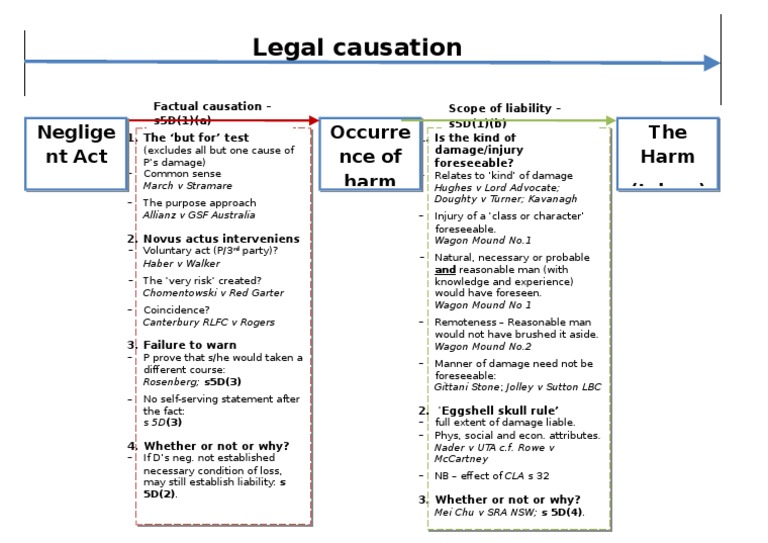
When is an action truly at cause? The phrase might inspire curiosity, especially in contexts laden with legal intricacies or workplace dynamics. It bridges the theoretical and the practical, inviting exploration into responsibility, accountability, and connection between actions and outcomes. This article endeavors to elucidate the meanings and implications of this term in both legal and workplace environments.
Understanding “At Cause” in Legal Terms
In the realm of law, the concept of being “at cause” carries substantial weight. Primarily, it relates to the necessity of establishing causation in both tort and criminal law. To claim that an individual is “at cause” often signifies that their actions directly led to a specific outcome, which can range from damages in tort cases to criminal consequences in the event of wrongdoing.
The Two Types of Causation
Generally, causation is dissected into two types: cause-in-fact and proximate cause. This bifurcation allows the legal system to address the intricacies of liability accurately.
1. Cause-in-Fact
Also known as actual cause, cause-in-fact refers to the tangible link between an action and its consequence. This is often determined through the “but-for” test: but for the defendant’s actions, the plaintiff would not have sustained harm. In legal parlance, if Ms. Johnson had not run a red light, the resulting collision would not have occurred. Therefore, she is at cause for the accident.
2. Proximate Cause
Proximate cause moves beyond mere connection to evaluate whether the consequences were a foreseeable result of one’s actions. It raises intriguing questions about moral and ethical responsibility. If a company’s faulty product led to an injury, was the manufacturer at cause for that injury because the outcome was foreseeable? Or should the injured party bear some responsibility for not adequately using the product? Proximate cause compels the legal mind to consider societal norms and the expectations within a given context.
The Role of At Cause in Tort Law
Tort law, which is designed to address civil wrongs, thrives on the concept of being at cause. It aids individuals in asserting claims against parties whose actions have led to harm. The plaintiff must establish that the defendant’s actions were at cause in bringing about the injury or damage claimed. The legal process often involves a multifaceted evaluation of both cause-in-fact and proximate cause to foster an equitable resolution.
Imagine a scenario where a delivery driver negligently runs a stop sign, colliding with another vehicle. The damaged party must illustrate that the driver’s actions were at cause for the accident. However, the intricacies deepen if the injured party failed to wear a seatbelt. How will that factor into the determination of liability? This dilemma encapsulates the challenges embedded in the legal interpretation of “at cause.”
Exploring At Cause in the Workplace
Transitioning from legal parlors to corporate corridors, the term “at cause” sharpens in its utility yet retains its core essence, anchoring our understanding of accountability within organizational frameworks. Here, it often pertains to actions that lead to disciplinary measures or employee performance evaluations.
1. Performance and Accountability
In workplaces, understanding who is at cause for success or failure is essential for assessing performance and accountability. If a project fails to meet deadlines, is it the team leader at cause for inadequate planning? Or was it a collaborative lapse in communication among team members? Addressing this question can sometimes feel akin to solving a riddle. The intricacies of human interaction and organizational culture complicate the identification of causation.
2. Disciplinary Actions
Similarly, knowing who is at cause can heavily influence disciplinary actions. If an employee exhibits misconduct, investigators must ascertain whether the individual’s actions were egregious enough to warrant termination or if mitigating circumstances exist. Did the company foster an environment that led to the employee’s behavior? Was there inadequate training or supervision? These questions create a layered approach to decision-making, essential for promoting fairness in the workplace.
Navigating the Maze of Causation in Both Contexts
Whether within a courtroom or a corporate boardroom, establishing causation isn’t merely an academic concern; it poses real-world challenges. For legal practitioners, proving that an action was the (or a) cause of damage is critical, yet fraught with complexities that demand thorough investigations and persuasive arguments.
In the corporate landscape, a thorough analysis of causation can illuminate pathways to improvement and accountability. Organizations that prioritize understanding causation among actions and outcomes foster environments of learning rather than mere retribution. This granular approach ensures that the interplay of human behavior and systemic processes is acknowledged and addressed as part of continual growth.
Conclusion: The Balancing Act
Ultimately, understanding what it means to be “at cause” in both legal and workplace contexts invites a contemplation of accountability and responsibility, each intricately woven into the fabric of human interaction. As we dissect the layers of causation, we not only grasp the consequences of our actions but also learn how to navigate their repercussions. Whether in a legal battle or an organizational assessment, the pursuit of clarity in causation remains a compelling challenge—a quest that is both critical and transformative.












