
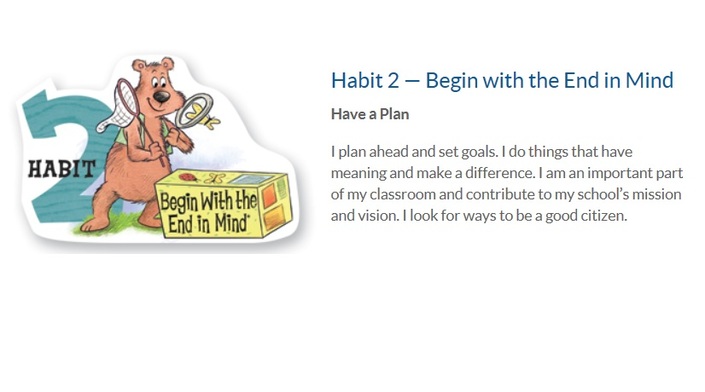
Have you ever set off on a journey without a clear destination in mind? You may have enjoyed the thrill of spontaneity, yet there’s an undeniable chance that you ended up lost or sidetracked. Now, imagine for a moment: what if you commenced every endeavor with the end clearly visualized? This notion forms the crux of “Begin with the End in Mind,” the second of Stephen Covey’s renowned 7 Habits of Highly Effective People. This habit encourages individuals to approach their lives and tasks from a goal-oriented perspective. But what does it truly mean?
To begin unraveling this concept, let us pose a playful question: What would your life look like if you could craft it like an artist painting on a blank canvas? Each brushstroke – a decision; each color – a relationship, a goal, or a project. The essence of this habit lies in the power of visualization and intentionality. By envisioning the desired outcome before embarking on any endeavor, you can navigate life’s complexities with clarity and purpose.
This mindset shift embodies proactive thinking. Traditional reactive approaches often lead to a series of uncoordinated actions, like a ship tossed about in turbulent seas. In contrast, those who “begin with the end in mind” are akin to seasoned captains charting their course with a precise map laid out before them. They contemplate where they want to be and what steps are necessary to embark upon that journey.
The Importance of Personal Mission Statements
At the heart of this habit is the formulation of a personal mission statement. This statement acts as a guiding star, illuminating the path to your aspirations. It encapsulates your fundamental beliefs, core values, and the overarching purpose of your life. Crafting a mission statement is an introspective process. It requires deep reflection on what is truly significant to you within both personal and professional realms.
When embarking on this exercise, consider the following queries: What do I value most? How do I wish to be remembered? What legacy do I desire to leave behind? By answering these, you begin to lay a solid foundation upon which your life’s decisions can be made. A clear mission statement not only shapes personal goals but also influences how one interacts with others, thereby fostering authentic relationships grounded in shared values.
Strategic Goal Setting
Once you’ve identified your mission, the next phase involves strategic goal setting. This entails breaking down your vision into actionable objectives. By doing so, you can translate grand aspirations into tangible steps. Think of it like constructing a staircase; each step brings you closer to the summit. Goals should be SMART: Specific, Measurable, Achievable, Relevant, and Time-bound. This framework ensures that your pursuits remain aligned with your ultimate vision.
Imagine you aspire to create a flourishing community garden that not only beautifies your neighborhood but also promotes environmental sustainability. The end goal is clear, yet how do you get there? You could establish smaller objectives such as forming a committee, researching native plants, securing funding, and engaging local residents. Each small step propels you forward while keeping your eyes firmly set on the end goal.
Visualizing Success
Visualization is more than just mere daydreaming – it is a powerful cognitive technique used by athletes, performers, and successful individuals across various fields. The act of picturing yourself achieving your goals activates the brain’s neural pathways, thereby enhancing motivation and perseverance. When you visualize success, you reinforce your commitment to your goals, making it easier to handle obstacles that may arise along the way.
Consider athletes who visualize their performance before a competition. They don’t merely see themselves succeeding; they immerse themselves in the sensations – the adrenaline, the cheer of the crowd, and even the scent of the grass. This mental rehearsal prepares them not only for triumph but for overcoming adversity. Similarly, by employing visualization techniques, one can mentally walk through significant life events, refining plans and strategies in the mind before executing them in reality.
Living with Intention
Living with intention is a natural extension of beginning with the end in mind. This involves being conscious of your choices and actions, ensuring they align with your mission and goals. It’s easy to drift through life on autopilot, succumbing to distractions and external pressures. However, intentional living requires discipline and self-awareness. It challenges you to evaluate whether each decision propels you closer to your envisioned future.
As you cultivate this habit, you may encounter challenges along the way. Unexpected life events might derail even the most meticulously crafted plans. In such instances, adaptability becomes paramount. This does not mean abandoning your end goal; rather, it entails reassessing and recalibrating your course while remaining steadfastly committed to your ultimate destination.
The Ripple Effect
Finally, the implications of beginning with the end in mind extend beyond individual pursuits. When you adopt this practice, you inadvertently influence those around you. Colleagues, friends, and family will witness your intentionality and clarity of purpose, potentially inspiring them to adopt similar mindsets. Your commitment to living a purposeful life creates a ripple effect, fostering an environment enriched with shared aspirations and mutual support.
In conclusion, the habit of beginning with the end in mind is a transformative approach that empowers individuals to take charge of their lives. By articulating a personal mission statement, setting strategic goals, and visualizing success, you can navigate the complexities of life with grace and intention. Through intentional living and adaptability, you not only elevate your life experience but also inspire those around you to craft their own remarkable journeys. Dare to envision the masterpiece of your life, and with commitment and foresight, take the necessary steps to bring that vision to fruition.












