
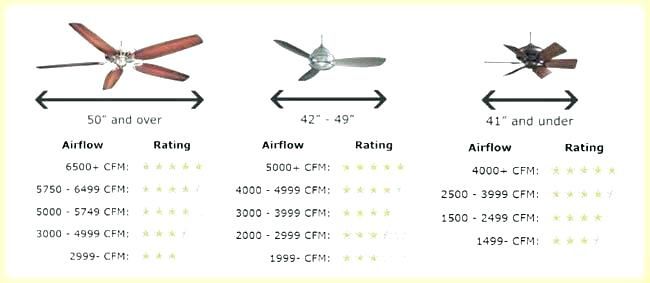
When shopping for a ceiling fan, you may encounter the important term CFM, which stands for cubic feet per minute. But what exactly does this measurement signify, and why is it crucial for your comfort and energy efficiency? Understanding CFM is fundamental for making an informed decision when selecting a fan that best suits your needs. This article delves into the intricate world of airflow ratings, demystifying the science behind CFM and its implications for your living space.
What is CFM?
CFM, or cubic feet per minute, is a metric used to quantify the volume of air that a fan circulates in a specific period. Essentially, it measures the airflow efficiency of the fan. The higher the CFM rating, the more air the fan can move, which translates into enhanced cooling or heating distribution within your home. It’s imperative to understand that not all fans are created equal; different designs and motor strengths yield various airflow capabilities.
The Importance of Airflow Ratings
Airflow ratings are vital for several reasons. Predominantly, they affect your comfort level. A fan with a suitable CFM rating ensures that you are adequately cooled during sweltering summer months or warmed during the bitterly cold winters. Additionally, the right airflow can enhance the efficiency of your heating and cooling systems, promoting energy savings and reducing utility bills.
Calculating the Right CFM for Your Space
Determining the appropriate CFM involves considering the dimensions of the room. As a general rule, larger spaces require fans with higher CFM ratings. For instance, a small room (approximately 100 square feet) might necessitate a fan with a CFM rating of between 1,500 to 3,000, whereas a larger room (like one measuring 400 square feet or more) could demand a fan that circulates upwards of 4,500 CFM.
Here’s a quick guide based on room size:
- 100 – 150 sq. ft.: 1,500 – 3,000 CFM
- 150 – 300 sq. ft.: 3,000 – 4,500 CFM
- 300 – 400 sq. ft.: 4,500 – 5,500 CFM
- 400+ sq. ft.: 5,500+ CFM
Fan Design and CFM Ratings
Another crucial element influencing CFM is the design of the fan itself. Ceiling fans with broader blades and higher blade pitches typically produce a greater amount of airflow. Conversely, smaller fans may not deliver sufficient CFM for larger rooms. Additionally, the speed settings of a fan also play a significant role in airflow; many fans offer multiple speeds, allowing for increased versatility in managing comfort levels.
Understanding Airflow Patterns
It’s not solely about the amount of air being moved; how that air is distributed throughout the room is equally important. The angle and shape of the blades can create different airflow patterns, impacting how effectively a fan circulates air. Fans with angled blades direct air downward, ensuring effective cooling, while others may distribute the air more evenly across the room. Knowing these distinctions can dramatically alter your purchasing decision.
CFM and Energy Efficiency
Investing in a fan with an appropriate CFM rating is not just about immediate comfort; it can also result in long-term energy savings. Fans with higher CFM ratings generally operate more efficiently, meaning they use less electricity to achieve optimal airflow. When combined with other energy-efficient practices, such as using ceiling fans to aid your HVAC system, you can significantly reduce your energy consumption and lower your bills.
Common Misconceptions About CFM
There exists a plethora of misunderstandings surrounding CFM ratings. One of the most common myths is that a higher CFM always equates to better performance; while this is often the case, it is contingent on the room size and fan design. Another misconception is that all fans with similar CFM ratings perform identically. In reality, factors such as blade material, shape, and motor quality can result in considerable variations in performance.
Choosing the Right Fan Based on CFM
When the time comes to select a ceiling fan, you must take a nuanced approach. Consider the following factors:
- Room Size: As mentioned, the size of your space directly influences the required CFM.
- Blade Design: Look for fans with larger, well-pitched blades if higher airflow is necessary.
- Energy Ratings: Check for Energy Star labels or other certifications that signify energy-efficient designs.
- Style and Aesthetics: A fan must match your home’s decor; fortunately, options abound in countless styles.
Final Thoughts on CFM and Fan Selection
Understanding CFM is not merely a technicality; it offers valuable insights into selecting the ideal fan for your home. By grasping how CFM impacts airflow, comfort, and energy efficiency, you position yourself to make a choice that not only enhances your immediate surroundings but also contributes to a sustainable and enjoyable living environment. As you ponder your next fan purchase, remember that CFM is more than just a number—it’s a gateway to a more comfortable and energy-savvy home.












