
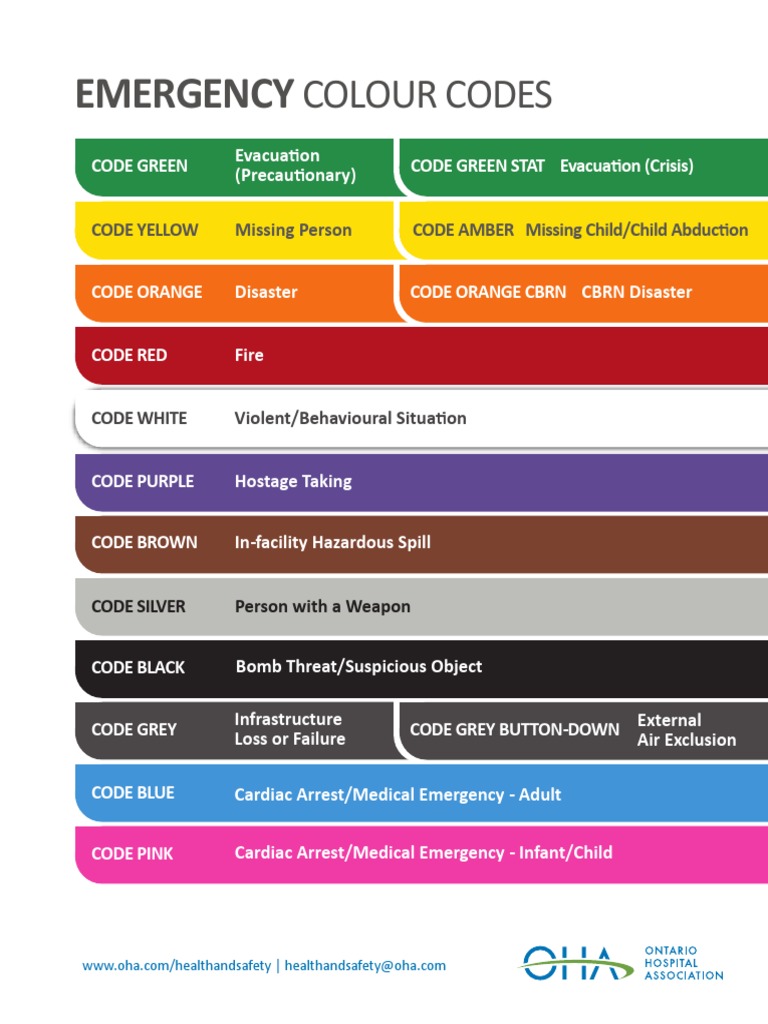
The world of a hospital operates much like a finely tuned orchestra, with each member of the medical staff playing a critical role in safeguarding life and well-being. Amidst this delicate symphony, a series of emergency codes are employed to communicate urgent situations succinctly. One such code, cloaked in an aura of urgency, is Code Pink. As the cacophony of alarms and alerts fills the corridors, the announcement of a Code Pink sends waves of palpable tension through the air, invoking swift responses from all who hear it.
But what exactly does Code Pink signify? In the labyrinthine nature of hospital operations, Code Pink specifically refers to an abduction of an infant or child. The implications of this alarm resonate deeply, as these emergencies enact a primal urgency among the medical personnel, akin to a lioness protecting her cub. Each member of the team must remain keenly aware and inherently prepared, their instincts honed to not only identify but also react to such incidents with speed and precision.
When a Code Pink is initiated, a series of meticulously orchestrated procedures are triggered, designed to facilitate a rapid recovery of the abducted child while ensuring the safety of others within the healthcare environment. Hospital staff are immediately alerted through a communication system that broadcasts the information clearly, leaving no room for ambiguity. Each announcement comes with a description of the child, including identifying features and clothing, almost as if describing a fugitive whose capture is of utmost priority.
The protocols established during a Code Pink are layered and intricate, much like a complex web woven with threads of vigilance. Security teams are mobilized instantly, scouring every facet of the hospital premises, monitoring exits, and scrutinizing surveillance feeds, all the while relying on the collaboration of nurses and doctors, who fan out through the facility. Their eyes are sharp, their movements choreographed; they are akin to sentinels on a lookout, prepared to thwart any mishap. The urgency propels them, creating an electric atmosphere thick with anticipation as they pursue the elusive threat.
Furthermore, Code Pink is not merely a mechanical response; it engenders a heightened sense of awareness among all staff members. With the very fabric of safety stretched taut, all personnel engage in a collective effort, underscoring the importance of teamwork and communication. The intercom might relay critical updates, ensuring that every corner of the hospital remains vigilant, effectively turning a bustling facility into a fortress of protection.
Contrary to what some might perceive, the implementation of Code Pink extends beyond the immediate event, tapping into the psychological realm of fear and the unyielding instinct to protect. It serves as a reminder of the vulnerabilities that exist, even within the safest of havens—the hospital. Each incident may inspire policy changes, helping to refine and enhance existing protocols, a continual evolution of strategies designed to address these sensitive situations.
Perhaps one of the most compelling aspects of Code Pink lies in its educational component. Hospitals often employ extensive training sessions to ensure that all staff comprehend not just the logistics of the code, but also the emotional ramifications involved. No one wants to be caught unprepared when the heartbeat of a child is at stake. These exercises are as much about developing skills as they are about fostering intuition and empathetic responses, creating an environment where compassion is as pivotal as reaction time.
Moreover, the involvement of law enforcement cannot be overlooked. In many cases, local police are alerted and brought into the fold, acting as indispensable allies in the pursuit of recovering a child. The interplay between healthcare professionals and law enforcement highlights the communal nature of such emergencies. It is a unification of various domains—public safety and health care merging into a single entity with one objective: to reunite a child with their guardians.
Interestingly, the significance of Code Pink extends beyond the walls of the hospital. It serves as a catalyst for broader societal discussions surrounding child safety, protective policies, and community involvement. Hospitals often engage local communities in awareness campaigns, shedding light on the challenges faced and encouraging vigilance beyond their premises. In doing so, a ripple effect occurs, galvanizing a collective effort towards safeguarding the most vulnerable members of society.
Yet, as dire as the circumstances may be, the announcement of a Code Pink also showcases the resilience and strength of the human spirit. Stories of successful rescues, of quick thinking and collaboration, evoke a sense of hope amid despair. They remind us of the unyielding resolve to protect, to care, and to see justice served, much like a phoenix rising from the ashes of a crisis.
In conclusion, navigating the realm of hospital emergency codes is akin to deciphering an intricate tapestry, with each thread carefully woven to maintain the fabric of safety and care. Code Pink, a harbinger of urgency, goes beyond mere terminology; it encapsulates the essence of protection, vigilance, and a relentless drive to ensure that children—those most innocent and cherished—remain within the sanctuary of safety. As the echoes of nurses’ feet pound against the linoleum and the voices of doctors resonate through the halls, one truth remains clear: when a Code Pink is called, the heart of the hospital beats even stronger, driven by a profound commitment to life and safety.












