
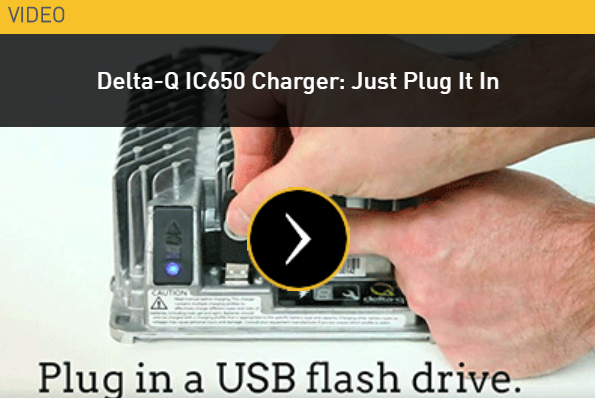
In the realm of battery charging technology, the Delta-Q IC650-048-CC emerges as a formidable contender, capturing the attention of both enthusiasts and industry professionals. But what does Delta-Q truly signify in this context? The term encapsulates not merely a brand, but a philosophy—a commitment to innovation, efficiency, and efficacy. As we delve into the multilayered implications of Delta-Q in the IC650, we unearth a myriad of features, functionalities, and technological advancements that underscore its significance.
To begin with, Delta-Q epitomizes a progressive approach to battery management. At the heart of the Delta-Q IC650 is a highly sophisticated charging algorithm that caters to a diverse range of battery chemistries. This versatility is paramount in today’s electrified landscape, where a multitude of applications require specialized charging solutions. Whether you’re dealing with lead-acid, lithium-ion, or other nuanced battery types, the IC650’s ability to adapt ensures that it meets the dynamic needs of various operational contexts.
The elegance of the IC650-048-CC doesn’t merely lie in its compatibility; it also showcases advanced power management capabilities. The integrated power factor correction fosters an energy-efficient environment, optimizing the utilization of electrical resources. This efficiency is further manifested in the charger’s impressive output—delivering a robust current while minimizing energy loss. Consequently, users not only experience superior performance but also enjoy cost savings through reduced energy consumption.
Moreover, the Delta-Q IC650 excels in its design and user experience. The user-centric interface is characterized by clear indicators and intuitive controls that guide operators through the charging process seamlessly. This simplicity belies the complex technology at play, making it accessible to users of varying expertise levels. When addressing the challenges associated with battery charging, the IC650’s design offers a potent solution, ensuring that even those less familiar with technical nuances can navigate the system effectively.
Another compelling aspect of Delta-Q technology is its emphasis on reliability. Built with durable components and robust engineering practices, the IC650-048-CC is designed to withstand the rigors of industrial environments. This resilience not only enhances longevity but also reinforces the trust that consumers and manufacturers place in the product. Such trust is critical when one considers the potential consequences of unreliable charging systems, which can lead to unexpected downtimes and increased operational costs.
Substantiating its commitment to reliability, Delta-Q also prioritizes safety features that are integral to the IC650 design. Overvoltage, short-circuit, and temperature protection measures are standard, ensuring that both the charger and the connected batteries are safeguarded against unexpected anomalies. This comprehensive safety protocol fosters peace of mind, allowing users to engage with the technology without fear of catastrophic failure.
Furthermore, let us explore the intricate interplay between the IC650’s capabilities and the larger narrative of sustainable energy practices. As the world becomes increasingly conscious of environmental impacts, the need for smart, efficient energy solutions intensifies. Delta-Q acknowledges this imperative, and the IC650 is engineered to contribute positively. The charger’s energy-saving features not only promote cost-effectiveness for businesses but also align with greener initiatives aimed at reducing carbon footprints in the powering of electric vehicles and machinery.
The adaptability of the IC650-048-CC opens avenues for myriad applications. From electric golf carts to commercial floor scrubbers, the range of compatibility signifies a disruptive potential—one that can influence multiple sectors. Each deployment stands as a testament to Delta-Q’s versatility, prompting users across industries to reconsider their existing charging solutions in favor of a more dynamic approach.
Digging deeper into the allure of Delta-Q, one begins to fathom the rich tapestry of technological advancements woven into the fabric of the IC650. Like an artist meticulously crafting a masterpiece, Delta-Q has amalgamated sophisticated techniques—including digital communication protocols and an intricate thermal management system—to produce a charger that is not only functional but also exemplary in innovation.
As we dissect the implications of utilizing the IC650 in various settings, we encounter real-world scenarios that exemplify its impact. For example, in the context of remote operations, such as those seen in agriculture or construction, the need for reliable charging solutions cannot be overstated. The Delta-Q IC650 provides an edge with its rugged design and efficiency, allowing for continuous operation without the constant need to monitor charge levels obsessively.
Reflecting on future prospects, one must consider how Delta-Q may evolve. As technological advancements race forward, the IC650 and its successors may integrate even more sophisticated features—such as artificial intelligence to forecast battery maintenance needs or advanced analytics to track energy usage in real time. Certainly, this foresight would enable users to transition smoothly into an energy-efficient future, cultivating an operational culture predicated on sustainability and innovation.
In summation, the Delta-Q designation encapsulates a multitude of transformative benefits embodied in the IC650-048-CC. From its robust versatility and commitment to safety to its energy efficiency and user-centric design, Delta-Q stands as a pioneering force in battery charging technology. It captures not only the imagination of innovators but also the operational needs of users across diverse industries, thereby fostering a deeper respect for the art and science of energy management. This intricate device serves as a beacon of progress, illuminating the potential that lies within the nexus of technology and sustainable practice.












