
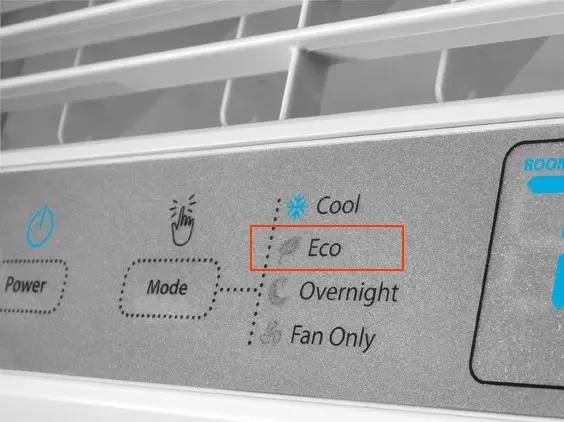
Have you ever thought about how much energy your air conditioner consumes while simultaneously ensuring your comfort? Moreover, when that bright “ECO” button beckons you, do you truly grasp its significance? The ECO mode on air conditioners is more than just a trendy feature—it poses a compelling question about how to harmonize comfort, efficiency, and environmental consciousness, presenting a challenge that merits exploration.
First, let’s delve into the quintessential nature of air conditioning systems. At their core, air conditioners work by absorbing heat from indoor spaces and expelling it externally, thereby cooling the air around you. However, this sophisticated process often comes at a considerable cost—both financially and environmentally. This is where the ECO mode steps in, promising a more sustainable approach to temperature regulation. But what does it really mean?
ECO mode, or Energy Saving mode, is designed to optimize energy consumption by utilizing a combination of advanced technology and energy-efficient practices. When activated, this mode adjusts the operation of the air conditioning unit in several specific ways, allowing it to consume significantly less electricity while still providing a conducive indoor climate.
The crux of ECO mode’s functionality lies in its adaptive operational patterns. Rather than running the compressor at full blast, which is the norm during standard operation, ECO mode often introduces a variable speed compressor. This allows the unit to make minute adjustments to the cooling output, dramatically reducing energy usage during periods when maximum cooling is unnecessary. Think of it as a graceful dance that reflects the ambient conditions, maintaining a delicate balance between energy efficiency and comfort.
But how does it achieve these energy savings? One foundational aspect is the temperature set point. In ECO mode, the air conditioner may allow for a slightly higher temperature setting when cooling is not crucial. For instance, if you usually set your temperature at a brisk 72°F, ECO mode may subtly elevate it to 75°F. While this might feel barely perceptible, the energy savings can be notable over time. It’s an intriguing conundrum: would you prefer to save money on your energy bill while perhaps tolerating a fraction less coolness during those balmy summer months?
Additionally, ECO mode may incorporate enhanced fan speed settings. During peak hours, when the outside heat is relentless, the fan may operate with a slightly increased speed to circulate air more efficiently, yet still within an energy-efficient framework. In such moments, it’s not merely about lowering the temperature; it’s ensuring that the air you breathe remains fresh and revitalizing without guzzling vast amounts of electricity.
Now, let’s consider the implications of utilizing ECO mode beyond mere convenience and cost savings. There’s an undeniable environmental perspective to consider. The undeniable link between energy consumption and carbon emissions places a spotlight on our collective responsibility toward sustainable living. By reducing energy usage, especially in air conditioning—a significant contributor to household energy bills—users can actively partake in minimizing their carbon footprint.
This shift in paradigm brings forth the environmental ramifications linked to energy consumption. Studies suggest that residential air conditioning constitutes a significant fraction of annual electricity use, particularly in regions with scorching climates. By embracing ECO mode, consumers are not merely tempering their expenditures; they contribute to a more extensive movement aimed at fostering sustainability. It is a proactive step towards mitigating climate change and conserving our finite natural resources.
However, a caveat exists: while the ECO mode is beneficial, can it fully replace traditional operational modes? This question fuels a lively debate among HVAC professionals and energy-conscious consumers alike. Some argue that the initial investment in variable-speed units enables superior performance and energy savings. Conversely, others contend that during extreme heat waves, the conventional mode may be necessary to deliver immediate relief. Balancing comfort and energy-efficient practices thus becomes a delicate competition worthy of scrutiny.
Moreover, understanding the spectrum of air conditioning technologies is imperative. Not all eco modes are created equal. Manufacturers may define “ECO” differently based on their proprietary technologies. Thus, evaluating the specifics of a model’s energy-saving features can substantially influence performance and savings. It’s wise to consult user manuals or seek expert insight into maximizing the benefits of your air conditioning unit. Are you prepared to explore the labyrinth of features that promise to save both energy and dollars?
Ultimately, the choice to employ ECO mode ranks high among the various decisions consumers face regarding their air conditioning. When pondering whether comfort should trump savings or vice versa, consider a blended approach—deploy the ECO mode during less demanding hours while reserving full cooling power for peak demands. Such tactical usage can afford a lifestyle that embraces modern technological advantages without neglecting personal comfort or environmental commitments.
In reflection, the ECO mode is a pivotal element of an air conditioning unit, striking an essential balance between user comfort and energy efficiency. It embodies a thoughtful methodology designed to make life cooler and consume less energy. As we confront pressing challenges tied to energy consumption and environmental impact, the adoption of such energy-efficient modes emerges not as a choice but as a necessity. How will you choose to interact with your air conditioning system? Will you adopt a wise, eco-conscious approach?












