
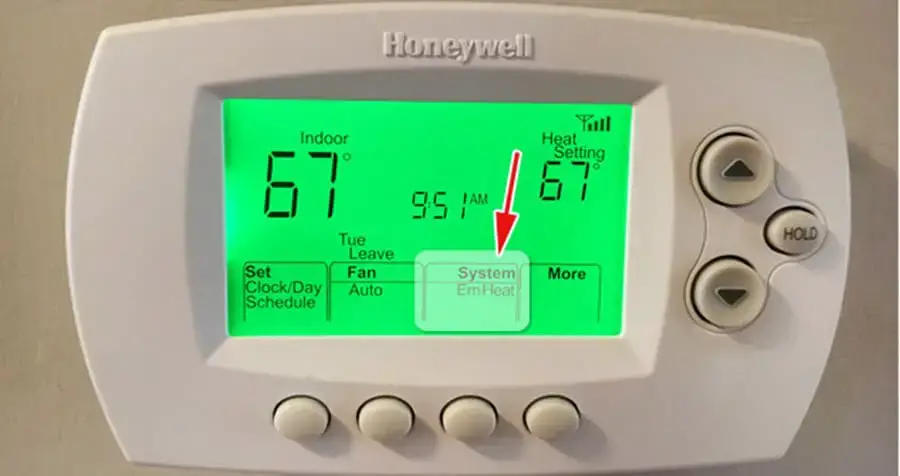
When facing the chill of winter, understanding your thermostat’s functions is paramount to ensuring comfort within your sanctuary. Among the various symbols and modes modern thermostats display, “EM Heat” often leaves homeowners puzzled. It beckons curiosity like an unopened book, promising knowledge within its cover. In this exploration, we shall unravel the enigma of EM Heat, delving into its significance, operation, and when to utilize this specific heating mode.
Defining EM Heat: A Close Inspection
EM Heat, often abbreviated to “Emergency Heat,” is a mode found predominantly in heat pump systems. Picture your heat pump as a diligent worker who usually reaps warmth from outside air, even in frigid conditions. However, when temperatures plummet perilously low, or the efficiency of your heat pump is compromised, EM Heat emerges as the reliable backup—the steadfast knight in shining armor, ready to fend off the biting cold.
Essentially, EM Heat activates an auxiliary heating source, typically electric resistance coils, within the system. When translated to everyday language, it’s akin to turning on your fireplace when the furnace just isn’t cutting it. While the heat pump withdraws warmth from outdoor air, EM Heat delivers the extra energy needed when your discomfort levels threaten to spiral into unbearable territory.
The Anatomy of Heating Modes
To fully appreciate the role of EM Heat, it helps to explore the broader spectrum of heating modes that thermostats commonly feature. Each mode serves a distinct purpose, navigating the journey through cold weather with grace and efficacy.
- Heat Mode: This is the primary setting for heat pumps, utilizing an evaporator coil to draw heat indoors, making it your first line of defense during colder months.
- Cool Mode: While not directly related to heating, understanding this mode is essential. It symbolizes the changing seasons, where the thermostat acts as a regulator, reversing its functions to expel heat and invite coolness inside on sweltering days.
- Emergency Heat (EM Heat): As described, this mode signals your thermostat to bypass the heat pump and engage auxiliary heating systems when the going gets tough. It’s like a lifebuoy, ready to be summoned at the first signs of struggle.
The When and Why of EM Heat
Employing EM Heat isn’t merely a matter of preference—it is a strategic decision shaped by circumstance. Situations necessitating its engagement include:
- Severe Weather Conditions: When the temperature outside dips below the operational capacity of your heat pump, EM Heat becomes essential. It ensures your home remains a bastion of warmth amidst the storm.
- Heat Pump Malfunction: In instances where your heat pump falters, perhaps due to mechanical failure or ice accumulation, engaging EM Heat guarantees that your heating needs are still met, offering a temporary reprieve.
- Supplemental Heating: If you’re hosting an elegant winter gathering, or if your space simply requires additional warmth, EM Heat can be activated to bolster your primary heating appliance.
The Cost Consideration
While EM Heat serves as a valuable asset during cold spells, it carries an implicit cost. The auxiliary systems it activates can be significantly less efficient compared to heat pumps, leading to higher energy bills. Think of it like calling in an expensive contractor to fix a plumbing issue when a DIY fix would suffice. It’s not that you shouldn’t call upon that contractor; it’s simply wiser to reserve that option for when the situation genuinely demands it.
Homeowners should be judicious about their reliance on EM Heat, monitoring usage carefully to strike a balance between comfort and energy expenditure. Implementing routine maintenance on your heat pump can stave off emergency scenarios, preserving both warmth and fiscal responsibility.
Tips for Thermostat Mastery
Gaining mastery over your thermostat and its various modes can prove advantageous. Here are some strategies to help you wield EM Heat with confidence:
- Know Your System: Familiarize yourself with how your heat pump operates and recognize when it struggles to maintain comfortable temperatures, granting you insight into when to activate EM Heat.
- Maintain Regular Checks: Establish a routine maintenance schedule for your heat pump to minimize the likelihood of sudden breakdowns, allowing EM Heat to remain an auxiliary option, rather than a necessity.
- Smart Thermostats: Consider upgrading to a smart thermostat, which can intelligently manage heating modes based on the outside temperature, ensuring optimal performance with minimal manual intervention.
Final Thoughts
Ultimately, EM Heat is not simply a feature on your thermostat but a pivotal lifeline during winter’s most frigid moments. It’s emblematic of our modern adaptation to comfort and control in the face of nature’s unpredictability. By learning to navigate the nuances of heating modes, you become better equipped to transform your home into a cozy haven—no matter the storm raging outside. In the dance between efficiency and comfort, EM Heat stands ready, a dependable partner in your quest for warmth, ensuring that even on the coldest days, tranquility resides within your walls.












