
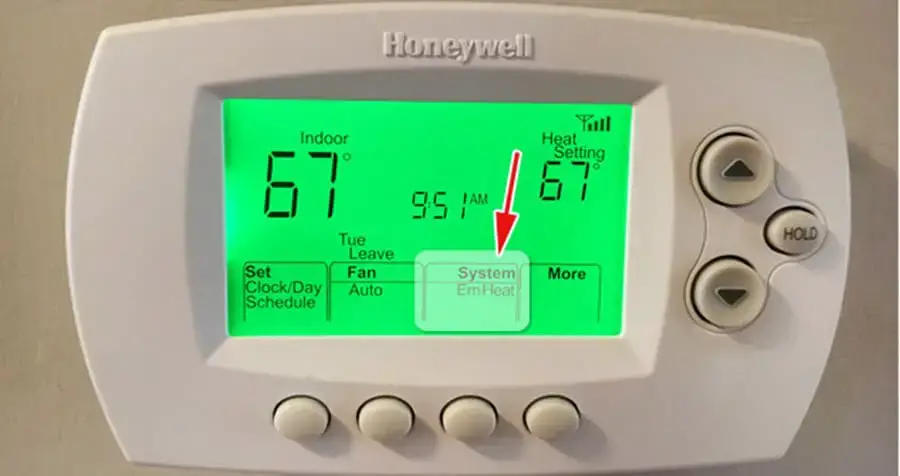
When it comes to understanding heating systems, homeowners often encounter the designation “EM Heat” on their thermostats, a seemingly innocuous term that can leave many puzzled. What does EM Heat propose, and why does it prompt such intrigue among those unfamiliar with heating jargon? In this article, we will delve into the intricacies of EM Heat, elaborate on its functionality, and explore the broader significance of this feature in modern heating systems.
1. The Basics of EM Heat
To grasp the concept of EM Heat, one must first comprehend the fundamental workings of residential heating systems. EM Heat stands for “Emergency Heat,” a setting available on many heat pumps. It’s a designation that indicates the activation of a backup heating method, typically electric resistance heaters, should the primary system fail or struggle to maintain the desired indoor temperature.
Heat pumps operate by transferring heat—either extracting warmth from the outside air during winter months or releasing it during the summer. However, when exterior temperatures plummet to suboptimal levels, heat pumps can become inefficient. In such cases, the EM Heat setting provides a safeguard, ensuring the home remains comfortable!
2. When to Use EM Heat
Utilizing the EM Heat setting is not a daily affair; rather, it’s a pivotal solution for those unexpected frigid snaps. Homeowners should engage EM Heat when the temperature drops significantly below freezing, or during periods of extreme weather. By default, heat pumps should ideally run in their standard heat mode; however, when faced with severe cold, switching to EM Heat can facilitate a rapid temperature rebound.
This distinctive mode is particularly invaluable during power outages—either due to a storm or an electrical failure. In such scenarios, homeowners can rely on electric resistance heating to avert the dreaded chill that can seep into a home when temperatures plummet.
3. The Science Behind EM Heat
To further appreciate EM Heat’s effectiveness, one must consider the mechanics of electric resistance heating. When engaged, this system uses electrical coils to generate warmth, a process that, while less energy-efficient compared to heat pumps, delivers heat promptly. Understanding this nuance is fundamental. While running EM Heat can elevate energy costs dramatically—often leading to higher utility bills—it’s an essential short-term solution in emergencies. Homeowners must be prudent in their use, balancing the need for comfort against the potential for energy waste.
4. Signs Your Heat Pump Requires EM Heat
So, how can you tell when it’s time to shift your thermostat into EM Heat? Pay attention to your home’s temperature levels and the performance of your heat pump. If you notice subpar heating, inconsistent climate control, or if your heat pump continuously runs without achieving the desired temperature, it may be an indicator that conditions warrant switching to EM Heat. Additionally, an audible shift in the sound of your heat pump—more pronounced running or plotting sounds—might also suggest strain in the primary heating method.
5. EM Heat and System Management
Managing your heating system effectively includes knowing when and how to use EM Heat as part of a broader approach to seasonal maintenance. Regular upkeep of your heat pump is pivotal; homeowners should schedule annual inspections to ensure that both the primary and backup heating systems are functioning optimally. This is a preventative measure that helps avert reliance on emergency solutions during peak cold spells.
Moreover, understanding the thermostat’s programming becomes essential. Program your thermostat to intelligently regulate between heat modes based on weather forecasts, thus maximizing efficiency and minimizing costs.
6. Myths and Misconceptions about EM Heat
Several myths surround the EM Heat setting that perpetuate confusion. A common misunderstanding is that EM Heat is intended for frequent use. In reality, it is a specialized feature designed for specific conditions rather than an everyday setting. Furthermore, some assume that utilizing EM Heat will always provide comfort; however, due to its energy-intensive nature, it can lead to inflated bills if employed indiscriminately.
There are also fears that toggling EM Heat too frequently can strain the system. In fact, most modern heat pumps are designed to handle such transitions with ease, though a balance must be maintained. Strive for an understanding that EM Heat serves its purpose best under certain circumstances.
7. Beyond the Thermostat: Broader Implications of Heating Knowledge
Understanding EM Heat fosters a sense of agency among homeowners. It underscores the importance of heating literacy—a notion that resonates far beyond individual properties. With fluctuating climates and the increasing unpredictability of weather patterns, deeper knowledge of heating mechanics becomes a cornerstone for sustainable living.
Your heating system is an investment that plays a pivotal role in your home. Navigating EM Heat proficiently can enhance energy efficiency while ensuring optimal comfort during the coldest months. So, as curious inquirers, homeowners are encouraged to explore beyond the basics, ask questions, and cultivate a deeper understanding of their heating solutions.
In Conclusion
The EM Heat setting on your thermostat holds significant value in maintaining comfort during extreme weather conditions. This knowledge empowers homeowners to utilize their heating systems to their advantage, promoting both environmental stewardship and cost-effectiveness. By staying informed about the intricacies of heating options, homeowners can navigate the nuances of their systems with assurance, converting what may once have felt like a mere observation into a meaningful understanding of their home heating strategy.












