
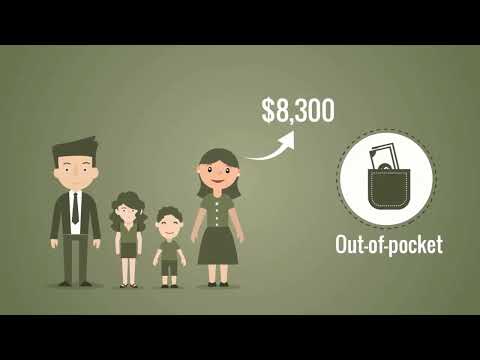
Understanding health insurance can often feel like navigating a complex labyrinth of terms and jargon. Among these terms is the concept of the “embedded deductible,” which plays a significant role in various health insurance plans. This article seeks to elucidate what an embedded deductible is, its implications for policyholders, and the distinctions between embedded and non-embedded deductibles. Through a comprehensive exploration of this term, readers will gain clarity and insight into how it influences their healthcare experience.
1. Defining Embedded Deductibles
At its core, an embedded deductible refers to a structure within a family health insurance plan where each individual member has their own separate deductible that counts toward the overall family deductible. This means that if one family member incurs medical expenses, they can reach their individual deductible limit independently of the collective family deductible. In situations where families are enrolled under a single policy, embedded deductibles provide an additional layer of financial protection.
2. The Mechanics of How Embedded Deductibles Work
To illustrate the functioning of embedded deductibles, consider a family of four with a health insurance plan that has an individual deductible of $2,000 and a family deductible of $4,000. If one family member sustains medical costs of $2,500, they will meet their individual deductible. The excess cost of $500 contributes towards the family deductible. Subsequently, other family members can also incur medical expenses and incrementally contribute to meeting the family deductible, thus leading to shared financial responsibility within the family unit.
3. Benefits of Embedded Deductibles
One of the primary benefits of embedded deductibles is that they prevent one family member’s high medical costs from becoming a financial burden on the entire family. For example, if a child faces severe medical challenges and reaches their own deductible, the family as a whole can still receive coverage without needing to meet the full family deductible for that year. This feature enhances accessibility to healthcare for all family members, providing a sense of security during unforeseen medical crises.
4. The Contrast with Non-Embedded Deductibles
In contrast, non-embedded or aggregate deductibles require the entire family to meet the specified family deductible before claims can be paid. Using the previous example, if the family has a non-embedded deductible of $4,000, one family member’s medical expenses would not be reimbursed until the entire amount has been reached across all members. This can create significant financial strain, particularly if one family member experiences high healthcare costs while others have minimal or no expenses.
5. When to Choose an Embedded Deductible Plan
Choosing between an embedded and non-embedded deductible plan largely depends on the family’s healthcare needs and financial circumstances. Families with children or members with chronic medical conditions may find greater benefit in selecting an embedded deductible plan, as it shields them from the full financial impact of a single member’s substantial medical expenses. Conversely, families that tend to utilize healthcare services minimally may fare better with a non-embedded plan, allowing them to take advantage of lower premiums.
6. Considerations for Healthcare Providers and Insurers
Health insurance companies sometimes promote plans with embedded deductibles as advantageous options. Insurers may market these plans to attract families, emphasizing the individual financial protection they provide. As families navigate the intricate health insurance landscape, understanding the nuances of embedded deductibles can lead to informed decision-making. Providers also benefit, as patients are more likely to seek necessary care when individual deductibles ease the financial burden.
7. Potential Drawbacks of Embedded Deductibles
While embedded deductibles offer many benefits, they are not without drawbacks. Premiums for plans with embedded deductibles are frequently higher than those without. The financial investment may be considerable, especially for those who do not anticipate significant medical expenses. Therefore, prospective policyholders must weigh the higher premium costs against the potential financial safety net that embedded deductibles provide. Thorough analysis of personal health needs and budget considerations is crucial for making the best choice.
8. Navigating the Embedded Deductible Landscape
Understanding embedded deductibles requires careful examination of plan details—such as the annual deductible limits, premium costs, and overall coverage. Policyholders should be proactive in soliciting clarifications about plan structures from their insurers to ensure they grasp how embedded deductibles function in practice. Asking questions regarding out-of-pocket maximums, co-pays, and co-insurance can provide a fuller picture of how healthcare expenses may affect the family’s financial health over time.
9. Conclusion: Making Informed Insurance Choices
The concept of embedded deductibles is an essential aspect of health insurance that, when thoroughly understood, can significantly influence choices about coverage. By grasping the mechanics, benefits, and limitations of these deductibles, policyholders can make informed decisions that safeguard their family’s financial well-being while ensuring access to necessary healthcare services. With a clearer understanding of embedded deductibles, families can confidently navigate their health insurance options and find plans that best suit their unique needs.












