
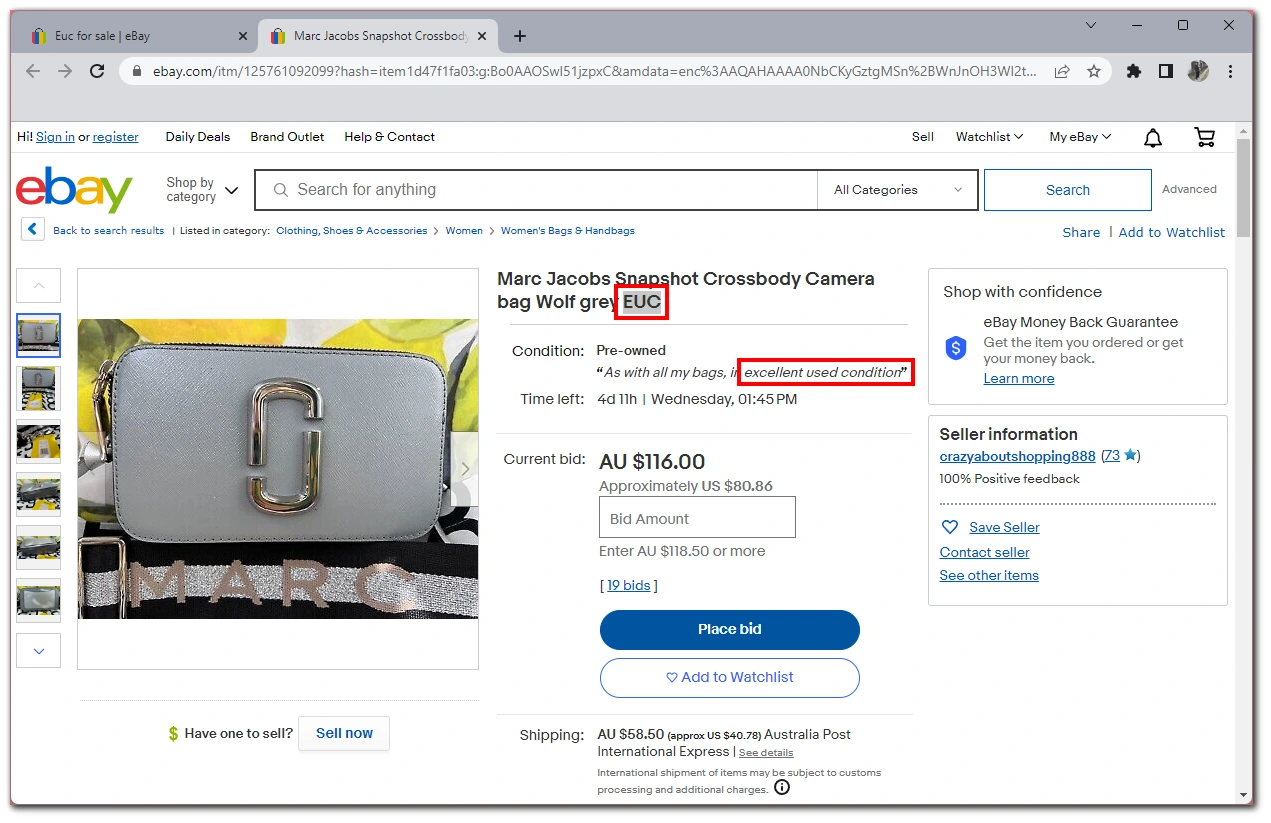
In the dynamic realm of online shopping, particularly on platforms like eBay, understanding item conditions can significantly influence purchasing decisions. One prevalent term that often piques curiosity among consumers is “EUC.” This acronym stands for “Excellent Used Condition,” a classification that transcends mere semantics to encapsulate a broader narrative about quality, value, and consumer expectations.
When browsing eBay, potential buyers frequently encounter items described as EUC. This condition implies not only that the item has been previously owned but also that it has been meticulously maintained, showing minimal signs of wear. The allure of finding a high-quality used item at a fraction of the retail price adds an exciting layer to the shopping experience. Yet, delving deeper into the EUC classification reveals nuances that every savvy shopper should consider.
Understanding how EUC varies among categories is paramount. For instance, an EUC assessment for clothing, electronics, or collectibles can differ dramatically. In fashion, garments may be labeled as EUC if they exhibit little to no fading, fraying, or other superficial damages, while still maintaining their functionality and aesthetic appeal. In contrast, electronics like cameras or smartphones must not only look pristine but also function flawlessly to merit an EUC designation. Herein lies the crux: context matters.
On eBay, sellers often provide descriptions to elaborate upon the item’s current condition. A thorough enumeration of any imperfections can demystify the term “EUC.” Sellers listing items in this category may highlight attributes such as a lack of scratches, a non-deteriorated original packaging, or unused accessories. In doing so, they provide buyers with a level of reassurance that the item, despite its used status, holds a value akin to that of a brand-new product.
It is not merely the description that aids in deciphering EUC; visuals play a critical role as well. Shoppers are encouraged to scrutinize images uploaded alongside listings. A picture speaks a thousand words, but what if the images do not appear to align with the EUC label? Discrepancies can sow seeds of doubt in potential buyers. Consequently, prospective shoppers should approach EUC listings with a discerning eye, ensuring the accompanying images do indeed reflect the advertised condition.
The EUC classification also carries with it an implicit promise regarding the item’s longevity and usability. It implies that the buyer can expect a respectable level of performance from a once-loved item. However, latent feelings of trepidation can surface when considering the unknown history of pre-owned goods. Did previous users treat the item with care? How has it withstood the test of time? This uncertainty often catalyzes deeper contemplation about consumer habits and the sustainability of second-hand markets.
The burgeoning second-hand economy has shifted consumer behavior dramatically in recent years. An increasing number of buyers are gravitating toward used items not merely for the financial savings involved, but also for the sustainability aspect. Purchasing EUC items contributes to a reduction in waste, aligning with environmentally-conscious lifestyles. This compelling narrative elevates EUC beyond its functional definition; it embodies a philosophy that encourages repurposing and recycling products rather than perpetuating a throwaway culture.
Yet, with the expansion of resale platforms, buyers are simultaneously faced with the challenge of navigating a landscape rife with misleading condition classifications. Sellers may wield the term “EUC” as a strategic marketing ploy, hoping to attract more bids and enhance sale prices while concealing more significant flaws. Herein lies the necessity for consumers to develop a critical eye and incorporate additional research into their buying processes.
One invaluable practice is to read reviews and seller ratings. eBay provides an array of feedback options that can inform buyers about previous transactions and overall seller reliability. Higher ratings often correlate with more transparent and honest descriptions, which can ultimately enhance buyer confidence. Following this path ensures a smoother shopping experience, mitigating risks and fostering trust in an online marketplace.
Additionally, delving into the FAQ sections or community forums dedicated to eBay might illuminate further insights regarding EUC assessments. Engaging with seasoned shoppers can unveil techniques and shared experiences, creating a collective wisdom that can guide new buyers through the sometimes murky waters of second-hand shopping.
In conclusion, the term “EUC” serves as a compelling lens through which to explore not only the condition of items on eBay but also the evolving nature of consumerism in a digital age. It signifies a desire for quality, sustainability, and value, all encapsulated within a simple acronym. As buyers navigate this complex landscape, a discerning approach will undoubtedly yield the best outcomes, enhancing not just their shopping experiences but also their understanding of the broader implications associated with purchasing pre-owned goods. By engaging thoughtfully with item conditions, consumers contribute to a narrative that values both quality and responsible ownership, embodying an inherent respect for the lifecycle of products.












