
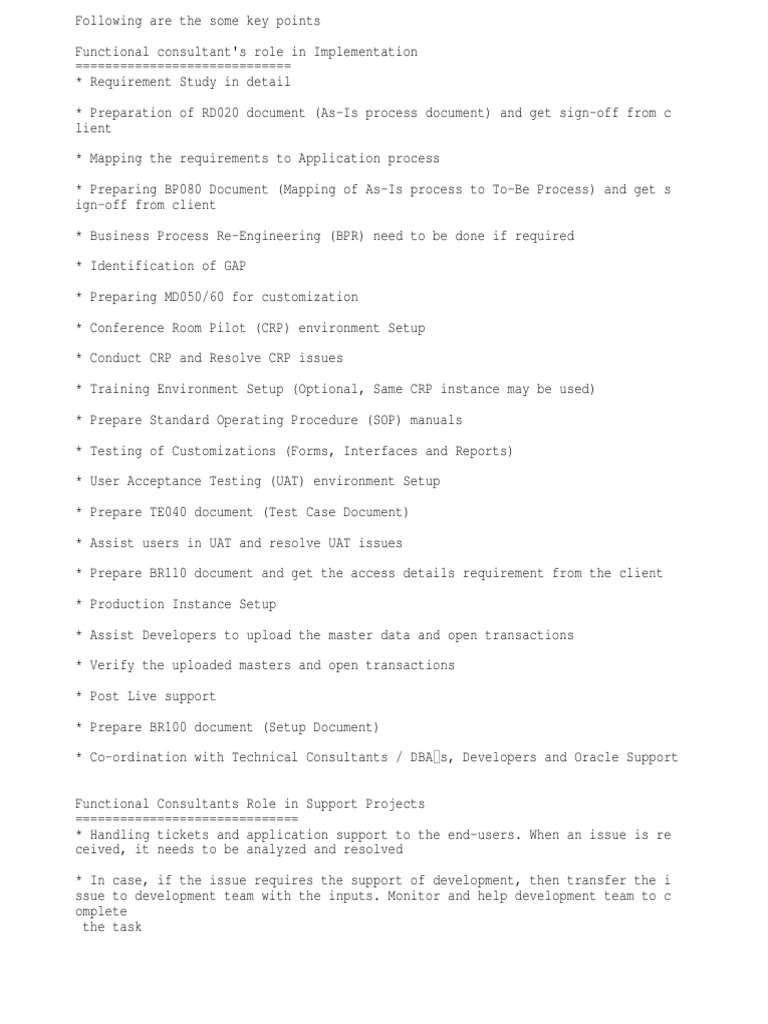
What does it mean to be a Functional Expert? Is it simply a matter of having in-depth knowledge in a specific domain, or does it entail navigating a labyrinth of responsibilities that contribute significantly to an organization’s workflow? This intriguing profession bridges the gap between technology and business processes, fostering collaboration and ensuring that systems align with strategic objectives.
At its core, a Functional Expert specializes in a particular area of an organization’s operations—be it finance, HR, or supply chain management. Their expertise is critical, as they translate complex requirements into functional specifications, guide the deployment of technology solutions, and facilitate continuous improvement initiatives. But stepping into the shoes of a Functional Expert poses a unique challenge: integrating diverse stakeholder perspectives while championing best practices in technology utilization. Let’s delve deeper into the roles and responsibilities that define this pivotal function.
Defining the Role of a Functional Expert
The essence of being a Functional Expert lies in possessing a profound knowledge base coupled with practical experience. They operate at the confluence of business and IT, necessary for the successful implementation of any enterprise resource planning (ERP) system or other technological innovations. What sets them apart is their ability to proactively address challenges and advocate for solutions that drive business efficiency.
Primary Responsibilities
Being a Functional Expert entails a myriad of responsibilities that can vary according to the industry and the specific tasks of the organization. Below are some of the primary duties that these professionals undertake:
- Requirement Gathering: This is often the starting point. A Functional Expert collaborates with stakeholders across the organization to gather and document business requirements. This requires not only technical knowledge but also strong interpersonal skills, as understanding varied perspectives is crucial.
- Process Mapping: After gathering requirements, the next step is to map existing processes and identify gaps. A Functional Expert employs analytical skills to illustrate how current workflows operate and delineate areas for enhancement. These maps often serve as foundational documentation for system design.
- Solution Design: Once gaps in processes are identified, Functional Experts craft solutions that align with organizational needs. This encompasses designing system functionalities that meet specific requirements while integrating seamlessly with other operational facets. Creativity and problem-solving are vital at this stage.
- System Configuration: Following the design phase, Functional Experts work closely with technical teams to configure systems. This role requires knowledge of software capabilities, as they often have to tailor solutions to ensure they meet user expectations.
- Testing and Validation: A crucial responsibility involves testing the proposed solutions. This entails developing test cases and scenarios to validate that the system works as designed. Functional Experts must ensure thorough documentation of these processes to facilitate future reviews.
- Training and Support: Change management is another significant responsibility. Functional Experts often lead training sessions for end-users, ensuring they understand how to utilize the new systems effectively. They also provide ongoing support and modify training materials as necessary to reflect system updates.
- Continuous Improvement: In the realm of technology, stagnation is not an option. Functional Experts actively seek opportunities for enhancing business processes, fostering a culture of continuous improvement. They analyze feedback from users, pinpoint inefficiencies, and advocate for solutions that elevate productivity.
Collaboration and Communication
A day in the life of a Functional Expert is not solitary. Rather, collaboration is at the heart of their function. They liaise with diverse teams, including IT professionals, project managers, and business leaders, functioning as a conduit between technical details and strategic direction. Strong communication skills are paramount, as they must articulate complex concepts in a manner that is accessible to all stakeholders.
This constant dialogue extends to facilitating workshops and presenting findings to senior management. The ability to convey insights and recommendations persuasively can make a significant impact on how projects are viewed and prioritized within the organization.
Adaptability in a Dynamic Landscape
As technology continues to evolve at an unprecedented pace, the role of a Functional Expert is one of perpetual learning and adaptation. Trends such as automation, machine learning, and artificial intelligence are ushering in a new era of operational possibilities. Functional Experts must remain vigilant, continuously updating their skills to keep pace with the changing landscape.
This adaptability extends beyond technology itself; it encompasses an understanding of shifting business models and regulatory requirements. A Functional Expert can be seen as a navigator in turbulent waters, guiding organizations toward optimal performance amidst constant change.
The Rewards and Challenges
While the role of a Functional Expert is laden with responsibilities, it is not without its rewards. Successfully implementing a solution that enhances efficiency can yield significant benefits for an organization, resulting in cost savings and improved productivity. However, the flip side of this coin is the inherent pressures. The stakes are high when managing expectations, integrating feedback, and delivering on project timelines.
Furthermore, navigating differing opinions from stakeholders can often feel like walking a tightrope. The challenge lies in mediating these discussions while remaining focused on the broader objectives. How does one strike a balance between opposing viewpoints while ensuring that the final product meets the operational needs?
Conclusion
In conclusion, the role of a Functional Expert is multifaceted and requires a blend of technical prowess, business acumen, and exceptional interpersonal skills. Though challenges abound, the potential for growth and impact makes this role not only vital but also immensely rewarding. As organizations chart their ever-evolving course in the digital age, the Functional Expert shines as an essential architect of progress, driving them toward success.












