
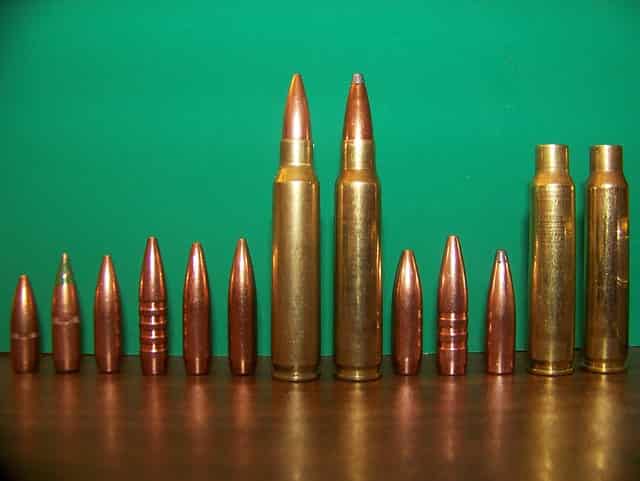
When it comes to firearms and ammunition, understanding the intricacies of bullet specifications is paramount for both novice shooters and seasoned marksmen alike. One such specification that frequently arises in discourse is the grain weight of a bullet. In this article, we shall unravel the meaning of grain in relation to ammunition, elucidate its significance in performance, and explore how it impacts various shooting scenarios.
To begin, it is essential to clarify what “grain” precisely signifies in the realm of ammunition. The grain (abbreviated as “gr”) is a unit of measurement that quantifies the weight of a bullet. One grain is equivalent to 1/7000th of a pound or approximately 0.0648 grams. When we reference bullet weight, we typically encounter figures ranging from around 40 grains for smaller calibers like .22 Long Rifle, to as high as 600 grains for heavy-duty cartridges like the .450 Marlin.
The choice of grain weight is not arbitrary; it is meticulously chosen based on the intended application of the ammunition. For instance, lighter bullets, weighing in the neighborhood of 40 to 90 grains, are often favored for varmint hunting or target shooting. Their reduced mass allows for higher velocities, enabling flatter trajectories and minimal bullet drop over distance. Conversely, heavier bullets, such as those exceeding 150 grains, tend to be preferred for larger game hunting, where greater stopping power, kinetic energy, and penetration are paramount.
Bullet weight directly correlates with kinetic energy—an essential consideration for hunters and sport shooters alike. The relationship can be exemplified by the kinetic energy formula ( KE = frac{1}{2} mv^2 ), where ( m ) stands for mass and ( v ) represents velocity. While lighter bullets generally achieve higher velocities, heavier bullets, albeit slower, can deliver more energy on impact, making them formidable against larger animals. The appropriate balance of weight and velocity is crucial for effective performance.
Additionally, the grain weight of a bullet can dramatically influence recoil. In a given caliber, lighter bullets will usually produce less recoil, which can benefit new shooters by making for a more manageable shooting experience. For example, a .357 Magnum round utilizing a lighter 125-grain bullet will typically exhibit softer recoil compared to a 180-grain variant. Thus, understanding grain weight can aid shooters in selecting rounds that will align with their comfort and proficiency levels.
Moreover, when discussing bullet performance, it is imperative to consider the influence of bullet design in conjunction with weight. Different designs, such as hollow points, full metal jackets, and bonded bullets, can interact uniquely with the grain weight. For example, a hollow point bullet, designed to expand upon impact, could be engineered to weigh less for rapid expansion, while a solid bullet could afford greater weight for deeper penetration.
Variations in bullet grain also contribute to ballistic factors such as wind drift and trajectory drop. Wind drift becomes a pivotal issue when shooting at distances greater than 100 yards. Lighter bullets are affected more by the wind due to their lower mass, which can lead to erratic shots in variable conditions. Conversely, heavier bullets tend to be more stable and maintain their trajectory over longer distances, making them a preferred choice for long-range shooters.
In practical applications, shooters will often engage with different types of ammunition for varied purposes. For competitive shooting, where precision is paramount, the choice of bullet grain can be pivotal. Many competitors opt for specific grain weights that have proven effective in their firearm, often conducting extensive testing to discern which weight provides optimal performance for their individual shooting style and weapon system.
Beyond the realm of shooting sports, grain weight plays an integral role in self-defense considerations. In defensive scenarios, selecting the appropriate ammunition can make a dramatic difference. A heavier bullet might yield superior stopping power, while a lighter bullet could ensure faster follow-up shots. The decision ultimately reflects a balance between personal preference and tactical requirements.
To summarize, understanding what grain means in the context of ammunition enriches one’s knowledge base in firearms. The implications of bullet weight resonate through every facet of shooting, from the selection of ammunition for a particular platform to the overall performance in various shooting scenarios. Through grasping the nuances of grain weight, shooters equip themselves with the acumen necessary to make informed decisions, enhance accuracy, and ultimately enhance their shooting experience.
In conclusion, make it a habit to consider bullet grain weight when selecting ammunition. Recognizing its implications on performance, recoil, and impact can ensure that you achieve the most favorable outcomes with your shooting endeavors. Whether you’re hunting, competing, or simply honing your skills, grain weight will continue to be a cornerstone of ammunition considerations.












