
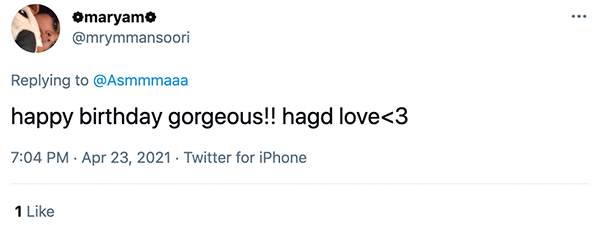
In the ever-evolving landscape of digital communication, slang abbreviations sprout like wildflowers, each one a snapshot of contemporary culture. One such curious abbreviation is “HAGD.” While many might encounter it in casual conversations or text messages, they may not fully grasp its implications. So, what does HAGD mean? Let us unravel this intriguing piece of modern lexicon and explore its nuances.
At its core, HAGD stands for “Have A Great Day.” It’s an epithet of positivity, a linguistic hug shared between friends, family, or even casual acquaintances. More than just a fleeting phrase, HAGD encapsulates goodwill and serves as a digital emissary of kindness in a world often overshadowed by distractions and disconnection.
But why has this particular abbreviation gained traction? With the advent of social media platforms and texting apps, brevity has become king. People are increasingly pressed for time, simultaneously juggling work schedules, social obligations, and personal responsibilities. Enter HAGD: an efficient way to convey sincere wishes without indulging in lengthy exchanges. However, this raises an intriguing challenge: does the proliferation of such abbreviations dilute their emotional weight?
In a world clamoring for both speed and sincerity, HAGD emerges as a solution, albeit not without its critics. Some argue that such phrases lose their heartfelt essence when stripped of context and warmth. Imagine receiving a simple “HAGD” from a colleague after a tense meeting; while the intent is positive, the brevity might feel impersonal. Hence, the juxtaposition of casual digital interactions with deeper emotional connections sparks a realm of questions. Can slang like HAGD coexist with the authentic expressions of affection we often cherish?
As we delve deeper into the implications of using HAGD, it’s salient to acknowledge the spectrum of informal communication. This abbreviation, much like others—such as BRB (Be Right Back) or LOL (Laugh Out Loud)—has empowered individuals with a sense of identity within the digital space. Slang often serves as an in-group language, fostering camaraderie among peers. In this context, using HAGD can signify belonging; it cultivates an ephemeral bond that transcends distance, reminding us that despite life’s challenges, a gesture of kindness is just a keystroke away.
One fascinating aspect of HAGD is its versatility. It may be applied in various contexts: from a lighthearted message to a friend heading into a busy day to a subtle encouragement shared with someone facing adversity. The beauty of HAGD lies in its adaptability; it carries an essential message but allows for personal interpretation. Yet, herein lies another exploration: how does the absence of tone affect the reception? Without vocal inflection or facial expressions to accompany the phrase, the subtle intent may be misconstrued, rendering the message almost ambiguous.
While common in everyday exchanges, HAGD also finds its way into more formal settings, albeit cautiously. In professional environments, it may serve as a friendly sign-off in an email, ideally encapsulating a positive sentiment without straying too far into informality. However, this raises the question: should such abbreviations be encouraged in workplaces, or do they undermine professionalism? Finding this balance can be a challenging endeavor for individuals navigating corporate cultures that often cling to traditional communication styles.
Moreover, as technology continues to embrace innovation, the evolution of language infiltrates the younger generations in ways that many might not yet understand. For instance, HAGD is indicative of how text-based slang can oftentimes be a reflection of cultural dynamics. Its usage among younger demographics might coincide with an emphasis on positivity and support. This cultural shift invites introspection: Is the prevalence of positive expressions like HAGD indicative of a society that is more empathetic and nurturing than before?
However, one might ponder whether such abbreviations foster genuine human connections. The convenience of sending a quick HAGD may overlook the richness of nuanced conversation. Could it possibly serve as a band-aid over deeper emotional wounds? While it’s imperatively important to light up someone’s day, the underlying feeling of caring requires evident dialogue that words alone can’t always convey. Hence, the exploration of HAGD becomes a microcosm of a larger conversation on digital communication; we mustn’t ignore the sobering question: are we sacrificing emotional depth for the sake of convenience?
In conclusion, HAGD represents more than just a simple mantra wishing someone well; it acts as a catalyst for introspection and discussion about how we communicate. As we toggle between the fast-paced realm of text messaging and the intricacies of human interaction, we must navigate the delicate balance between brevity and emotional authenticity. Are we ready to embrace the challenge of ensuring that a simple abbreviation like HAGD doesn’t hinder our capacity for genuine connection? This begs continuous exploration into how we can skillfully wield the tools of modern communication to enrich our lives—one HAGD at a time.












