
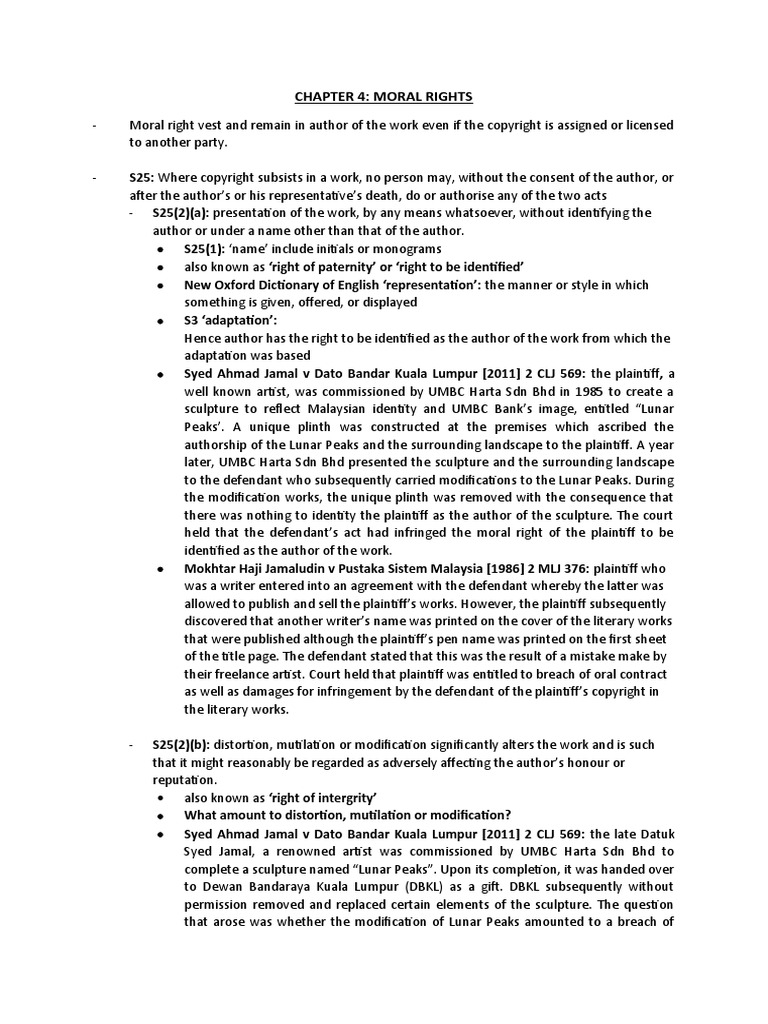
The concept of moral rights exists within the ambit of copyright law and represents a facet that diverges from the traditional economic protections afforded to authors and creators. Unlike economic rights, which grant creators the ability to monetize their works, moral rights are intrinsically linked to the personal and reputational interests of the creator. This deep-seated connection raises a pivotal question: what does it mean to sign away moral rights? In this article, we will delve into the intricate legal landscape surrounding moral rights, elucidate their significance, and explore the legal implications of waiving these rights.
To begin with, it’s crucial to understand the essence of moral rights. Moral rights typify the non-economic entitlements that an author possesses regarding their work. These rights can include the right to attribution, the right to integrity, and the right to the disclosure or withdrawal of a work. The right to attribution allows creators to be identified as the authors of their works, while the right to integrity protects against derogatory treatment or modification that could harm the creator’s reputation.
When an individual or entity decides to sign away these moral rights, they are essentially relinquishing their personal connection to the work. This act can have profound implications, not only for the creator but also for the work itself and its reception by the public. Let’s explore the implications of relinquishing these rights more comprehensively.
### Legal Framework of Moral Rights
The legal framework governing moral rights varies significantly from one jurisdiction to another. Countries that adhere to the Berne Convention for the Protection of Literary and Artistic Works typically recognize moral rights as a fundamental part of copyright protection. Notably, jurisdictions such as France place a heavy emphasis on moral rights, bestowing upon creators perpetual rights that cannot be waived. In contrast, common law countries like the United States historically offered limited protections for moral rights, primarily under the Visual Artists Rights Act (VARA) for certain visual works.
### The Waiver of Moral Rights: What It Entails
Signing away moral rights involves the formal and often irrevocable act of renouncing one’s rights in a legal agreement. This waiver can manifest in various forms, including contracts between artists and publishers, filmmakers and studios, or musicians and record labels. The implications of such a decision should not be taken lightly, as they can lead to outcomes that significantly impact the creator’s relationship with their work.
### 1. The Right to Attribution: A Double-Edged Sword
Foregoing the right to attribution can lead to a profound disconnect between the creator and their work. By waiving this right, an author surrenders their ability to be recognized as the originator of their creative output. This can be particularly disheartening for artists who derive intrinsic satisfaction from their identity as creators. Furthermore, the lack of attribution can conceal the creator’s contributions from the public, potentially eroding their professional reputation over time.
### 2. Right to Integrity: Protection or Limitation?
The right to integrity safeguards an artist’s work from alterations that may tarnish their reputation. For instance, a filmmaker may find their cut of a film altered by a studio in a way that misrepresents their artistic vision. Waiving this right opens the floodgates to modifications that may not align with the creator’s original intent. Such alterations can inspire controversy and dissent among audiences, thereby complicating the artist’s legacy. In this context, the integrity of the work is inevitably at stake.
### 3. Economic vs. Moral Rights: A Complex Relationship
While moral rights are distinct from economic rights, their interplay can engender intricate scenarios. Creators may wish to sign away their moral rights to secure a lucrative contractual agreement that provides economic benefits. However, this decision invites a potential conflict where financial gain may come at the expense of artistic integrity. This conundrum can manifest in dilemmas faced by creators when allocating their rights to larger entities, where the allure of immediate compensation outweighs concerns for long-term reputation and legacy.
### 4. Jurisdictional Variances: A Global Perspective
As mentioned earlier, moral rights differ globally, impacting how they can be waived. In some civil law jurisdictions, moral rights are inalienable; thus, creators cannot legally surrender them. In these cases, any attempts to sign them away would be rendered void and unenforceable. Conversely, in countries where moral rights can be forfeited, the waiver often entails specific legal language to ensure clarity and enforceability. This inconsistency necessitates a thorough understanding of local laws when navigating contractual agreements involving moral rights.
### 5. A Creator’s Legacy: Long-term Considerations
One of the most pressing considerations when signing away moral rights is the long-term impact on a creator’s legacy. As cultural perceptions evolve, a work once deemed acceptable may face scrutiny and criticism in a contemporary context. Creators forfeiting their moral rights may find themselves distanced from their art, unable to voice dissent or correction when their work is misrepresented or exploited. This temporal dissonance can complicate the narrative that artists seek to tell through their creations, often leading to a disenchanted relationship between the artist and their oeuvre.
### Conclusion: Navigating the Complexities of Moral Rights
In summary, signing away moral rights represents a significant legal and personal decision for creators. The delicate balance between economic benefit and the preservation of one’s artistic integrity presents a challenge that warrants careful contemplation. Creators stand at a crossroads, weighing the allure of financial compensation against the potential disenfranchisement from their own work. Understanding the nuances of moral rights and their potential implications is imperative for any individual navigating the expansive world of copyright law. In an era where the lines between creator and creation are increasingly blurred, safeguarding one’s moral rights may serve as a vital endeavor in maintaining the integrity of the artistry itself.












