
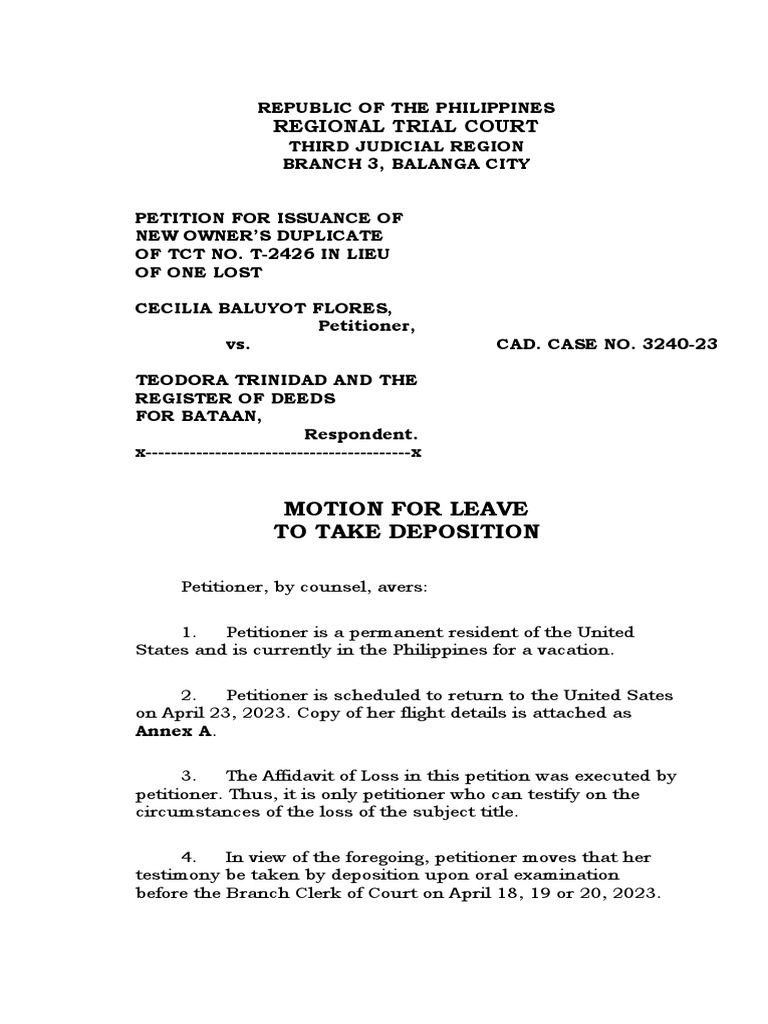
In the intricate tapestry of legal proceedings, the term “deposition” holds significant weight. It acts as a pivotal mechanism for gathering sworn testimony from witnesses, often including the plaintiff in civil lawsuits. Understanding what it means when a deposition of the plaintiff is canceled presents a multifaceted view of legal strategy, potential ramifications, and the underlying principles of due process.
At its core, a deposition is an opportunity for the opposing party to glean insights and information directly from the plaintiff, who outlines their claims and the basis of their legal actions. However, circumstances occasionally arise that lead to the cancellation of this crucial event, and the implications can be far-reaching, signaling shifts in strategy for both sides or highlighting procedural deficiencies.
The Reasons Behind Cancellation
There are multifarious reasons why a deposition may be canceled. Often, it stems from logistical issues—scheduling conflicts, illnesses, or unexpected emergencies can be common culprits. The legal environment is inherently dynamic, and the parties involved must navigate a complex web of timelines, court dates, and personal obligations, causing ripples that can lead to cancellations.
Moreover, strategic considerations can play a significant role. For instance, an attorney may opt to cancel a deposition if they believe that further discovery will enhance their case or if they have recently acquired additional evidence that renders the deposition less necessary. In these scenarios, canceling the deposition could be perceived as a tactical retreat in order to regroup and reassess the merits of the case.
The Legal Implications
The cancellation of a plaintiff’s deposition can engender a host of legal consequences. Initially, it may reflect upon the party’s ability to navigate legal obligations and adhere to the court’s timeline. Frequent cancellations can paint a picture of disorganization or lack of preparation, which could negatively influence how a judge perceives the plaintiff’s credibility or the strength of their case.
Additionally, the cancellation scenario opens avenues for potential motions or sanctions. If one party perceives that the cancellation is an unnecessary delay or a deliberate act to obstruct justice, they may file a motion to compel. This motion seeks to legally enforce the deposition’s occurrence, mandating the plaintiff to appear and testify. Such an outcome can not only increase the urgency of the legal process but may also inflame tensions between the disputing parties.
Strategic Repercussions
On a strategic level, the fallout from a canceled deposition can place both parties in a precarious position. For the plaintiff, the cancellation may be an opportunity to fortify their factual assertions before they are scrutinized under oath. Alternatively, it could signal an indication of weakness, prompting the defendant to reassess their approach, potentially leading to either an aggressive counter-strategy or an eagerness to settle the case out of court.
Defendants, too, must weigh the ramifications of a canceled deposition. Depending on the context, they might interpret it as a sign that the plaintiff lacks confidence in the merits of their claims, influencing their decision-making process. If a defense team believes the plaintiff is evading critical questioning, they may choose to escalate their discovery efforts, thereby intensifying the litigation landscape.
Perceptions of Justice
Moreover, the perception of justice plays a crucial role in interpreting the significance of a canceled deposition. Members of the public and jury may develop preconceived notions about the character and intentions of a plaintiff based on their actions and choices. A cancellation might feel counterintuitive to the pursuit of truth. Consequently, it is essential for plaintiffs and their legal teams to navigate these waters carefully, attempting to maintain transparency and accountability even amidst adversity.
Future Implications
Looking ahead, the direct consequences of a canceled deposition extend beyond the immediate legal battle. The case dynamics may shift, potentially leading to a settlement that seems favorable in light of altered strategic perspectives. In this regard, understanding the motivations behind canceling a deposition can lend insight into the broader narrative surrounding the litigious context and the involved parties’ objectives.
Furthermore, the landscape of legal proceedings continues to evolve with changes in technology and societal values. Virtual depositions, for example, have become more prevalent, changing the traditional deposition format and influencing decisions surrounding cancellations. The newfound flexibility may mitigate some logistical hurdles, allowing for a smoother legal process, yet may also introduce new challenges as parties navigate the nuances of remote testimony.
The Broader Legal Landscape
In examining what it means when a deposition of the plaintiff is canceled, one must consider the surrounding legal environment. Each cancellation resonates throughout the legal community. It evokes curiosity surrounding procedural integrity, ethical practices, and genuine intentions of truth-seeking. The interplay between legal maneuvers and perception ultimately enmeshes itself in the fabric of judicial dealings, rendering each case unique and compelling.
Ultimately, the canceled deposition of a plaintiff unfolds a rich narrative steeped in strategy, legal obligations, and the search for truth. Understanding this scenario enriches one’s perspective on the broader implications within the judicial system, revealing a nuanced picture of how legal battles are fought, perceived, and resolved. Each cancellation is but a chapter in a larger story that challenges the players involved to navigate the seas of justice with acumen and foresight.












