
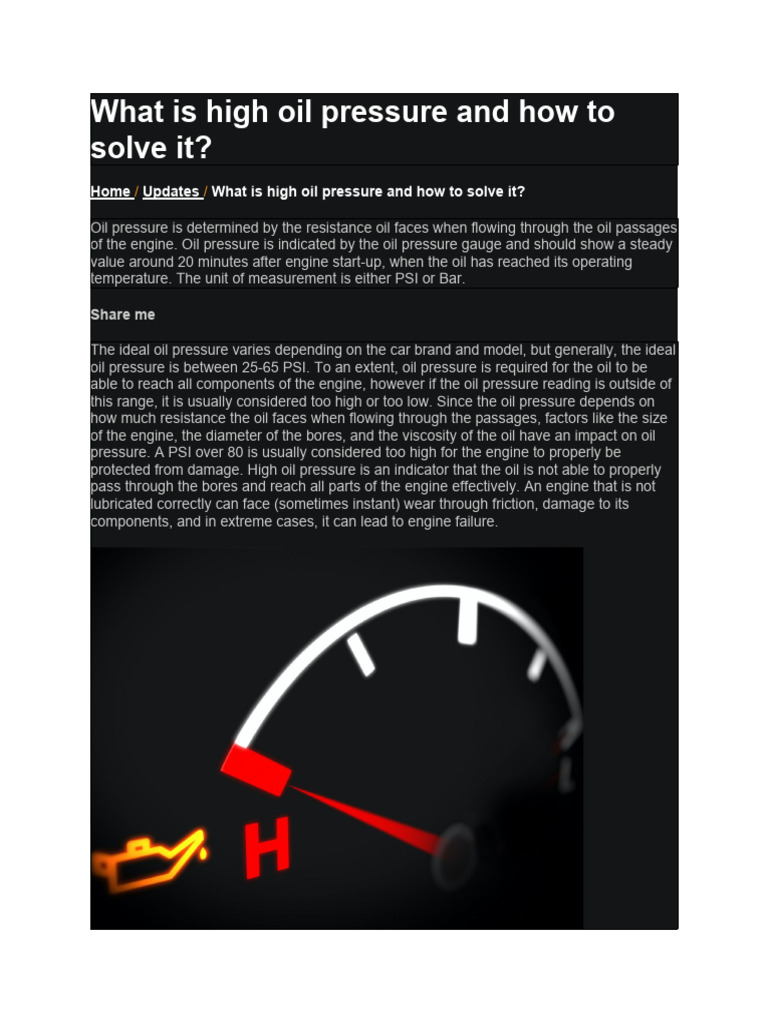
When it comes to car maintenance, few things are as crucial as understanding oil pressure. This seemingly innocuous aspect of engine function can lead to significant consequences if mismanaged. This article delves into the intricacies of high oil pressure, exploring its implications, potential causes, and the necessary corrective measures. By the conclusion, you’ll be equipped with the knowledge to diagnose and address high oil pressure effectively.
Understanding Oil Pressure
Oil pressure refers to the force exerted by the engine oil as it circulates through the various components of an engine. This pressure is vital for lubricating engine parts, dissipating heat, and protecting against wear. Maintaining optimal oil pressure is fundamental for ensuring the longevity and efficiency of a vehicle’s engine.
What Constitutes High Oil Pressure?
High oil pressure generally signifies that the oil is not able to flow freely through the engine. While specific pressure readings can vary between different vehicle makes and models, a reading significantly above the manufacturer’s specifications often points to underlying problems. But before fear sets in, it’s important to understand what high oil pressure might be indicating.
Common Symptoms of High Oil Pressure
Identifying high oil pressure can be a straightforward process, given its prominent symptoms. Consider these signs:
- Gauge Reading: One of the most straightforward indicators is the oil pressure gauge. If it registers above the safe zone, it could be time to take action.
- Unusual Engine Sounds: High pressure can lead to abnormal sounds from the engine, including whining or knocking noises, signaling that something is amiss.
- Oil Leaks: Increased pressure may force oil past seals and gaskets, leading to leaks, noticeable oil spots under the vehicle.
- Dashboard Warning Lights: Modern vehicles often come equipped with warning lights for oil pressure; if illuminated, it requires immediate investigation.
Potential Causes of High Oil Pressure
Understanding the reasons behind elevated oil pressure is essential for effective troubleshooting. Here are some common culprits:
- Oil Viscosity: Using a heavier grade of oil than recommended can increase resistance within the engine, leading to high pressure readings. Oil viscosity, an important factor, needs to align with manufacturer specifications, particularly seasonally when temperatures fluctuate.
- Oil Filter Issues: A clogged or improperly installed oil filter can restrict oil flow, causing a backup and hence increasing pressure. Regular maintenance and timely replacements of the oil filter are vital to prevent such scenarios.
- Faulty Oil Pressure Relief Valve: The oil pressure relief valve regulates oil pressure within the engine. If it becomes stuck or malfunctions, it can disrupt the entire oil pressure system, resulting in high pressure readings.
- Engine Blockage: Sludge build-up or debris can create blockages within the oil passages of the engine. This obstruction limits oil flow and increases pressure. Regular oil changes can help prevent sludge formation.
- Temperature Variations: Elevated temperatures can either increase oil viscosity or put excessive strain on the oil pump, leading to higher than normal pressure. Monitoring engine temperature alongside oil pressure is prudent.
Consequences of Ignoring High Oil Pressure
Neglecting high oil pressure can lead to dire consequences for your vehicle’s engine. Continually operating under high-pressure conditions can cause:
- Engine Wear: Excessive pressure can lead to increased friction and wear on engine components, resulting in premature aging and damage.
- Seal Damage: Prolonged high pressure can deteriorate seals and gaskets, leading to oil leaks and the potential for catastrophic engine failure.
- Pressure Burst: In extreme cases, excessive oil pressure can cause pipes to burst or seals to split, resulting in oil being expelled from the system at an alarming rate.
Diagnostic Steps
When faced with high oil pressure, identifying the underlying issue is paramount. Here are some actionable steps:
- Check Oil Quality and Viscosity: Inspect the oil quality and ensure it meets the recommended viscosity for your vehicle. If your oil appears dark or gritty, it may be time for a change.
- Inspect the Oil Filter: Ensure the oil filter is free from blockages and is properly installed. Replacing it can often resolve issues related to oil pressure.
- Test the Oil Pressure Relief Valve: A faulty valve can often be tested and replaced if needed, restoring proper flow and pressure levels.
- Consult with a Mechanic: If troubleshooting proves ineffective, seeking professional assistance is advisable. A certified mechanic can conduct a thorough diagnosis and pinpoint the issue.
Conclusion
In summary, understanding high oil pressure is essential for vehicle health and longevity. By recognizing the symptoms, knowing the causes, and taking appropriate diagnostic actions, car owners can avoid severe engine damage. A proactive approach to vehicle maintenance can ensure that your engine operates smoothly, allowing you to enjoy every mile on the road with confidence.












