
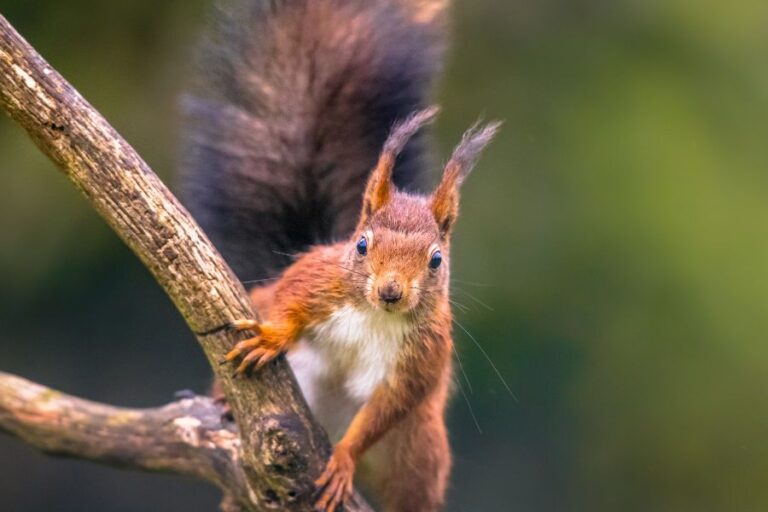
Squirrels are captivating creatures that roam our parks, gardens, and woodlands, often captivating our attention with their acrobatic antics and lively dispositions. Among the many behaviors exhibited by these furry critters, tail flicking stands out as particularly intriguing. But what does it mean when squirrels flick their tails? This article delves into the various reasons behind this common yet enigmatic behavior, shedding light on the motivations and circumstances that drive these charming animals.
1. Communication with Fellow Squirrels
One of the primary reasons squirrels flick their tails is as a form of communication. Squirrels are sociable creatures, often found in groups, and their tails serve as vital instruments for conveying a range of messages. The upward flick of a tail can be interpreted as a warning signal to other squirrels in the vicinity. This flicking motion can indicate the presence of a predator or an imminent threat. For instance, if a squirrel spots a hawk soaring above, it may engage in vigorous tail flicking, alerting its companions to the potential danger.
Moreover, these flicks can denote a variety of emotional states. A frantic tail flick might express anxiety or excitement, while a slow, languid flick can signify relaxation and contentment. This duality is essential for the survival of the species, as it enhances cohesion among group members and aids in collective vigilance.
2. Display of Agitation or Distress
Tail flicking can also reveal a squirrel’s emotional turmoil. When a squirrel is agitated—whether due to competition for food, an encounter with a rival, or feelings of insecurity —their tail may engage in rapid, frenetic movement. This serves as a visual cue to potential adversaries, a display meant to assert dominance or warn away challengers. In such scenarios, the flicking is typically more pronounced and may be coupled with other body language, such as erect postures or loud vocalizations.
Similarly, when cornered or feeling threatened, a squirrel may flick its tail as a self-defense mechanism. The rapid motion not only draws attention but can also confuse predators, distracting them and providing a fleeting opportunity for escape. This remarkable adaptability showcases the complex interplay between behavioral responses and survival instincts.
3. Navigational Aid and Balance
In addition to communication, tail flicking serves a physical function: balance and navigation. Squirrels are natural acrobats, expertly darting up and down trees and leaping from branch to branch. Their bushy tails act as rudders, helping them maintain stability during these aerial maneuvers. When a squirrel leaps from a high branch, the flick of its tail helps pivot and balance the body, allowing for a controlled landing. In this context, tail movement can appear as flickering as the squirrel adjusts its position mid-air.
This balance is crucial when traversing narrow branches or initiating unexpected jumps, demonstrating the tail’s role beyond mere aesthetics or communication. Instead, it plays an essential part in their physical prowess, underscoring the multifaceted utility of this appendage.
4. Sign of Playfulness and Energy
Squirrels are inherently playful animals, with tail flicking also signifying exuberance and playfulness. Play behavior is vital among young squirrels as it helps develop essential skills and social bonds. During playful interactions, a squirrel may engage in a flurry of tail flicks, which can be contagious, prompting simultaneous displays in others. This exuberant flicking can be observed during games of chase, where squirrels dart playfully around trees and across the ground, their tails contrasting with their lively antics.
This playful behavior helps the young learn critical survival skills, from agility to social interaction. The incorporation of tail flicking during play enhances their ability to bond with their peers and is essential for fostering a sense of community in a squirrel’s social structure.
5. Attraction and Mating Rituals
During mating season, the behavior of squirrels shifts dramatically. Tail flicking enters a new dimension as it becomes part of courtship rituals. Male squirrels may flick their tails in an exaggerated manner to attract females, signaling vigor and health. The prospect of a suitable mate is often buoyed by a male’s display of confidence, and tail flicking can serve as a flamboyant advertisement of fitness. The intensity and frequency of these flicks may correlate to the male’s overall condition and desirability.
Observing this behavior not only highlights the complexities of animal courtship but also illustrates the significance of physical displays in the reproductive strategies of squirrels and many other animal species.
6. Environmental Interactions
Lastly, tail flicking can be contextually tied to environmental interactions. Squirrels are keenly alert to changes in their surroundings and may flick their tails in response to stimuli, be it rustling leaves, other animals, or sudden movements in their vicinity. Such reactions are indicative of their heightened senses and adaptability to their environment. This instinctive behavior allows them to stay attuned to their habitat, facilitating foraging or avoiding danger, and it underscores the profound connection between animal behavior and environmental awareness.
In conclusion, the act of tail flicking in squirrels is a multifarious behavior rooted in communication, emotional expression, playfulness, and environmental interaction. Understanding these nuances enriches our appreciation for these remarkable animals, illuminating the complexities of their social structures and survival strategies. Whether it’s the flicker signaling a call to action, a display of emotional states, or a playful interaction between peers, the tail plays an essential role in the life of a squirrel, weaving together a tapestry of behavior that reflects their complexities as living organisms. So next time you see a squirrel in your yard, take a moment to observe those flickering tails—it’s not just a random movement, but a window into the world of squirrel behavior, brimming with meaning and purpose.












