
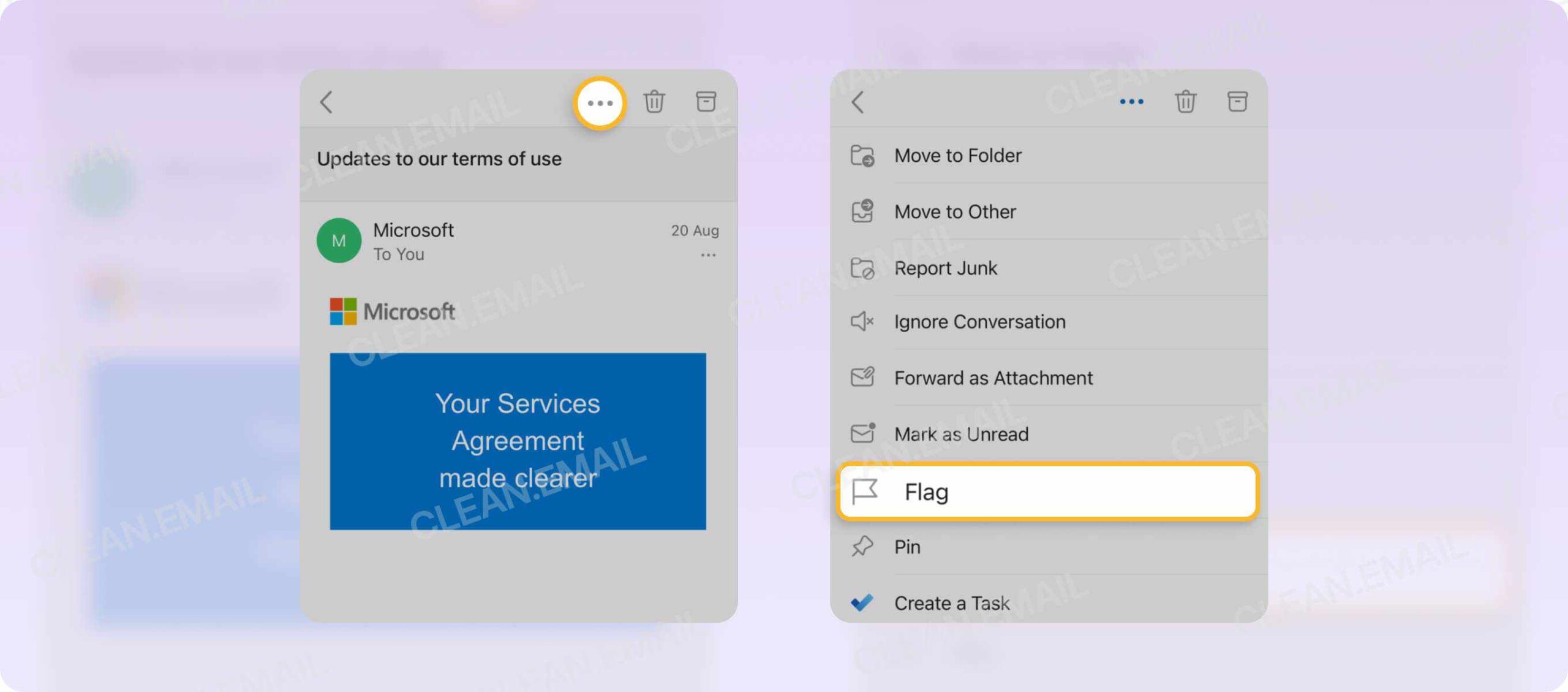
In today’s digital age, email serves as a pivotal conduit for communication, whether for personal correspondence or professional engagements. With the influx of messages flooding our inboxes daily, effective organization becomes imperative. One often overlooked yet powerful feature designed to assist users in managing their emails is the “flag” option. But what does it signify when you flag an email? Understanding this feature can both streamline your workflow and enhance your productivity.
1. The Essence of Flagging an Email
Flagging an email primarily serves as a visual cue, allowing you to categorize and prioritize your messages. When you flag an email, you designate it as important or warranting further attention. This practice can be especially useful for individuals juggling multiple responsibilities, ensuring crucial correspondence does not slip through the cracks.
Additionally, flagging can be perceived as a call to action. It implicitly indicates that the flagged email requires additional input, whether it be a response, further investigation, or a decision to be made. Consequently, it transforms a passive approach to email management into a more proactive strategy, enabling users to filter their focus where it is most needed.
2. Understanding the Nuances of Different Email Platforms
While the concept of flagging emails is universally applicable across various platforms, the execution and visual representations may differ. For instance, in platforms like Outlook, flagged emails appear with bold text or a small flag icon, raising their status in the pecking order of your inbox. This visual differentiation ensures that flagged emails stand out amongst the deluge of unflagged ones, an essential feature as the quantity of incoming messages increases.
On the other hand, Gmail employs a slightly different tactic through its “star” system, which permits users to assign stars of various colors to their messages. Although this may seem superficially distinct, the underlying principle remains intact: both features facilitate the organization of emails according to priority.
3. The Psychological Implications of Flagging
At the heart of the flagging feature lies a deeper psychological intrigue. The act of flagging carries with it a sense of ownership and responsibility. When emails are flagged, it often results in mental classification—users begin to associate flagged messages with tasks that are pending completion. This can breed a psychological comfort, as it provides users a corporeal and visible method to manage their to-do lists within the digital realm.
Moreover, the act of flagging can enhance motivation. The process of organizing emails fosters a sense of control and accomplishment, allowing users to visualize their productivity. As flagged messages decrease, individuals experience a liberating sensation, akin to crossing an item off a physical checklist. This self-affirming behavior reinforces positive habits, adding a layer of complexity to our interactions with digital communication.
4. Beyond Basic Flagging: Advanced Techniques
Flagging is not just about marking messages; it can be elevated to more sophisticated forms of email management. Consider implementing a color-coding system using flags or stars. Each color could represent a different priority level: red for urgent tasks, yellow for follow-ups, and green for informational messages that require acknowledgment but not immediate action. This stratification helps in providing clarity, reducing ambiguity surrounding which emails demand immediate focus.
Furthermore, combining flagging with other organizational tools, such as labels or folders, can yield significantly improved results. By categorically organizing flagged emails into detailed folders based on projects, clients, or subjects, users can create a meticulous ecosystem of email management, ensuring that no detail is lost amid the myriad of demands.
5. The Limitations of Flagging
Despite its many advantages, flagging emails does have limitations. Overusing this feature can lead to “flag fatigue,” where the sheer volume of flagged emails becomes overwhelming. Consequently, users may neglect to revisit older flagged messages, ultimately defeating the purpose of flagging as a productivity tool. Furthermore, some individuals might develop a false sense of security, believing that simply flagging an email is sufficient for task management, thus potentially neglecting actual responses or follow-ups.
It’s also important to acknowledge the ephemeral nature of digital communication. As swiftly as an email can be flagged, it can equally be buried under an avalanche of new messages. Thus, users must remain vigilant in their email practices, regularly reviewing and managing flagged messages to ensure their system remains effective.
6. Best Practices for Effective Email Flagging
To maximize the benefits of the flagging feature, consider adhering to a few best practices. Firstly, develop a routine for reviewing flagged emails—set aside time each day or week to address these messages, ensuring they are consistently prioritized in your workflow. Moreover, be selective about what you choose to flag; only mark emails that genuinely require action. This tactic reduces clutter in your flags and helps prevent feelings of overwhelm.
Additionally, utilize reminders or task management applications in conjunction with your email system to enhance accountability. For example, if you flag an email that requires a response by a certain date, annotate it in your task list or calendar as well, reinforcing your commitment to timely responses.
Conclusion: Embracing the Power of Email Management
Flagging serves as a valuable tool in navigating the labyrinthine expanses of email communication. Understanding its significance—from the psychological implications to advanced organizational techniques—can foster enhanced productivity and efficiency. By embracing the flagging feature, alongside other organizational strategies, individuals can transform their inbox from a seemingly chaotic collection of messages into a well-structured and navigable workspace. This shift not only promotes better communication but also nurtures a more profound engagement with the tools that govern our professional and personal interactions.












