
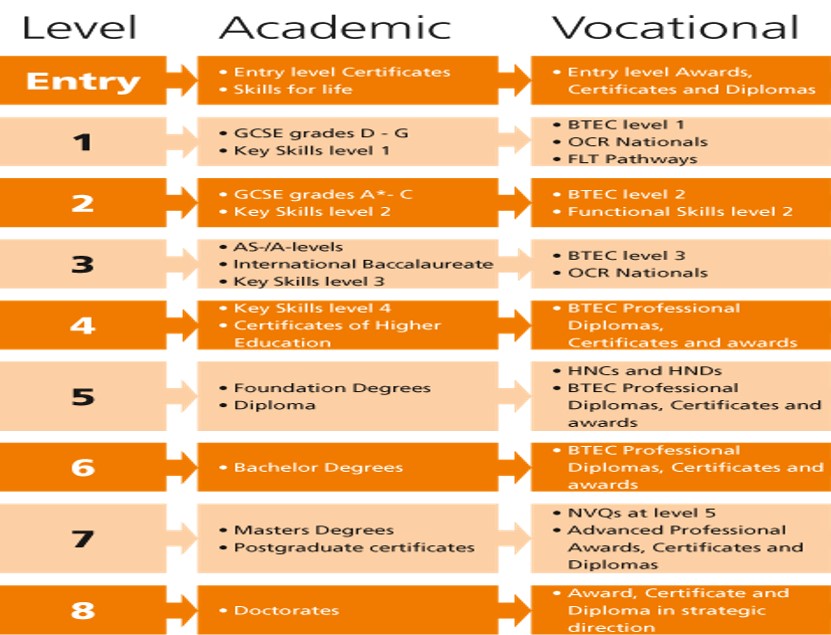
When embarking on the academic journey of higher education, students often find themselves engrossed in a labyrinth of course codes, credit hours, and academic levels. Among these codes, “L9” surfaces with a distinct significance, particularly for students engaged in college courses that adhere to specific frameworks. But what does L9 really entail, and how does it relate to the academic experience? Let’s dive into the depths of academic levels, elucidating their meanings and implications for learners navigating the higher education landscape.
Firstly, it’s paramount to appreciate the context of “L9.” Academic levels are typically designated using a structured hierarchy that categorizes courses by their depth and complexity. The L9 designation often signifies a postgraduate or master’s level course. This level is typically pursued by individuals who have previously completed undergraduate studies, and it poses an intellectual challenge that goes beyond the foundational knowledge acquired in an undergraduate setting.
At this juncture, one might ponder: what makes L9 significantly different from lower academic tiers such as L5 or L6? Let’s explore this question further. Lower levels, such as L5 (usually associated with the second year of an undergraduate degree), tend to focus on broad knowledge across various subjects. They concentrate on establishing foundational theories and concepts, nurturing critical thinking skills.
In stark contrast, L9 demands an advanced level of analytical prowess. It often requires students to engage in nuanced discussions, employ sophisticated methodologies, and undertake independent research. Such level is reflective of a graduate’s ability to synthesize complex information and apply it to practical scenarios — an endeavor that not only enriches one’s academic credentials but also enhances career prospects.
What does this mean for a college course embracing the L9 designation? To successfully traverse this academic territory, students must be equipped with a myriad of skills. Critical thinking becomes indispensable; the ability to dissect texts, question underlying assumptions, and formulate balanced arguments is quintessential. Additionally, communication skills undergo a transformation, requiring students to articulate their viewpoints and findings eloquently, whether in writing or verbally during seminars and group projects.
Collaboration also plays a pivotal role at the L9 level. Working alongside peers can foster a rich exchange of ideas, perspectives, and critiques that enhance the learning experience. Group projects, often integral to postgraduate courses, not only hone one’s ability to work within diverse teams but also reflect real-world professional scenarios. Therein lies a challenge — how can students effectively contribute to collaborative efforts while ensuring their individual voices are heard?
Another dimension of the L9 academic experience involves holistic engagement with the subject matter. Students are often compelled to delve deeper into specialized research, igniting a passion for inquiry. The expectation to produce rigorous assignments, literature reviews, and research papers requires a refined approach and meticulous attention to detail. The journey might prompt one to ask: how does one remain motivated amidst the rigorous demands of L9 coursework?
Moreover, the L9 experience is not solely about academic rigor; it serves a broader purpose in molding professionals equipped with both theoretical knowledge and practical application. Many L9 courses are designed to bridge the gap between academia and industry, offering experiential learning opportunities through internships, projects, or collaborations with industry partners. This connection elevates the learning experience by allowing students to witness the real-time implications of their studies.
However, students must navigate the two-fold challenges that arise: balancing theoretical knowledge with practical application, and navigating time constraints while still striving for excellence. This balance can often resemble a tightrope walk, and the question remains: how can students cultivate resilience to adapt to the rigorous demands of L9 without feeling overwhelmed?
As students progress through L9 courses, they invariably encounter the necessity for self-directed learning. Unlike in lower levels, where supervision and guidance may be more prominent, the L9 learner is often expected to take charge of their educational journey. This newfound autonomy can be as exhilarating as it is daunting. Students may find themselves grappling with time management issues, prioritizing tasks while striving for quality. How can one harness the power of self-regulation to enhance their learning experience?
Encouragement and support systems can significantly impact the L9 experience. Institutions typically provide access to academic advisors, mentors, and counseling services tailored for postgraduate students. Tapping into these resources can alleviate the pressures associated with advanced studies and foster an atmosphere of collaboration and support, enabling students to cultivate resilience.
Ultimately, the academic journey at the L9 level is multifaceted, rich with intellectual stimulation and rigorous challenges. It stands as a testament to one’s commitment to personal and professional growth. Graduating from an L9 course not only signifies mastery of a subject but also embodies the perseverance and adaptability requisite for succeeding in an ever-evolving job market.
In conclusion, while the “L9” designation may seem merely a label, it encapsulates a profound shift in academic expectation and engagement. Students must navigate this exhilarating yet daunting terrain, embracing the complexities and challenges that accompany advanced studies. Mastery of the discipline, coupled with personal reflection and collaboration, will illuminate the path forward. So, are you ready to embark on your L9 journey and rise to the challenge that awaits?












