
Have you ever found yourself tangled in the intricacies of file paths as you explore the labyrinth of your computer’s directories? In the realm of programming, the symbols used for navigating file systems can sometimes seem enigmatic at first glance, particularly the sequence “../../”. So, what exactly does this curious notation signify?
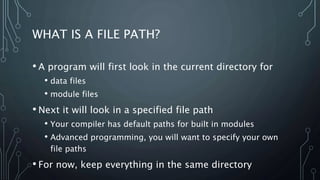
To unravel this mystery, we must first delve into the concept of relative file paths and absolute file paths. Each file on your system resides within a directory structure, a hierarchy that organizes files in a way conducive to ease of access and management. An absolute path provides the complete address, starting from the root directory, while a relative path conveys a location in relation to where you currently stand in that directory structure.
Now, let’s consider the “..” symbol. This notation is a shorthand that represents the parent directory – the directory one level up from the current location. Thus, when you see “../../”, it indicates a navigation that ascends two levels in the directory tree. Fascinating, isn’t it?
This brings us to a practical scenario: imagine you are deep within a series of folders. You reside in “C:/Users/John/Documents/Projects/2023/”. If you want to reference a file located in “C:/Users/John/Images/”, how would you traverse back to reach that destination? By utilizing the “../../” notation, you can backtrack effectively. From your current directory:
- “..” takes you to “C:/Users/John/Documents/Projects/2023”
- Another “..” will lead you to “C:/Users/John/Documents/Projects”
From here, instead of listing the entire path down to “Images”, you can append the folder name directly as follows: “../../Images/your_image.png” to access your desired file.
But why is this form of navigation paramount in programming? When dealing with larger projects, the ability to use relative paths enhances portability. As developers share their work across different systems or environments, the paths can shift based on user-specific configurations. Relative paths mitigate the risk of hard-coded absolute paths that may fail when the project is transferred elsewhere.
Furthermore, using “../../” is not just a convenience; it embodies best practices in coding. By relying on relative paths, the code adheres to a more adaptable structure, allowing developers to avoid the harrowing ordeal of constantly rewriting paths. This is particularly useful in collaborative projects, where numerous contributors may have different directory layouts.
However, navigating with relative paths is not devoid of challenges. One pitfall that newcomers might face is losing track of their current directory. The deeper you dig into nested folders, the more convoluted your path can become. Keeping a mental map of your location is essential to avoid spurious errors. A smart trick is to utilize terminal commands to print your current working directory if you’re in an environment that supports it.
As we venture deeper, it’s crucial to consider the overall structure of your project. Effective organization can prevent the need for excessive use of “../../”. For instance, a well-structured directory, where files are divided logically into subfolders, can simplify access. Best practices suggest creating a hierarchy where resources are grouped meaningfully. This minimizes the necessity of ascending directories oftentimes.
Moreover, understanding this syntax also prepares you for more sophisticated tools and frameworks. File management and pathing are foundational elements in web development, scripting, and even build systems. Whether you’re coding in Python, JavaScript, or shell scripting, grasping the underlying principles of file paths will enhance your fluency in navigating the digital workspace.
That being said, how do you keep your coding journey enjoyable amidst these complexities? One playful approach is to turn the navigation into a game. As you encounter paths like “../../”, challenge yourself to visualize the hierarchy of directories and predict the outcome of your navigations. This interactive method will reinforce your understanding and make the learning process less tedious.
In conclusion, the notation “../../” is a powerful ally in the realm of programming and file management. By grasping its utility, you not only unlock the ability to navigate directories with ease but also cultivate best practices that streamline your coding workflows. Always strive for mastery of the seemingly simple; understanding these foundational details will serve you well in your journey through the programming landscape.
So, the next time you come across “../../”, take a moment to reflect. Are you ready to embrace the challenge, or does it still appear to be a perplexing puzzle? The key lies in practice and exploration, so venture forth into your directory structure and wield your newfound knowledge like a seasoned programmer!












