
Have you ever pondered the intricate dance of legal terms within the realm of personal injury claims? Specifically, in the aftermath of a car accident, what does a “Motion of Writ” truly entail? This legal jargon may seem daunting, yet understanding its implications can be both crucial and enlightening. The journey through this complex landscape reveals not only the procedural intricacies but also the potential challenges faced by those involved.
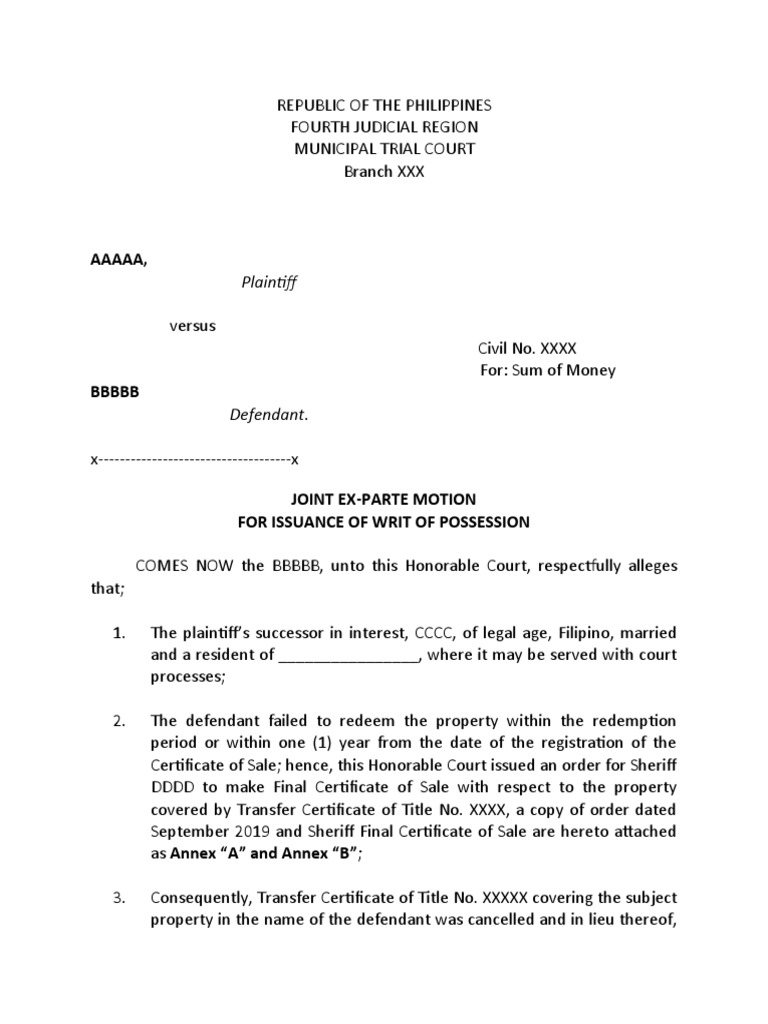
To commence, let us dissect the term “Motion of Writ.” A “motion” is a formal request to the court, invoking its authority to perform a specific act. In contrast, a “writ” is a legal document issued by a court commanding the person to whom it is addressed to perform or refrain from performing a specified act. In the context of a car accident case, the “Motion of Writ” often pertains to the enforcement of a legal judgment or the securing of rights that may have been overlooked in the aftermath of the collision.
When a car accident leads to litigation, it is not uncommon for one party to seek a motion to compel action from another party. This might involve compelling the insurance company to settle claims in good faith or ensuring that the negligent driver complies with the court’s judgment. A Motion of Writ in this situation serves as a procedural mechanism that propels the legal process forward, ensuring that justice is not delayed.
Yet, what challenges might arise when navigating this procedural labyrinth? One common hurdle is the procedural intricacies associated with filing a motion. Parties must meticulously adhere to court rules and guidelines, failing which they risk dismissal or delay. This is compounded by jurisdictional variances — different states may have distinct requirements regarding the content and format of motions. Consequently, individuals often find themselves entangled in a web of legal nuances, which can be overwhelming.
Furthermore, the strategic timing of filing a Motion of Writ can present an additional challenge. Timing plays a pivotal role in legal actions; a motion filed too late may render the claimant’s arguments impotent. For instance, if the motion is aimed at enforcing a judgment related to a financial award, delays can result in prolonged financial distress for the injured party. Thus, astute legal advice is invaluable, guiding clients to make timely and informed decisions.
This leads us to a crucial question: How does one determine the appropriateness of filing a Motion of Writ? Generally, this decision hinges on several factors, including the clarity of documentation, the responsiveness of the opposing party, and the overall circumstances surrounding the case. An individual should assess whether prior attempts to reach a resolution have been ineffective, and if so, whether the court’s intervention is warranted. Legal counsel can provide guidance, evaluating the likelihood of success based on precedent and the specifics of the case.
The purpose of a Motion of Writ extends beyond mere procedure; it seeks to uphold the principles of law. When placed in the context of car accident claims, it reinforces the notion that accountability must be pursued. Injured parties should feel empowered to assert their rights, seeking the recourse necessary for recovery. This is especially poignant when medical bills accumulate and livelihood is jeopardized after an accident.
One significant aspect of a Motion of Writ in car accident cases is its potential to enforce settlement agreements. When parties reach a settlement but one fails to comply, the injured party may resort to a Motion of Writ to compel adherence to the agreement. This legal safeguard ensures that settlements, which often involve substantial financial considerations, are honored and effectively executed. Consequently, it highlights the importance of documenting all settlement terms meticulously prior to proceeding with any legal actions.
Equally formidable is the role of a Motion of Writ in the collection of damages awarded by the court. In instances where a defendant fails to pay a judgment, a plaintiff may file a motion seeking enforcement of the judgment through garnishments or liens. Such motions illustrate the tenacity required within the legal system to ensure that victims are not left without recompense after suffering injuries due to another’s negligence.
A broader implication of the Motion of Writ also encompasses the protection of rights within the broader justice system. It ensures that overlooked legal entitlements are championed and reinforces the system’s commitment to fair treatment. For example, if an insurance company denies a valid claim, the injured party could invoke a Motion of Writ to challenge the insurer’s decision, seeking judicial review and validation of their claim. This ultimately promotes consumer protection, vital in an industry where power dynamics can often favor corporate giants.
In bringing this exploration to a close, it is clear that the Motion of Writ is a multifaceted tool within the personal injury legal framework, especially in car accident cases. While it does pose challenges, particularly in the realms of strategy and procedural understanding, it serves as an indispensable mechanism to ensure justice and accountability. As claimants navigate the often tumultuous waters of legal disputes, comprehension and strategic application of the Motion of Writ can make a substantial difference in the outcome of their case.
Understanding the intricacies of such legal concepts empowers individuals to take proactive steps toward claiming their rightful compensation. After all, who wouldn’t want to stand armed with knowledge when faced with seeking justice?












