
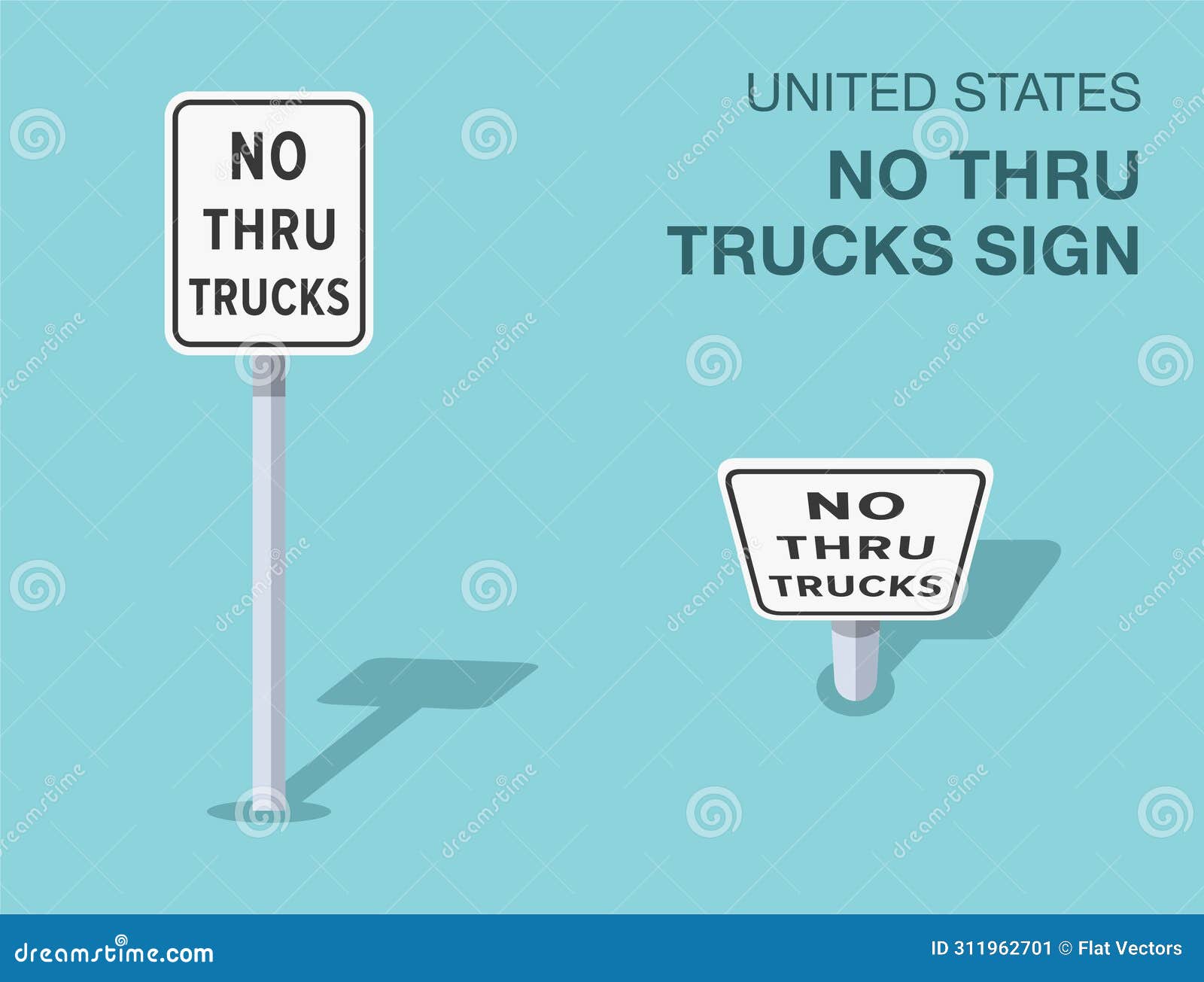
When traversing the intricate web of roads and highways, we often encounter a myriad of signs designed to facilitate our journey. Among these, one particularly intriguing sign appears with its emphatic message: “No Thru Trucks.” This seemingly straightforward directive provokes deeper inquiries into the rules of the road, the operational dynamics of truck transportation, and the overarching rationale behind such regulations. In this article, we will embark on a comprehensive exploration of the “No Thru Trucks” road sign to uncover its implications, the reasons for its existence, and its significance for drivers and communities alike.
The Essence of the “No Thru Trucks” Sign
The phrase “No Thru Trucks” is a clear indication that trucks exceeding a specified weight limit or size are not permitted to pass through certain roads, particularly residential areas or narrow thoroughfares. This restriction serves a dual purpose; it protects the integrity of local infrastructure and ensures the safety and comfort of residents. The sign bears a bold visual declaration, often depicted with an image of a truck, accentuating its significance in regulating commercial traffic.
Understanding the Rationale Behind the Sign
Perplexingly, one might wonder why some streets are designated as off-limits to larger vehicles. Several factors contribute to this restriction, primarily focusing on the safety of the community and the preservation of road conditions.
- Preservation of Road Infrastructure: The weight of heavy trucks can inflict substantial wear and tear on roads not equipped to handle such burdens. Streets designed for light traffic may develop cracks, potholes, and other forms of damage from the constant stress imposed by large vehicles. Therefore, communities employ this regulation to prolong the lifespan of their roadways.
- Enhancement of Safety: Narrow streets, typically found in residential neighborhoods, can pose significant hazards when accommodating large trucks. The potential for accidents increases exponentially in these environments, where pedestrians, cyclists, and children often frequent. The “No Thru Trucks” sign mitigates these risks by redirecting heavy traffic to more suitable routes.
- Reduction of Noise and Pollution: Trucks are notorious for their noise and emissions. By limiting their access to certain roads, communities can mitigate the disturbance and negative environmental impact typically accompanied by frequent truck traffic. This encourages a more serene and healthier living atmosphere for residents.
Defining Dimensions: Truck Size and Weight Regulations
In the realm of truck regulations, size and weight specifications are paramount. The designation “No Thru Trucks” typically applies to vehicles that exceed a certain weight—often around 10,000 pounds—or length, which may vary by locality. These parameters are fortified by local ordinances and traffic laws, designed to safeguard both infrastructure and individuals.
Moreover, this sign does not ban trucks outright; rather, it restricts their passage along specific routes unless they are making local deliveries. When approached with caution and within bounds, trucks can navigate safely to their destinations without violating regulations.
Understanding the Exceptions
One of the fascinating aspects of “No Thru Trucks” signs is the nuance surrounding exceptions. Despite the seemingly absolute nature of the sign, there are instances where certain trucks may still find their way onto restricted streets. Many municipalities allow local deliveries to be made in designated truck zones, understanding the essential role that logistics play in everyday life.
For example, delivery vehicles transporting goods to nearby businesses or homes may be exempt from the restrictions as long as they adhere to designated routes and do not linger unnecessarily within the vicinity. This flexibility ensures that commerce can continue to function smoothly while still prioritizing community safety.
A Broader Perspective: The Cultural Impact of Truck Traffic
The cultural implications of truck traffic and the regulations surrounding it extend beyond mere legalities. Within many towns and cities, the sight of massive trucks filling residential streets often incites a profound sense of disruption. Residents may express concern over the potential hazards posed by large vehicles, invoking a sense of community identity centered around safety and tranquility.
It is essential to recognize that these regulations are not arbitrary; they emerge from a collective desire for enhanced living conditions amidst the realities of modern transportation. Instead of merely being a signpost of restriction, the “No Thru Trucks” symbol becomes a landmark of civic responsibility, exemplifying the delicate balance between commerce and quality of life.
The Role of Drivers and Compliance
For drivers, the presence of a “No Thru Trucks” sign serves as a pertinent reminder of the importance of compliance with road regulations. Ignorance or disregard for such signs can lead to fines, traffic disruptions, and even accidents. Consequently, it becomes critical for truck drivers to remain vigilant and informed about the routes they traverse, upholding both the letter and spirit of the law.
Truck drivers must utilize their navigational tools, consult local guidelines, and always respect the restrictions that these signs impose. By doing so, they contribute not only to their own safety but also to the welfare of the community and its infrastructure.
Conclusion: The Intersection of Safety and Community
In essence, the “No Thru Trucks” road sign encapsulates much more than what meets the eye. It signifies a protective measure for neighborhoods, a guideline for responsible driving, and a reflection of the collective consciousness regarding safety and infrastructure. By understanding the implications of this sign, we can appreciate the intricate dance between vehicular commerce and community welfare. The next time you encounter this sign, take a moment to ponder its deeper significance and the interplay between regulations and the everyday realities of life on the road.












