
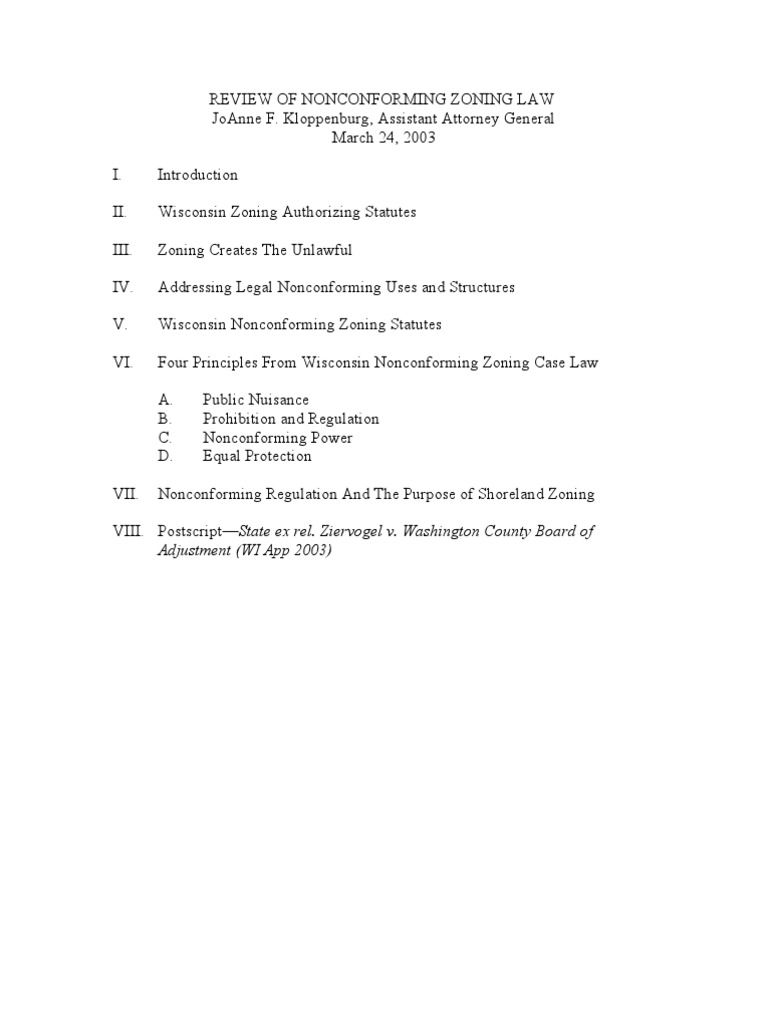
Have you ever driven through a neighborhood and noticed a charming old building sitting side by side with modern structures? This visual juxtaposition often raises an intriguing question: what does “non-conforming” really mean in the context of zoning and property? The world of zoning laws can be a labyrinth of regulations and definitions, and understanding non-conforming uses offers a window into the complexities of urban planning and property rights.
To begin with, let’s demystify the term “non-conforming.” Generally, a non-conforming use refers to a situation where a property does not comply with current zoning laws, yet was legally established under previous regulations. Imagine a quaint family-owned bakery nestled in an area that has since been re-zoned for commercial office space. While the bakery is still operational, the current zoning ordinance does not accommodate its presence. This discrepancy invites a deeper exploration of zoning classifications and their implications.
To understand non-conforming uses, one must first grasp the broader concept of zoning. Zoning is a regulatory mechanism employed by local governments to control land use, aiming to promote organized development, protect property values, and enhance public welfare. It divides land into categories – residential, commercial, industrial, agricultural, and more – each with specific regulations governing the type and scale of development permitted within that category.
As zoning laws evolve, they may render certain pre-existing uses incompatible with newly established paradigms. The bakery example is one such case. This situation underscores two critical concepts: the grandfather clause and amortization. The grandfather clause allows existing non-conforming uses to continue operation, albeit with certain restrictions, while amortization involves a gradual phase-out of such uses over a set period. This raises questions about the fate of beloved community fixtures as urban landscapes transform.
But how does this all play out in reality? Consider a historic property in a rapidly developing area. It might have been an elegant Victorian home in a residential zone, but as the demand for commercial space surges, local government may decide to rezone the area. The old home, now a non-conforming use, faces potential challenges: Will it be allowed to stand, or will the city insist on its removal to make way for more profitable developments? These decisions are not merely administrative; they can incite public outcry, affect community identity, and alter economic dynamics.
Moreover, non-conforming uses can provoke a sense of nostalgia and cultural significance. Take, for instance, an old movie theater that has been a town staple for decades. As new zoning regulations emerge, pressures intensify to replace it with a multi-story complex. The resulting conflict between progress and preservation highlights the delicate balance between modernization and maintaining historical character.
Challenges do not merely arise from community sentiments; they also involve legal complexities. Non-conforming uses may lead to disputes regarding property rights. Owners of such properties might seek to expand or renovate their buildings, only to be confronted with restrictions that limit what can be done while operating outside the law. This often results in a cat-and-mouse game between property owners and regulatory bodies, raising questions about equity and fairness in zoning practices.
The importance of understanding the ramifications associated with non-conforming uses cannot be overstated. Many towns employ a zoning board of appeals or similar entities to adjudicate requests for variances or special permits, allowing non-conforming properties a chance at compliance with the new zoning ordinances, albeit subject to specific criteria. This mechanism serves as a lifeline for businesses facing existential threats, but navigating the bureaucratic maze can be exceedingly daunting.
Furthermore, the effects of non-conforming zoning extend beyond individual properties. Communities face broader implications such as neighborhood cohesion and economic viability. Striking a balance between accommodating the diverse needs of residents and allowing for growth can create a misalignment between objectives. Strategic planning, resident engagement, and proactive regulatory measures can mitigate conflicts and promote sustainable outcomes.
Interestingly, not every non-conforming use must languish in uncertainty. Some jurisdictions embrace the concept of “adaptive reuse,” wherein non-conforming properties are repurposed to serve modern needs while preserving their historical essence. This approach can breathe new life into aging structures and cultivate a sense of urban identity that pays homage to the past while embracing the future.
Ultimately, the question of what non-conforming means in zoning and property law is layered and multifaceted. It speaks to the heart of urban development and the diverse values held by residents. From nostalgic bakeries to historic theaters, these non-conforming uses evoke sentiments of familiarity and character, reminding us of the rich tapestry of history that defines our communities.
The realm of zoning law poses challenges, inviting us to reflect on the delicate balance of progress and preservation. As cities evolve, the fate of non-conforming properties may become a pivotal point of discussion that shapes the future urban landscape. What happens next will depend largely on community engagement, regulatory foresight, and a shared vision for sustainable and inclusive development.












