
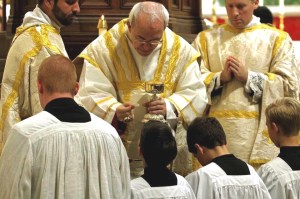
The term “Novus Ordo,” Latin for “New Order,” refers to the liturgical rites of the Roman Catholic Church established following the Second Vatican Council, which convened from 1962 to 1965. These liturgical reforms emerged from a collective desire within the Church to foster greater engagement and understanding of the Mass among the laity, thereby revitalizing the communal aspect of worship. In exploring the nuances of Novus Ordo, one must delve into its historical context, theological underpinnings, and its multifaceted implications for Catholic liturgy.
Historical Context of Novus Ordo
The genesis of Novus Ordo lies in the mid-20th century, a period marked by sociopolitical upheaval and profound theological re-examination. The Second Vatican Council catalyzed this transformation within the Church, encouraging a move toward modernization and inclusivity. Before this era, the Tridentine Mass, with its Latin liturgy and rigid structure, dominated Catholic worship. However, as society evolved, so too did the understanding of the Church’s mission in the world.
Decisions made at the council facilitated a liturgical discourse that sought to address the perceived disconnect between the clergy and the congregational experience. Schema prepared by the Constitution on the Sacred Liturgy (Sacrosanctum Concilium) emphasized participation as a vital component of worship. The Novus Ordo was ratified in 1969, marking a seismic shift in liturgical practice.
The Theological Underpinnings
At its core, Novus Ordo embodies a theological framework that championed the active participation of the laity. This liturgical reform was not simply a superficial alteration of the rite but represented a profound theological affirmation of the communal aspect of the Church. By moving from a clerically dominated ritual to one in which the congregation plays an active role, the Church echoed the teachings of Vatican II regarding the universal call to holiness.
Moreover, the incorporation of the vernacular—the everyday language spoken by worshippers—into the Mass was a radical yet necessary adjustment. This change allowed for more meaningful interactions with the texts and prayers, encouraging deeper spiritual engagement. Inclusive language and a more relatable context manifested in the revised liturgy fostered a sense of belonging, challenging previously entrenched barriers between the clergy and the faithful.
Structure of the Novus Ordo Mass
The Novus Ordo Mass is structured into two main parts: the Liturgy of the Word and the Liturgy of the Eucharist. Each segment is meticulously designed to culminate in a prayerful encounter with the Divine. Notably, the Liturgy of the Word encompasses scriptural readings that vary according to a three-year cycle, ensuring a breadth of biblical exposure. This dynamic approach invites congregants to embrace the richness of the Scriptures, fostering a deeper understanding of their faith.
The Liturgy of the Eucharist, wherein the bread and wine are consecrated, is the apex of the Novus Ordo. Here, the transformation of the elements into the Body and Blood of Christ reflects an ongoing mystery central to Catholic belief. The emphasis on communal prayer, notably during the Our Father and the Sign of Peace, further reinforces the practice’s intent to unify the Church as the Body of Christ.
Common Observations and Fascination
This engagement raises deeper questions about the nature of worship and its changing landscape. In a rapidly shifting cultural milieu, individuals find themselves fascinated with the liturgical landscape, often seeking to reconcile personal beliefs with communal practices. The allure of Novus Ordo extends beyond the mere structure or language; it encapsulates a movement striving for reclamation of the sacred in everyday worship.
Cultural Reactions and Adaptations
Responses to Novus Ordo have been varied across different demographics and geographical contexts. In some regions, the liturgical reforms have been embraced wholeheartedly, heralding a revitalization of parish life. Activities such as hymn singing, feedback initiatives, and homilies delivered in relatable dialects have become commonplace, promoting an immersive worship experience.
Conversely, there exists a significant contingent that views the Novus Ordo as a concession that detracts from the solemnity of the Mass. These sentiments often reflect a yearning for tradition, where the transcendental aspects of worship are perceived to have been diluted. Such tensions invite ongoing dialogue regarding how to hold on to foundational beliefs while adapting to contemporary realities.
Conclusion: The Evolution of Catholic Worship
Ultimately, Novus Ordo represents more than just a new format of the Mass; it signifies an evolution in Catholic worship that reflects a broader quest for spirituality in a modern world. The complexities of these liturgical reforms continue to inspire not only theological discourse but also a profound exploration of what it means to be a part of the Church today. As members of the community navigate the interplay between tradition and adaptation, the questions raised by Novus Ordo highlight the overarching themes of faith, connection, and worship in the life of the Church.












