
Have you ever pondered the significance of numbers in your favorite literary works or ancient texts? Numbers often possess deeper meanings, and this is particularly true in the Bible, where numerical symbolism is woven meticulously into its narratives and teachings. One number that stands out in its symbolic resonance is the number four. So, what does the number four actually signify in biblical terms? Let’s embark on an exploration of this multifaceted digit.
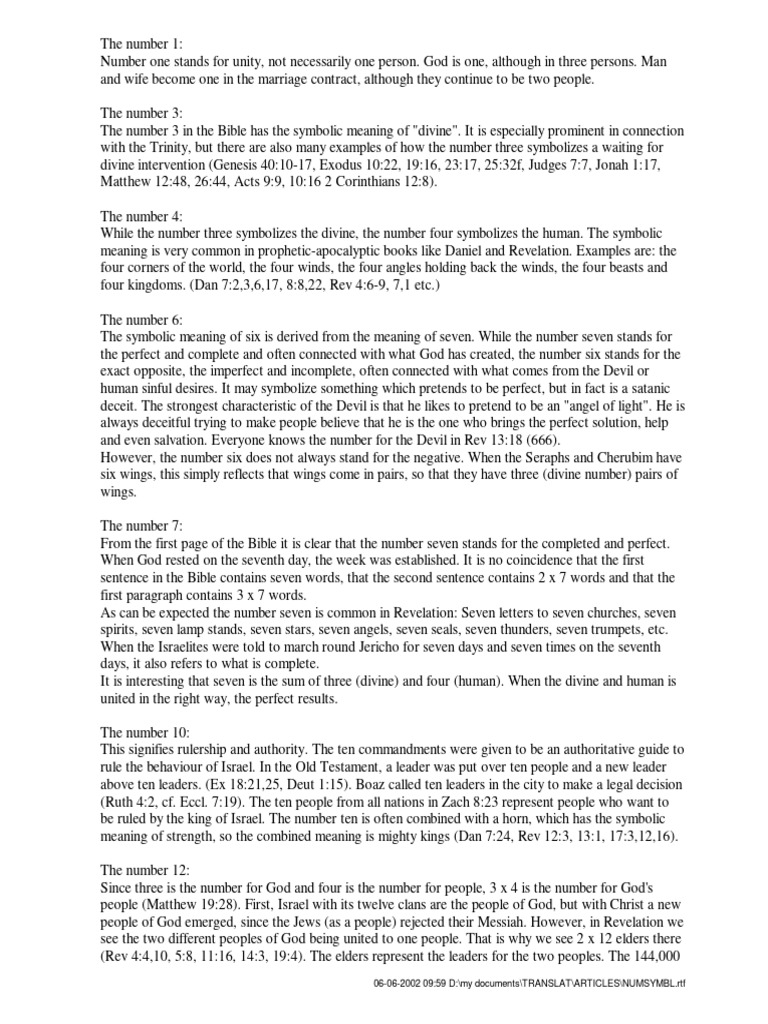
To begin with, the number four is commonly associated with the concept of completeness or totality. This notion stems from several occurrences throughout the scriptures where the number signals the entirety of creation. In the very first chapter of Genesis, God forms the world in six days and conducts specific acts over four distinct sections: land, sea, sky, and all that dwells within these realms. Observing this pattern, we can identify how the numeral encapsulates the totality of God’s creative work, showcasing a world that is both comprehensive and harmonious.
Another illustrative example can be found in the four corners of the earth, a phrase that not only points to geographical orientation but also evokes a sense of wholeness in God’s dominion over the entire world. This symbolism is further emphasized in Revelation 7:1, where John references the four angels standing at the four corners of the earth, signifying control over the land and sea. As such, the number four emerges as a powerful representation of the entirety of creation under divine sovereignty.
In addition to representing completeness, the number four conveys stability. Think of the practical architecture of the square—four sides, four corners, lending a firm foundation. This solid structural integrity is mirrored in biblical teachings where the stability of God’s laws and promises is paramount. The four Gospels—Matthew, Mark, Luke, and John—each offer a unique yet solid portrait of Jesus Christ, reinforcing the idea that God’s message is steadfast and unwavering, echoing the reliability we associate with the number four.
Moreover, consider the significance of the four living creatures depicted in the Book of Revelation (Revelation 4:6-8). These creatures encompass a lion, an ox, a man, and an eagle, representing not only the fullness of God’s creation but also a multifaceted approach to worship and the divine. Each creature symbolizes essential characteristics of Christ’s nature: strength, servitude, humanity, and sovereignty. This intricate connection highlights both the grandeur of the divine and the depth of worship that extends across dimensions, further reiterating the number four’s multifaceted symbolism.
Interestingly, the concept of four is prevalent in the structure of religious observance and festivals. For instance, there are four major Jewish festivals—Passover, Shavuot, Rosh Hashanah, and Yom Kippur—each holding significant spiritual meaning. These festivals not only mark pivotal historical events but also symbolize the sacred timeline of God’s redemptive history, further enriching the significance of the number four as it pertains to divine intervention and salvation.
Another fascinating dimension of the number four is its association with divine guidance. Throughout Scripture, we come across clusters of four that inform us on how to live according to God’s will. For example, in Ezekiel 1, the prophet encounters a vision involving four wheels, signifying the omnipresence of God’s spirit and His guidance during trials. Such occurrences emphasize that no matter the circumstance, God’s presence is comprehensive and served across every aspect of life.
The number four uniquely intersects with the cardinal directions—north, south, east, and west—further symbolizing God’s guidance within a vast and potentially overwhelming world. This directional connotation implies that God’s reach spans all realms of existence, assuring believers that His presence and influence envelop every corner of the earth.
Moreover, the number four also weaves itself into the fabric of community and covenant. In the context of the tribes of Israel, they were organized into four divisions. This structuring not only represents a complete society but also showcases the importance of collaboration and unity under God’s covenant. When we envision God’s intention for the community, it becomes evident that the number four serves as a reminder of collective purpose in faith, instilling a spirit of unity among believers.
As we delve deeper into the complexities of the number four in biblical context, we uncover a call to reflection. How can the weighty symbolism of this number inspire our daily lives? Perhaps it invites us to seek completeness—from spiritual wholeness to a collective sense of belonging within our communities. Furthermore, recognizing God’s stable character through the lens of this numeral could ground us amidst the uncertainties we face, prompting us to trust in His unchanging nature.
In conclusion, the number four in the Bible transcends mere numerological curiosity; it serves as a profound signifier of completeness, stability, divine guidance, and the communal experience of faith. When we encounter this number within biblical passages, we are encouraged to reflect upon the vast and intricate meanings it holds. From attributing stability to the chaotic moments of life to recognizing the presence of God’s guidance in our journeys, the number four extends an invitation to embrace a life rich in faith, purpose, and connection.












