
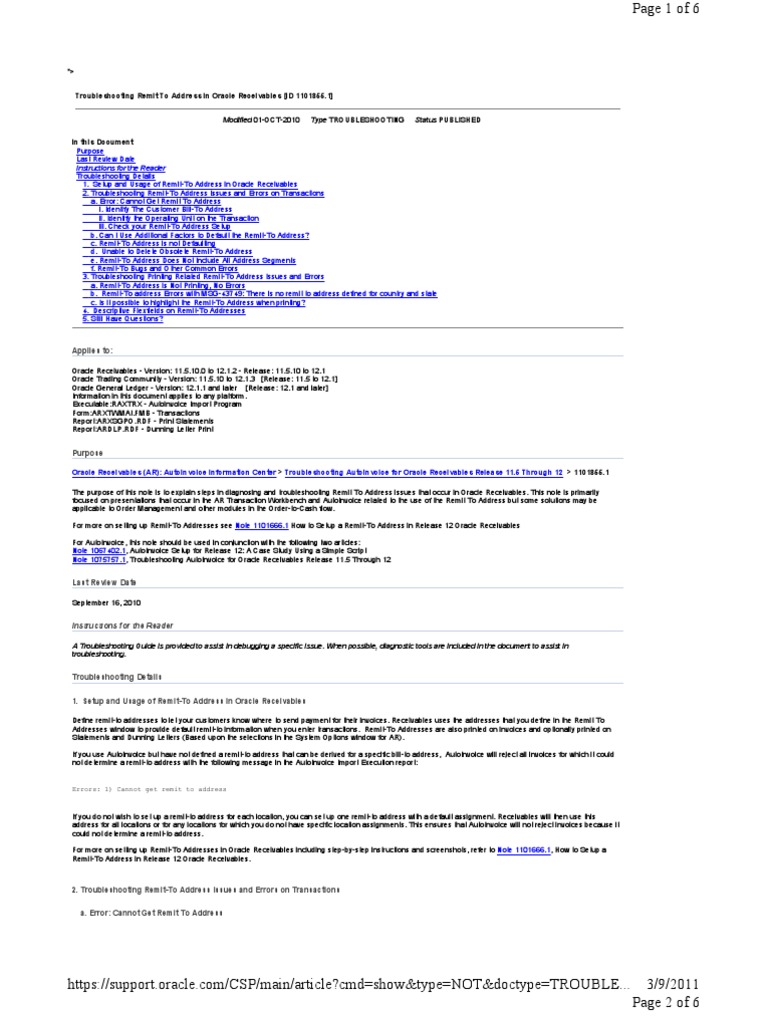
In the intricate tapestry of modern commerce, the term “remit to address” weaves a crucial thread across the realm of billing and invoicing. Much like an artist meticulously selecting hues to enhance a canvas, understanding these billing terms enriches our comprehension of financial transactions and contractual obligations. What does “remit to address” signify, and why is it pivotal in the intricate world of invoicing? Let us embark on a journey to unravel the complexities of this term and illuminate its significance in the landscape of finance.
Understanding the Essence of “Remit to Address”
At its core, “remit to address” signifies the designated location where payments should be sent. It serves as a geographical compass for those partaking in monetary exchanges, directing funds to their rightful recipients. Imagine a treasure map, with ‘X’ marking the spot where the bounty lies—the remit to address is that ‘X’ for both billers and payers, providing clarity and direction amidst the often chaotic realm of financial transactions.
This term is often accompanied by a specific address that customers or clients must use when submitting payments. It could be as formal as a corporate headquarters or as quaint as a small-town post office. Regardless of the setting, the remit to address is fundamental in ensuring that payments are processed efficiently and accurately.
A Closer Look at Billing Terms
Before delving deeper into “remit to address,” it is paramount to understand the taxonomy of billing terms within which it resides. Several other terms often accompany it, each contributing to the meticulous nature of invoicing and the flow of money.
• Invoice: The lifeblood of commercial transactions, invoices serve as formal requests for payment for goods or services rendered. They compile details including the descriptions of items, quantities, prices, and due dates.
• Payment Terms: These stipulations outline when payments are due, methods of payment accepted, and any penalties for late payments. Think of payment terms as the rulebook of the financial game.
• Billing Cycle: This refers to the interval at which invoices are generated and payments are expected, akin to a clock that ticks in rhythm with financial obligations.
Within this elaborate lexicon, “remit to address” emerges as both a destination and a directive. Its inclusion on an invoice is fundamental for enhancing communication and preventing misunderstandings between parties engaged in a commercial transaction.
The Importance of Clarity
To navigate the labyrinth of commerce, clarity is indispensable. Unambiguous instructions regarding the remit to address can significantly mitigate instances of misdirected payments—a nightmare scenario for both payer and payee. Picture a misplaced letter dropped into the wrong mailbox; the original intent of financial responsibility is lost in transit.
Excessive vagueness surrounding the remit to address can lead to tangles in cash flow, increased administrative costs, and, ultimately, a breakdown in business relationships. By pinpointing a specific remit to address, organizations exemplify professionalism and maintain the integrity of their financial dealings. This fosters trust and instills confidence in their partners and clients.
Navigating Geographical Nuances
In an increasingly globalized economy, geographical nuances become paramount. Businesses operating on an international scale must navigate various jurisdictions and regulatory environments. The remit to address not only signifies where funds should be directed but also serves as a reminder of the unique legal and currency implications that accompany each transaction.
For instance, a company in the United States might require clients in Europe to remit payments to a local banking institution to avoid currency conversion fees or regulatory delays. Each remit to address can, therefore, be viewed as a bespoke compass tailored to each unique transaction, taking into account the international landscape and intricacies of cross-border transactions.
Examples of Remit to Address
To illustrate the practical application of “remit to address,” consider several hypothetical scenarios:
• A freelance graphic designer sends an invoice to a tech startup with a remit to address listed as: “123 Creative Lane, Suite 4B, San Francisco, CA 94105.” This clear directive ensures that payment arrives promptly.
• A small manufacturer sells products to a retailer out of state. The invoice includes the instruction to remit payment to: “456 Industry Drive, Brooklyn, NY 11232,” thus delineating the payment’s final destination.
Providing such specific addresses prevents the proverbial needle in a haystack frenzy of searching for the correct payment path, allowing for the serene navigation of financial responsibilities.
Conclusion: Navigating the Financial Seas with Assurance
In conclusion, understanding the term “remit to address” offers vital insights into the broader landscape of billing within commerce. By providing clear and precise instructions regarding payment destinations, organizations can navigate the often tumultuous waters of financial transactions with confidence. A well-defined remit to address acts as a lighthouse—a guiding beacon that directs funds safely ashore, ensuring that exchanges are conducted smoothly and efficiently.
As the adage goes, clarity is key in any relationship, and this maxim rings especially true in the world of finance. Embracing the nuances of billing terms not only facilitates professional interactions but also cultivates a foundation of trust and reliability in the intricate dance of commerce. In this age of constant connectivity, let us not overlook the power of precise communication in our financial matters.












