
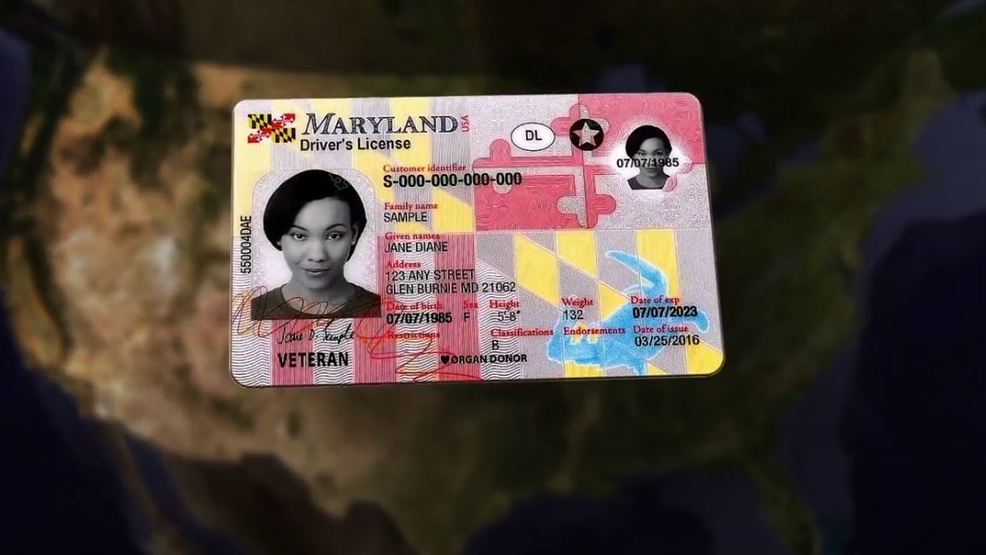
The realm of driving regulations is often laden with complexities that can cause confusion and bewilderment among new and seasoned drivers alike. In the state of Maryland, one feature that raises eyebrows is the peculiar restriction labeled “T” on a driver’s license. But what exactly does this restriction signify? And how does it affect those who must adhere to it? Join us as we unravel the intricacies of this lesser-known aspect of Maryland’s licensing system, promising insights that may alter your perspective.
Understanding “Restriction T”: A Definition
To distill the essence of restriction “T,” one must first comprehend its official designation: it signifies “Must wear corrective lenses.” This succinct description encapsulates a crucial requirement imposed on certain drivers who may have visual impairments that necessitate the use of glasses or contact lenses to operate a vehicle safely. This restriction is not merely a bureaucratic formality; rather, it embodies a commitment to road safety, ensuring that individuals with impaired vision take the necessary precautions while navigating Maryland’s thoroughfares.
The Rationale Behind the Restriction
In a state renowned for its varied landscapes—from the hustle and bustle of urban environments to the serene stretches of rural roads—the importance of clear vision cannot be overstated. The rationale for imposing a restriction such as “T” is rooted in the alarming statistics surrounding vehicular accidents. According to various studies, a significant percentage of road incidents can be attributed to impaired vision, which poses a substantial risk not only to the driver but also to passengers and pedestrians alike. By requiring corrective lenses for those who need them, Maryland aims to foster a safer driving culture.
The Process of Obtaining a Restriction T
Acquiring a Maryland driver’s license with “Restriction T” entails a series of evaluations and steps, each designed to ensure the applicant’s fitness to drive. Initially, an individual undergoing the licensing process must submit to a comprehensive vision test, administered either at the Motor Vehicle Administration (MVA) or by a qualified optometrist. A passing grade on this examination is not just a mere formality; it acts as a gatekeeper, filtering out those who do not meet the prescribed visual acuity standards.
Should one fail to meet these standards, the pathway to licensure is not entirely obstructed. For those diagnosed with refractive errors—such as myopia, hyperopia, or astigmatism—the MVA offers an alternative solution: wearing corrective lenses. Once an individual is fitted with the appropriate eyewear and is able to pass the vision test, obtaining the “T” restriction becomes a straightforward endeavor.
Navigating Life with Restriction T
What does life look like for those driving under the constraints of restriction “T”? For many, it entails an augmented level of attentiveness and responsibility. Drivers must ensure they always have their corrective lenses handy—whether perched on their nose or stowed in the glove compartment. This may seem like a minor inconvenience, but it underscores a larger principle of accountability on the road. Failing to comply with the restriction could not only lead to citations and fines but also to heightened risks while driving.
Moreover, individuals who fall under the “T” restriction can occasionally experience social dimensions tied to their eyewear choice. Some may feel self-conscious or even stigmatized by the need for glasses, affecting their self-image and confidence behind the wheel. This emotional aspect adds a layer of complexity to the driving experience that extends beyond mere rules and regulations.
Potential Misconceptions Surrounding Restriction T
As with many regulations, misunderstandings abound. One common misconception is that holding a license with restriction “T” limits driving privileges to daylight hours only or precludes one from driving in adverse weather conditions. Such beliefs could not be further from the truth. The “T” restriction does not impose additional limitations on where or when a driver can operate a vehicle, provided that the individual is wearing their corrective lenses. This distinction is crucial for those who may fear that their license status constrains their mobility.
Exploring the Broader Implications
Adopting a broader lens reveals that the “Restriction T” designation is not merely an isolated edict; it serves as part of a larger narrative regarding public health and safety. In an age where distracted driving and impaired driving persist as primary dangers on the road, initiatives that promote responsible usage of corrective lenses are critical components in combating these societal challenges. By encouraging individuals with visual impairments to take charge of their driving safety, Maryland joins the ranks of states employing proactive measures to mitigate road hazards.
Conclusion: Embracing Responsibility
Ultimately, the “Restriction T” on a Maryland driver’s license serves as a reminder of the intrinsic connection between our vision and our ability to drive safely. It encapsulates the state’s commitment to protecting its citizens by mandating the use of corrective lenses for those who need them. For drivers facing this restriction, it is essential to embrace the responsibility that accompanies it. By acknowledging the importance of clear vision and remaining conscientious about wearing corrective lenses, individuals can navigate Maryland’s roads with confidence and assurance, safeguarding their well-being and that of others on the road. In this way, the simple “T” restriction transcends ordinary regulatory jargon and morphs into a potent symbol of commitment to public safety.












