
When it comes to deciphering the cryptic language of eye prescriptions, the term “sphere” emerges as a central figure, pivotal in understanding vision correction. As you delve into the labyrinth of optometry, grasping what this term means could offer a fresh perspective not just on your prescription, but on your vision as a whole. So, let’s embark on this enlightening journey to unravel the intricacies of the sphere measurement in glasses.
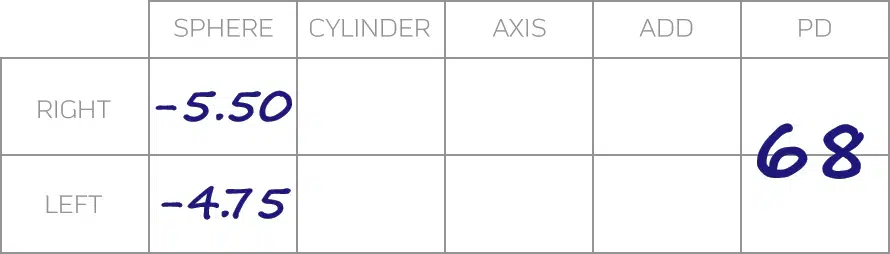
To begin, let’s establish the foundation. The “sphere” component of an eye prescription indicates the degree of vision correction required for spherical refractive errors. This measurement, typically expressed in diopters (D), plays a significant role in tailoring lenses to meet individual visual needs. The sphere value can either be a positive or negative number. A positive value signifies hyperopia, commonly known as farsightedness, where distant objects are seen more clearly than nearby ones. Conversely, a negative value denotes myopia, or nearsightedness, typifying a condition where close objects are clear, while those at a distance appear blurry.
Intriguingly, the numeric value associated with the sphere can range from slight to profound, dictating not only the thickness and curvature of the lenses but also influencing how your brain perceives images. A greater absolute value of sphere indicates a more substantial refractive error and thus requires a stronger corrective lens. This aspect of the sphere measurement is vital; a keen understanding can shift the way you perceive the corrective process of your eyewear.
At the core of visual clarity lies the eye’s anatomy, particularly the cornea and lens, which work in tandem to focus light onto the retina. When the shape of either is irregular—too steep or too flat—it leads to incorrect light refraction and subsequently contributes to vision problems. The sphere measurement functions as a critical parameter in remedial lens crafting, aiming to restore harmony in visual perception.
Understanding sphere also necessitates familiarity with the concept of astigmatism. Astigmatism, characterized by an irregular curvature of the cornea or lens, might coexist with myopia or hyperopia, leading to a more complex prescription including cylinder (CYL) values and axis measurements. However, it’s noteworthy that the sphere itself does not encapsulate astigmatism; it simply addresses spherical errors. This knowledge not only enhances your understanding of personal prescriptions but also fosters an appreciation for the delicacy of vision correction.
Consider the experience of donning glasses for the first time. Initially, there might be a peculiar adjustment period. It’s not merely an accessory; the lenses crafted based on your sphere measurement are recalibrating your visual experience. This transition, although seemingly mundane, can offer extraordinary revelations about what it means to see clearly. Engaging with the world through optimized lenses can ignite a sense of awe; the vibrancy of colors, the sharpness of lines, the intricacies of details—the transformation is often astounding.
Moreover, it’s essential to appreciate the significance of regular eye examinations in this context. Vision can fluctuate over time; thus, a stagnant sphere measurement might not adequately reflect current visual demands. Schedule periodic assessments with your optometrist to ensure your prescription remains in tune with your evolving eyes. This proactive approach to eye health can vastly enhance the depth of your visual experiences.
As technology advances, the lens options available have multiplied. Single-vision lenses, bifocals, and progressive lenses each cater to varied lifestyle needs, all driven by the sphere measurement. Notably, progressive lenses feature multiple prescriptions within a single lens, allowing for seamless transitions between near and far vision. This innovative design particularly serves those with presbyopia—a condition that tends to develop with age, signalling another facet of our ocular journey. The innovative interplay between your sphere measurement and lens design serves as potent proof of how far optical science has evolved.
Furthermore, alongside technical knowledge, navigating the world of eyewear can be exhilarating. Understanding sphere can equip you with the confidence to make informed decisions about styles, materials, and shapes that best suit your needs. With options ranging from lightweight polycarbonate lenses to high-index materials, exploring ocular fashion transforms a simple prescription into a means of personal expression, fulfilling both aesthetic desires and functional necessities.
In conclusion, the sphere measurement on your eye prescription serves as a gateway into a deeper understanding of vision. It transcends mere numbers; it encapsulates the nuances of how we interact with our environment. With newfound clarity, the world offers vibrant experiences previously obscured by visual impairment. This pivotal element of eye health encourages individuals to perceive their prescriptions not as burdens, but as tools for unveiling the beauty in everyday life. So, embrace the adventure of seeing the world anew; with understanding comes the powerful promise of sight filled with clarity and color.












