
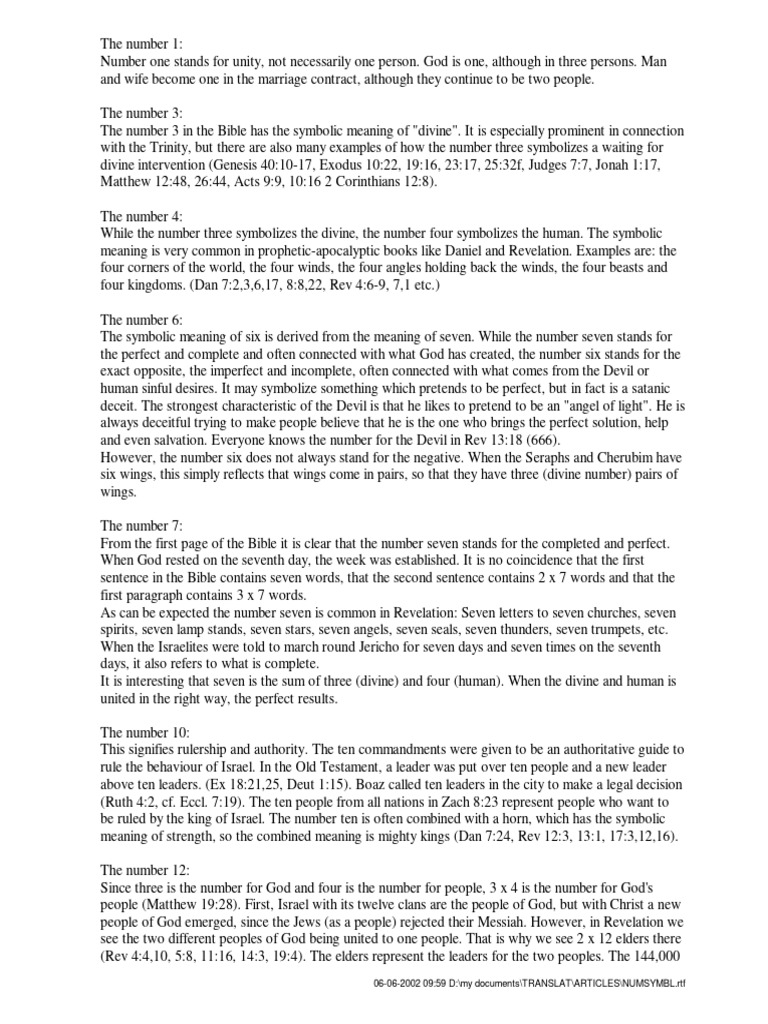
The number 19 holds a unique and significant position within biblical scripture, often representing divine principles and eschatological implications. Understanding the nuances of this number can unlock hidden meanings in various passages and provide deeper insights into the overarching themes of the Bible. In this exploration, we shall delve into the symbolism of the number 19, examining its manifestations in scripture, its connections with other numerological concepts, and its interpretations throughout both religious and cultural contexts.
The Basics of Biblical Numerology
To appreciate the symbolism of the number 19, one must first grasp the foundational concepts of biblical numerology. Numbers in the Bible extend beyond mere mathematical values; they carry profound spiritual meanings and truths. Many biblical scholars posited that God communicated with humanity through numbers, infusing them with significance that can reveal aspects of character, events, and divine plans.
As we unpack the essence of the number 19, it is essential to note that it is a composite number, derived from the sum of 1 and 9, which signifies a divine order combined with completion or fulfillment. This duality encapsulates an intricate interplay between beginnings and endings—attributes vital to grasping the broader implications of biblical narratives.
Significance of the Number 19
The number 19 encapsulates both linear progression and spiritual completion, reflecting an ascension to higher understanding. One prominent instance of this number can be found in the correlation between 19 and the lunar calendar, which has implications for the Jewish festivals. Because the Jewish calendar consists of 19-year cycles, it emphasizes the cyclical nature of time and life—where events are not merely linear but reiterative, echoing past occurrences while ushering in new insights.
This cyclical aspect becomes particularly apparent when examining the festivals and rituals in the Jewish tradition. They encompass themes of renewal and cycles of redemption, exemplified poignantly during Passover. The feast encapsulates the journey from bondage to freedom—a powerful metaphor interwoven throughout biblical theology.
Instances of Number 19 in Scripture
In the Biblical canon, the number 19 appears in several key passages, each contextualizing its meaning within specific narratives. One notable occurrence is in the 19th chapter of the book of Genesis, which tells the story of Lot and the destruction of Sodom and Gomorrah. The narrative captures themes of divine judgment, mercy, and the stark contrast between righteousness and wickedness. Here, the number 19 serves as a harbinger of impending change, underscoring the gravity of moral decline contrasted with the promise of salvation.
Additionally, 1 Kings 19 recounts the story of the prophet Elijah’s flight from Jezebel, showcasing a moment of deep spiritual crisis and full circle transformation. Within this context, the number signifies a critical transition point—moving from despair to renewal, as Elijah encounters God through an inexplicable whisper. Such episodes elevate the number 19 from mere numerical representation to a beacon of hope and resilience amidst adversity.
Connections with Other Numbers
To further illuminate the significance of 19, it is essential to explore its connections with other Biblical numbers. The number 1 symbolizes unity, singularity, and the divine. When combined with the number 9, which often embodies finality, judgment, or spiritual completeness, one can discern how these meanings interlace to form a richer tapestry of understanding. The union of these qualities suggests that 19 is not only a number of completion but also a precursor to new beginnings, echoing God’s sovereign authority over time and history.
Moreover, upon consideration of significant biblical events that transpired within the span of 19 years, the consequences of these occurrences deepen the understanding of their impact. For instance, the Babylonian exile—and consequent return—transpired over this period, emphasizing how pivotal events can yield monumental changes in the trajectory of faith and communal identity.
Cultural Interpretations and Influence
The number 19 transcends the boundaries of biblical texts, echoing through cultural, historical, and spiritual paradigms. Among various religious traditions, facets of the number are seen in diverse interpretations, lending it a universal significance. For instance, in Islamic tradition, 19 is often referenced in the context of the Quran, particularly surah 74, which mentions 19 guardians of hell, establishing a theme of accountability and divine judgment that parallels certain biblical tenets.
In more contemporary circles, the number 19 also manifests within various sects and movements aiming to align themselves with the perceived divine order that comes through numerological evaluations. Through diverse interpretations, 19 continues to shape theological discourse and ignite reflections on morality, spirituality, and the essence of faith.
Conclusion: The Timeless Relevance of Number 19
In summary, the number 19 emerges as a multifaceted symbol steeped in biblical narrative and divine connotation. By exploring its implications within scripture, interweaving it with other significant numbers, and acknowledging its broader cultural resonance, one can appreciate the depth of its meaning. As believers seek to comprehend their spiritual journeys, the study of numbers—particularly the enigmatic 19—serves as an enriching exploration of God’s interaction with humanity throughout the ages. The journey of faith is, after all, punctuated by cycles of judgment and mercy, where each number unfolds new dimensions of divine revelation.












