
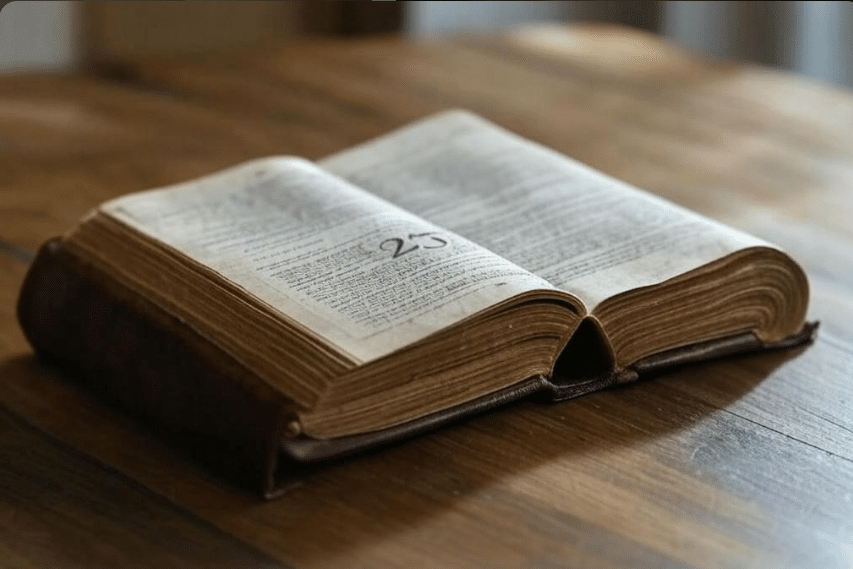
The number 23 possesses a unique place in the realm of biblical numerology, often invoking curiosity and introspection. It encapsulates a deeper significance that extends beyond mere arithmetic, drawing connections between divine promise, transformation, and a call to higher understanding. To unravel the layers of meaning embedded in the number 23, one must journey through its numerological essence and its manifestations within biblical scripture. Thus, an exploration of this enigmatic number can undoubtedly shift perspectives, revealing profound insights.
In biblical numerology, numbers frequently serve as conduits for divine messages. Each numeral embodies specific characteristics, reflective of divine principles. To understand the number 23, one must recognize that it can be impractically understood through the sum of its digits—2 and 3. The number 2, in this context, symbolizes duality, partnership, and the harmonious balance found in relationships. It represents a divine call to unity and collaboration, urging individuals to foster connections and seek companionship.
Complementing this is the number 3, emblematic of completeness and divine perfection. It conveys the notion of the Holy Trinity—Father, Son, and Holy Spirit. Throughout scripture, the number 3 appears frequently, accentuating themes of resurrection, new beginnings, and wholeness. When compounded, the numeral 23 merges these meanings, suggesting a divine partnership that culminates in a higher state of understanding or revelation.
Throughout the narratives of scripture, instances of the number 23 emerge, encouraging believers to contemplate its significance. One telling example is found in the account of King David, wherein he organized the Levites. The divisions of the Levites involved 24,000 men, yet it’s intriguing to note that they were categorized into different groups, one of which consisted of 23,000. This division embodies an essential aspect of service; it illustrates that even within the collective, each individual holds value and purpose, firmly rooted in a divine plan.
In other biblical contexts, the number 23 highlights a profound transformation. It calls forth visions of new beginnings that can transpire when individuals embrace change with faith and conviction. In the Gospel of Matthew, chapter 23, Jesus confronts religious hypocrisy, urging the scribes and Pharisees to recognize their shortcomings. The address serves as a paean to introspection, beckoning listeners to engage in self-examination and pursue genuine spiritual growth. Here, the cycle of transformation is bulky; it emphasizes the necessity of shedding stagnant beliefs to embrace a new reality.
Moreover, the biblical significance of the number 23 is intrinsically linked with themes of promise and divine intervention. For instance, in the book of Numbers, 23:19, it is declared, “God is not a man, that He should lie, nor a son of man, that He should repent; Has He said, and will He not do? Or has He spoken, and will He not make it good?” This assertion illuminates the steadfast nature of divine promises and the assurance that God remains unwavering in His commitments. The essence of 23 rallies around the notion that promises made by the Divine are immutable, a true source of hope in times of doubt.
In contemporary practices, the appearance of the number 23 in everyday life often garners attention, nudging individuals toward a higher consciousness. Many individuals ascribe personal meaning to repeated encounters with this number, viewing it as a sign of guidance or affirmation. Whether spotted on clocks, license plates, or important documents, these synchronicities serve as gentle reminders of the sacred interconnectedness of life. It embodies an invitation to cultivate awareness and seek out moments of divine grace.
Furthermore, believers may find solace in engaging with the number 23 through prayer and meditation. By invoking this number, individuals can foster an environment for reflective contemplation, allowing the meaning to reveal itself. In doing so, practitioners may feel compelled to examine their relationships, personal beliefs, and their portrayal of genuine faith in the world. This engagement allows for a personal evolution, where understanding deepens, and divine wisdom can flourish.
On a broader scale, the number 23 resonates with the global consciousness, symbolizing unity in diversity. As a composite number, it serves as a metaphor for the myriad layers of human experience and the quest for harmony. Its biblical implications echo the call for inclusivity, reminding followers that every individual embodies a reflection of the divine. In this light, engaging with the number becomes an act of reverence, cultivating an ethos of compassion within local and global communities.
In summary, the biblical significance of the number 23 encompasses themes of duality, completeness, divine promise, and transformative potential. It beckons individuals to examine their lives through a new lens, revealing truths that transcend everyday occurrences. By embracing the deeper meanings of the number 23, believers may find themselves embarking upon a journey of profound growth and understanding, one that is intertwined with the divine narrative. Ultimately, the number 23 invites all to seek deeper connections, both to themselves and to the divine, fostering a collective pursuit of enlightenment and spiritual fulfillment.












