
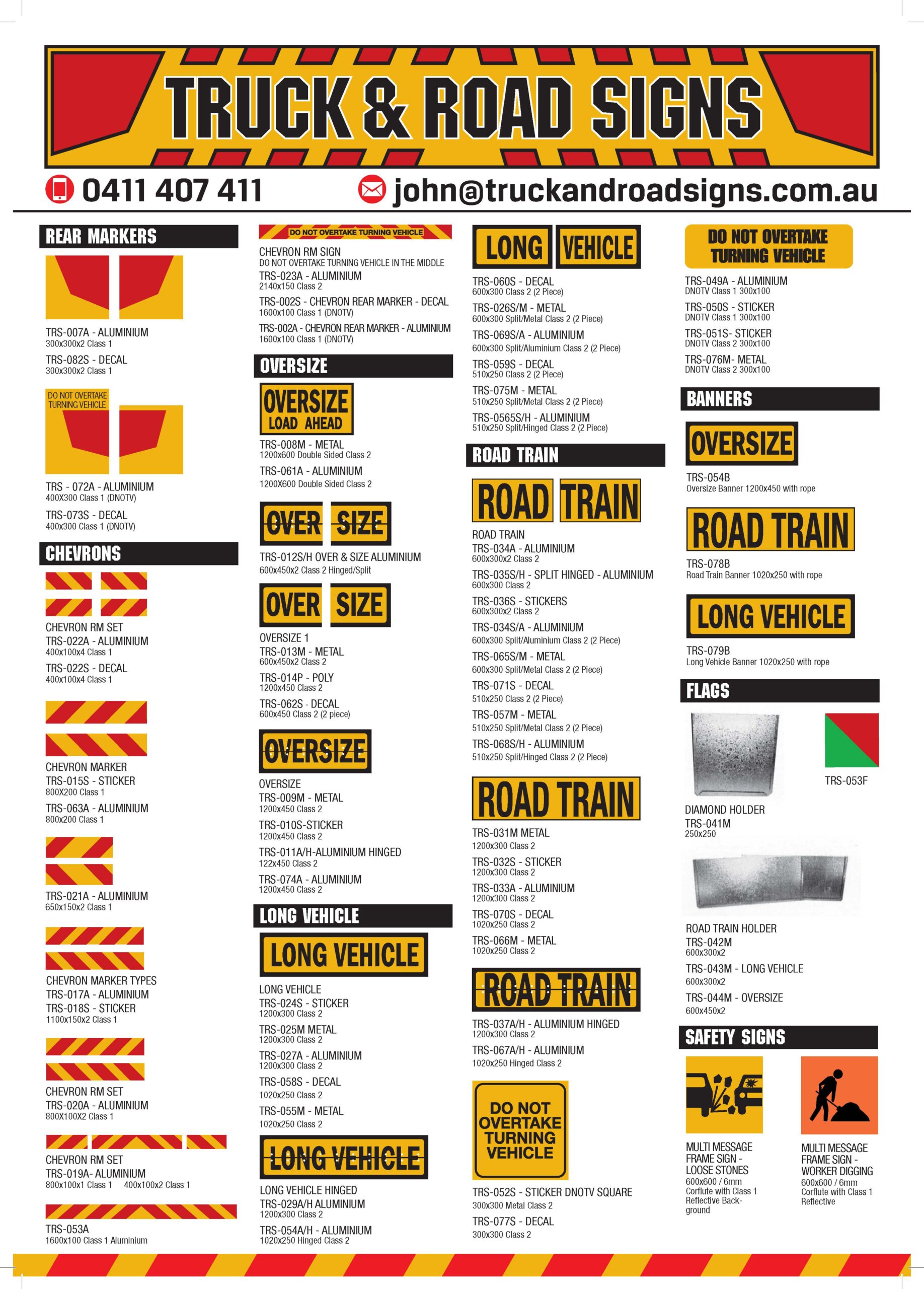
Road signs are a vital component of our daily navigation, serving as guides that inform, warn, and direct drivers on their journeys. Among these symbols, truck signs hold particular significance, primarily because of their crucial role in ensuring safety on the road. Understanding what these signs mean is not merely a matter of compliance; it reflects a broader comprehension of the dynamics of road use, the responsibilities of various vehicle operators, and the intricate interplay between safety and efficiency in transportation.
Before delving into the specifics of truck signs, it is essential to appreciate the context in which they exist. As urban environments expand and freight movement increases, the relationship between trucks and other vehicles becomes increasingly complex. Trucks, which are often significantly larger than standard cars, occupy a unique space within our transportation infrastructure. Their dimensions necessitate particular signage to facilitate safe interaction among all road users. This interdependence raises interesting questions: What rules pertain to these colossal vehicles? How does signage enhance our understanding of those rules?
One of the fundamental signs related to trucks is the “Trucks Prohibited” sign, often depicted with a pictorial representation of a truck crossed out. This sign communicates a crucial message that helps uphold public safety and ensures smoother traffic flow. These restrictions are often found in urban areas, residential neighborhoods, and certain stretches of highway where the presence of large vehicles could pose a danger or lead to congestion. By marking off limits for trucks, municipalities strive to create an environment conducive to both pedestrian and vehicular safety.
Conversely, signs that signal “Truck Route” provide an entirely different directive. These signs guide trucks onto paths that are designated for their use, typically featuring roads that can accommodate their size and weight. These routes are strategically mapped out, taking into account road capacity, overhead clearances, and weight limits. By having designated truck routes, cities can mitigate the risks associated with large vehicles navigating through congested or narrow streets. Interestingly, the establishment of these routes often requires an extensive analysis of traffic patterns and potential hazards.
But signage isn’t solely about prohibition or guidance; it also encompasses varying restrictions based on weight limits. “Weight Limit” signs specifically indicate the maximum load that a road can safely bear. This is a critical consideration as over-weight trucks can wreak havoc on a road’s integrity, causing degradation and necessitating costly repairs. It is not uncommon for municipalities to invest considerable resources into monitoring and enforcing these limits, underscoring the profound economic implications of transportation infrastructure.
Another fascinating aspect is the “No Parking” and “Loading Zone” signs tailored for trucks. “No Parking” signs often extend specific regulations regarding where trucks may stop momentarily to load or unload their cargo. Loading zones are vital in urban settings where space is at a premium. These zones provide a designated area for trucks to stop, facilitating efficient deliveries without disrupting the flow of traffic. However, misuse of these zones can lead to significant traffic delays, demonstrating the fine balance that must be managed by municipal authorities.
Perhaps one of the most iconic truck-related signs is the “Truck Use Low Gear” sign. This sign is typically found on downhill gradients where large vehicles might experience difficulty controlling their speed. It serves as a crucial warning to truck drivers, reminding them to engage low gear to maintain control. The fascination here lies not only in the technical aspect of driving but also in the broader implications for road safety. Inadequate attention to these warnings can lead to catastrophic outcomes, highlighting the need for continuous education and awareness among truck operators.
Diving deeper, we also encounter signs that alert drivers to “Truck Turn” areas or “Sharp Curve Ahead.” These signs are positioned to safeguard both truck drivers and other motorists by indicating that larger vehicles may need additional space to navigate turns. Herein lies another layer of complexity: the need for all drivers to understand the limitations of trucks when it comes to maneuverability, which varies significantly compared to smaller vehicles. This mutual comprehension fosters a cooperative driving environment, essential for preventing accidents.
While all of these truck signs serve practical purposes, they also reflect an intricate web of societal norms and behaviors regarding road usage. The presence of these signs bears witness to the historical evolution of urban planning and vehicle safety. Over time, as industries grow and vehicular technology evolves, the necessity for clear and effective road signage becomes ever more critical.
The allure of truck signs lies not merely in their function but also in their ability to reflect the values and priorities of society concerning transportation, safety, and efficiency. They serve as a stark reminder of the complexities of road sharing—a delicate ballet where trucks, cars, cyclists, and pedestrians all have roles to play. The narrative surrounding these signs invites us to ponder wider questions about urban infrastructure, regulation, and the responsibilities we hold as users of these collective spaces.
In conclusion, while truck signs may seem straightforward at first glance, they unfold layers of meaning that go beyond mere compliance. They are a testament to our pursuit of safety and order on our roads. By understanding the diverse array of truck-related symbols, drivers demonstrate respect for the rules that govern our shared spaces, ensuring that both the transport of goods and the safety of all road users are upheld. The fascination with these signs thus lies not only in their utility but in their representation of our collective journey towards a more harmonious coexistence on the roadways.












