
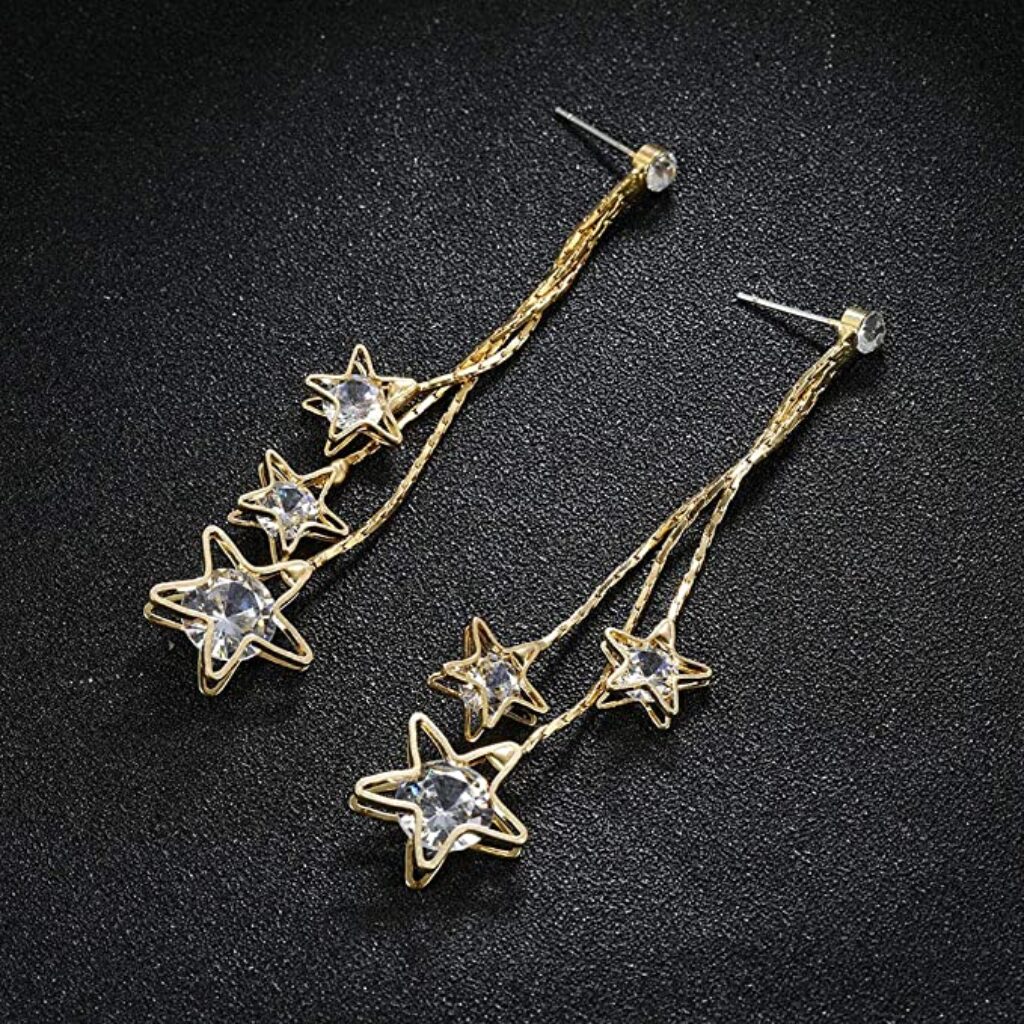
The word “star” often evokes imagery of the heavens: a realm where celestial bodies twinkle, guiding navigators and inspiring dreamers alike. When embedded within the delicate confines of a ring, the star transcends mere aesthetics, morphing into a profound emblem representing a myriad of concepts steeped in history and cultural significance. This intricate relationship between form and meaning invites exploration into what the star symbolizes within jewelry, particularly rings.
Symbolism of the Star:
The star has been a subject of fascination across diverse cultures, embodying various ideals that resonate with humanity. From ancient civilizations to contemporary interpretations, the star represents guidance, hope, and aspiration. Its five-pointed structure has become synonymous with the notion of reaching for one’s dreams, a beacon illuminating the path towards personal ambitions.
Stars are intrinsically linked to navigation; sailors have historically relied on them to find their way across vast oceans. This navigational significance imbues the star with attributes of direction and purpose. When crafted into a ring, the star serves as a reminder to the wearer of their journey, encouraging steadfastness in the face of challenge. It conjures thoughts of resilience, a reminder that, like the stars above, one can shine brightly amid the darkest nights.
A Historical Lens:
Throughout history, various cultures have infused the star symbol with rich narrative threads. In ancient Mesopotamia, the star was revered as a divine emblem, associated with gods and cosmic order. Similarly, in Egyptian mythology, stars were associated with the afterlife and the soul’s ascension, symbolizing a person’s transition to eternity. Such associations have left an indelible mark on the perception of stars in jewelry, particularly in rings that precede important life milestones such as engagements and marriages.
In contemporary interpretations, the star often signifies one’s inner light and femininity, frequently seen in women’s jewelry as an empowering emblem. The incorporation of the star in ring design evokes a sense of individuality and personal narrative, inviting the wearer to weave their own story around this celestial symbol.
Design and Craftsmanship:
The physical manifestation of a star within a ring can vary significantly in design, each variation imbued with its own unique narrative. Classic star motifs often boast a geometric precision, where sharp edges contrast with the organic curves of the human form. Designers may choose to surround the central star with a halo of smaller stones, echoing the notion of a starry sky, illuminating the central symbol while adding a touch of glamour.
Moreover, the material of the ring plays a pivotal role in enhancing the star’s essence. Gold, with its warm hue, imbues a sense of timelessness, while silver’s cool luster suggests modernity. The choice of gemstones, too, contributes profoundly to the ring’s overall symbolism. For instance, diamonds can symbolize purity and strength, while sapphires might emphasize loyalty and wisdom. Each combination of materials melds together to craft narratives uniquely tailored to the wearer’s life story.
Personal Significance:
Choosing a star ring often reflects the wearer’s personal journey, a way to engrave one’s aspirations closely to the heart. Individuals may opt for a star ring to commemorate a significant life event or transformation. It stands as a talisman, a physical representation of the wearer’s hopes and dreams. By wearing such a piece, individuals might feel a sense of alignment with their guiding star, a reassurance of their boundless potential and aspirations.
Relationships, too, find a place within the embrace of a star ring. Couples may exchange star rings as a pledge of their commitment to navigating life’s tumultuous seas together, embodying the idea that love serves as a guiding light through darkness. Such gestures are steeped in symbolic significance, connecting partners through shared dreams and ambitions.
Variations and Cultural Interpretations:
The representation of stars varies widely across cultures, each adding its unique flavor to the symbolism. In Eastern cultures, the star often stands for longevity and eternity, evoking thoughts of cosmic connections and the cyclical nature of life. In Western contexts, stars often align closer to ideas of fame and success, perhaps reflecting one’s desire to be recognized and cherished.
Customary lore even lends itself to superstitions surrounding stars. For example, one might wear a star-ring on their left hand, believed to attract fortune and positive energies. Conversely, a star on the right could be seen as a symbol of prowess and activity, urging the wearer to reach out and grab opportunities as they present themselves.
Conclusion:
The allure of a star ring extends far beyond its visual allure; it encapsulates moments, aspirations, and deeper meanings amalgamated within the cosmos. Its presence on a finger serves as a testimony to the wearer’s journey, a perpetual reminder of the infinite possibilities that lie ahead, grounded by hope and illuminated by the brilliance of dreams. No matter the culture or context, the star embodies an eternal truth: we are all travelers in life, guided by our own celestial aspirations, striving to shine brightly in a constellation of collective human experience.












