
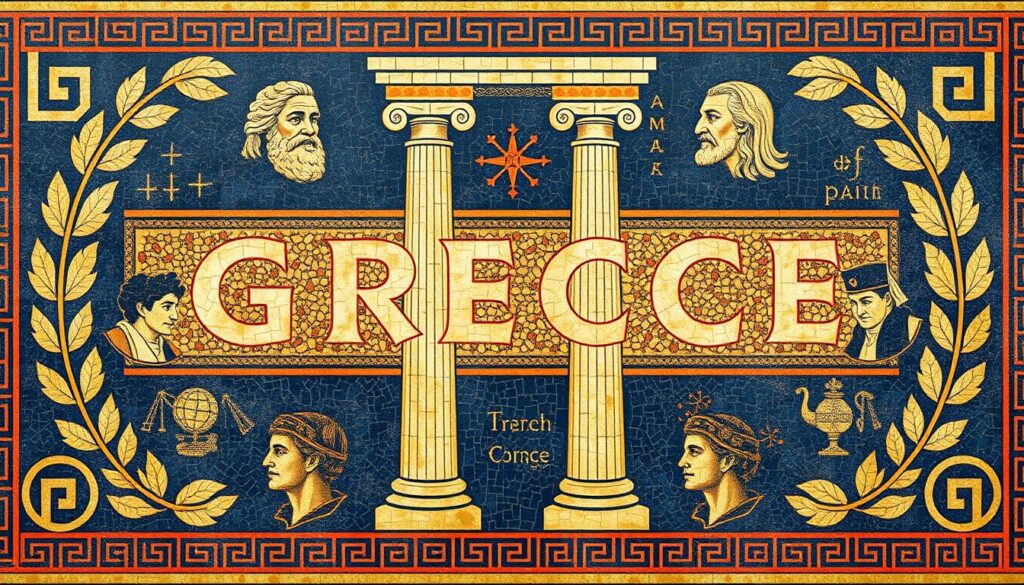
Language is a tapestry of history, woven from threads of culture, geography, and interaction. When delving into the intricacies of the Greek language, one uncovers a rich heritage that is not merely confined to its archaic roots but extends into the foundations of many modern languages and concepts. This exploration will illuminate the multifaceted origins of Greek, its evolution through time, and the significance of its lexicon in contemporary contexts.
**1. The Genesis of Greek**
Greek belongs to the Hellenic branch of the Indo-European language family, which boasts a lineage extending over three millennia. The earliest attested form, known as Mycenaean Greek, was inscribed on clay tablets in Linear B script, dating back to the 15th century BCE. This ancient form already demonstrated the complexity and sophistication that the Greek language would later embody. As linguistic anthropologists would agree, this early script encapsulates nuances that reflect the socio-political frameworks of Mycenaean society, revealing insights about governance and trade.
The transition from Mycenaean to Classical Greek marks a significant evolution. The dialects—ranging from Attic, which would become the lingua franca of much of the classical period, to dialects like Doric and Ionic—exemplified regional variations. The synthetic nature of Greek, characterized by inflection and extensive morphology, allowed for a dynamic expression of ideas, resulting in its rich literary canon.
**2. The Influence of the Greek Alphabet**
The Greek alphabet, derived from the Phoenician script, is another monumental contribution to linguistic evolution. Implemented around the 8th century BCE, it introduced distinct vowel sounds, thereby fostering greater phonetic clarity. The introduction of vowels was revolutionary. It permitted a broader range of expression compared to its consonantal predecessors. As a result, texts became more accessible, paving the way for the flourishing of literature, philosophy, and science.
Interestingly, the Greek alphabet has exercised considerable influence on other writing systems. The Latin alphabet, used universally today, owes much of its structure to Greek. This linguistic interconnectedness exemplifies how language can transcend geographical confines, melding into a collective human heritage.
**3. Vocabulary and Terms: A Lexical Expedition**
The richness of Greek lexicon is profound, with numerous words having permeated modern languages. Notably, fields like philosophy, science, and mathematics are replete with terms derived from Greek origins. Words such as “democracy,” “ethics,” and “physics” not only encapsulate essential concepts but also carry the weight of thousands of years of intellectual history.
Moreover, the concept of “loanwords” deserves exploration. Many English words, for example, have roots in Greek. The term “phobia,” stemming from the Greek “phobos,” signifies the roots of fear and anxiety. This Latinized adaptation showcases the perpetual resonance of Greek cinema within psychological discourses and beyond. Furthermore, “chronology,” derived from “chronos” (time), underpins modern frameworks of historical analysis and timekeeping.
**4. Cultural Intertwining: Myths and Morality**
The Greek language is inextricably linked to the cultural narratives that have shaped Western civilization. Myths and epics, such as Homer’s “Iliad” and “Odyssey,” are not simply texts but cultural cornerstones, offering moral and educational insights. Through metaphorical language and allegorical narratives, these works delve into the human condition, tackling themes of honor, bravery, and fidelity.
Moreover, the philosophical treatises of Plato and Aristotle, written in Greek, continue to inspire contemporary thought. Concepts like “virtue ethics” and “metaphysics” resonate deeply within today’s ethical and philosophical discussions. The specific terminology employed in these discourses stems from the meticulous nature of the Greek language itself, laden with nuanced meanings that invite in-depth analysis.
**5. Greek in the Digital Age: Continuity and Adaptation**
In today’s globalized world, the Greek language has not only persisted but has adapted to resonate with modern contexts. The Internet, a new frontier for communication, has enabled the dissemination of Greek culture and language across borders. Social media platforms, online courses, and digital dictionaries facilitate an unprecedented accessibility to learning Greek, granting users the ability to explore linguistic intricacies and conversational fluency.
The emergence of Greek as a medium in the digital realm fosters a renewed interest among younger generations. Through platforms like TikTok and Instagram, contemporary figures utilize Greek phrases, infusing ancient wisdom into modern dialogue—demonstrating that despite the passage of time, the relevance of Greek remains intact.
**6. The Ongoing Legacy of Greek Language**
As we dissect the nuances of the Greek language and its origins, it becomes evident that its impact is both profound and multifaceted. From its foundational role in the development of writing systems to its essential contributions to modern vocabulary, Greek continues to shape our linguistic landscape. For enthusiasts and scholars alike, the journey into the depths of this ancient language is not merely academic but a pilgrimage through the essence of human thought and culture.
In conclusion, the Greek language embodies a rich tapestry of historical narratives, cultural transformations, and intellectual advancements. It not only captivates linguists and historians but also resonates with everyday individuals seeking connection through the shared experience of language. As we navigate this labyrinth of language, we uncover not just words, but the profound meanings they harbor—timeless echoes of a civilization that continues to illuminate our world.












